
Share

The electronic nose detects cancer, bombs and wine

Published Nov 15, 2010

What about an electronic nose capable of identifying exactly when it is time to harvest grapes, distinguish pork from beef, smell for bombs, drugs and spoiled food or find the perfect perfume mixture. This at a fraction of the price compared to what current technology which manages to do the same thing costs. Scientists from KTH have created such a nose.
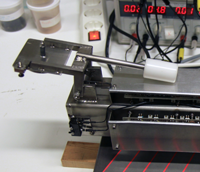
Electronic nose

What makes the electronic nose especially interesting is that it produces better results compared to similar technologies in other companies and universities. The physics professor Thomas Lindblad and José Chilo, former PhD student at KTH and now professor at the University of Gävle, are together responsible for the research and the electronic nose.

The work has attracted a lot of attention. The fact that the electronic nose with a great degree of certainty can distinguish between the scent of ovarian tumours and tissue from healthy women has recently been published in the scientific journal Future Oncology.

“We're talking about an accuracy on the distinction between sick and healthy tissue samples of between 88 to 92 percent depending on the method. With twice the number of sensors, we can achieve 95 percent, which I think is fully sufficient in cancer screening," says Thomas Lindblad.

The actual analysis is quick, it takes about 20 seconds. The price is also low, about one-tenth of the price of the equipment that performs cancer diagnoses.

“Gas chromatography costs around a million crowns; but if the nose is used to analyze cancer, it will cost around SEK 100,000,” says Thomas Lindblad.

For example, if an ICA retailer were to use the equipment to distinguish the fit food from spoiled food, the price tag would be around SEK 1,000 for the equipment as it would not need as many sensors or need to be as advanced.

Thomas Lindblad continues by saying that it's just a bit harder to trace drugs compared to that of explosives, and as regards the latter, the nose has so far produced an accuracy rate of 100 percent. As regards the mixing of perfumes, the electronic nose is the right way to go because there is a very minute difference as to whether a perfume smells good or awful. This is something the nose can deal with.

“It is critical to know exactly on the hour when the grapes should be harvested so that the wine will be as good as possible. The nose will also be helpful here. It also applies, for example, to apples and their degree of ripeness," says Thomas Lindblad.

Another thing my nose could be tested on is to find out exactly when a specific wine in an opened bottle really starts to go off and get bad. There are a lot of myths about different wines which the nose could remove with scientific precision. To quickly find out whether a piece of meat is pork or beef could be of interest to practicing Muslims.

For more information, contact Thomas Lindblad at 08-55 37 81 84 or lindblad@particle.kth.se.

Peter Larsson

EVENTS

KTH at Nordic Energy Outlook

The KTH Energy Platform put the university’s research breadth on display in March at the annual Nordic Energy Outlook conference in Gothenburg. Staged by the Swedish Energy Agency, the conference brought together producers, consumers, regulators and academics for three days of exhibitions and presentations. 

NEWS

Private Donation Will Fund Medical Imaging Research

The Erling-Persson Family Foundation has donated SEK 22 million ($3.2 million) to help KTH expand research into medical imaging physics and computed tomography. The new funding will allow important new diagnostic tools to move out of the laboratory and into medical clinics. 

“With our new technology, fewer children will develop cancer due to CAT scan radiation,” says Professor Mats Danielsson of the KTH School of Engineering Sciences.

AWARDS

Volvo Foundation Honours KTH Professor

Professor Annika Stensson Trigell, Director of the Centre of Vehicle Engineering Research at KTH, has received the Håkan Frisinger Award for her “key role in supplying Swedish industry with highly qualified engineers and researchers in the field of vehicle dynamics and vehicle system technology.”

“This award really belongs to all the talented researchers who have made KTH a force to be reckoned with in vehicle design,” she says. 

NOBEL PHYSICIST

Leggett at KTH: Revising How We Understand the Arrow of Time

At the AlbaNova Colloquium, Sir Anthony Leggett, the 2003 Nobel Physics Prize winner, talks about the science of quantum mechanics, looking at how research into the very strange behaviour of atomic particles is beginning to deliver new technologies — even before the fundamental principles are fully understood.

Sir Anthony's lecture delved into the mysterious phenomenon known as entanglement, where the act of observing one atom changes the state of an entangled atom regardless of distance and without any passage of time. 

PROFILE

A Man of Magnetism

Photo: Jens-Olof Lasthein

Married in January, Stefano Bonetti and his wife, anthropologist Karin Båge, are preparing to move from Stockholm to California, where Stefano will begin a post-doctoral fellowship at Stanford University studying the smallest and fastest magnetic phenomena known to science.

NEWS

Microfluidics and Nanotech Research Aims for New Cancer Diagnostics

KTH is home to a new research project in droplet microfluidics and nanowire technology, aiming to develop techniques for rapid detection of cancer cells circulating in patients’ blood. The team has set an ambitious target of a clinical sensitivity of one cancer cell per millilitre of blood.

NEWS

KTH to Host New Smart Grids Centre

KTH has been selected to anchor the new Swedish Centre for Smart Grids and Energy Storage (SweGRIDS), bringing academia together with industry and public utilities to tackle the European Union’s ambitious targets for improved energy efficiency. Some one hundred scientists will work on development of electric power grids that respond intelligently to consumer and supplier behaviour.

NOBEL PRIZE WEEK

U.S. Energy Secretary Visits KTH

A University of California Professor, the 1997 Nobel Physics Prize winner and President Barack Obama’s Secretary of Energy paid a visit to KTH on December 8 — all in one person. Spending an afternoon on campus, Dr. Steven Chu delivered a scientific address and met students in a lab at the AlbaNova Centre for Physics, Astronomy and Biotechnology.

NEWS

Better Insulation for Durable Transformers

Arun Venkatamaran’s degree project on insulation for electrical transformers spans a range of fields, from computer simulations and design to construction and electrical power.

NEWS

Fighting Childhood Cancer with a Nanotech Capsule Therapy

Researchers from KTH’s Microsystem Technology Lab are working with colleagues at Karolinska Hospital to develop and test a nanotechnology capsule for precise delivery of stem cell medicine. The aim is to fight the most common type of childhood cancer—without the unpleasant side effects of traditional chemotherapy.