

- Lectures – 6 hrs (2hrs x 3 lectures)
- Seminars –2 hrs/ intro/ planning
- 2 hrs/ half time feedback
- 4 hrs presentation of project work
- Study visits organized and documented by the students themselves
- 3 study visits
- Individual Assignment - Opposition
- Group Project & Written report
MJ2685 Smart Cities and Climate Mitigation Strategies- Project Based 7.5 credits
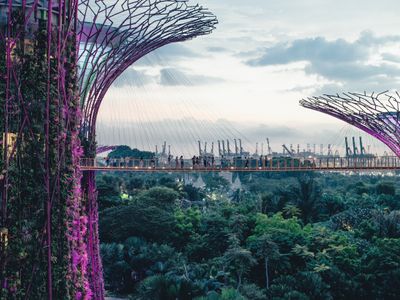
This course is a compulsory component for all students of the international MSc programme Energy for Smart Cities (EIT InnoEnergy). The course is also offered as an elective course for other students at KTH (as MJ2685). This project-based course aims to give an overview of the key concepts within smart cities and climate change mitigation strategies, and to provide students with hands-on experience in working on an aspect of smart cities towards a sustainability-related outcome.
Choose semester and course offering
Choose semester and course offering to see current information and more about the course, such as course syllabus, study period, and application information.
Application
For course offering
Autumn 2024 Start 26 Aug 2024 programme students
Application code
50104
Headings with content from the Course syllabus MJ2685 (Autumn 2023–) are denoted with an asterisk ( )
Content and learning outcomes
Course disposition
Course contents
The concept of a “Smart City” reflects that ICT is increasingly integrated in all areas of urban development and urban living. It is also a reflection of how ICT is being designed with sustainability purposes.
The course will provide knowledge about the concept of Smart Cities and their relation to climate mitigation strategies. These strategies are geared toward the municipalities themselves, as well as urban actors across all city sectors, including companies, property owners, utilities, households, etc.
This course is project-based with a multidisciplinary approach, including environmental, technological, economic and social aspects. The basic aim of the course is to, on a system level, investigate and explore the potentials of the concept of “Smart Cities” in relation to the challenges associated with mitigation strategies for the cities of today and tomorrow.
Intended learning outcomes
After passed course the student should be able to:
· Describe and explain concepts of “Smart Cities” based on scientific literature and reports from case studies.
· Describe and discuss the mitigation challenges for the cities today and in the future.
· Investigate, analyze and explore “Smart City“ concepts and solutions in relation to the climate mitigation challenges for important urban development sectors, such as transportation, buildings, consumption, lifestyle, energy production, waste management, water management, etc.
· Complete a “Smart City” team-based project, related to climate mitigation on an urban level together with a relevant stakeholder such as a waste company, the municipality, or a local energy or water utility.
· In a written and oral form present the result from a project work in a scientifically acceptable form.
Literature and preparations
Specific prerequisites
Admitted to Master's Programme, Sustainable Technology (TSUTM).
Others: Degree of Bachelor or Degree of Bachelor of Science in Engineering or other corresponding technical, natural or other science degree at first cycle academic education of at least 180 higher education credits or equivalent.
Courses from upper secondary school corresponding to the courses Eng B/6 according to the Swedish upper secondary school system or equivalent.
Recommended prerequisites
No information inserted
Equipment
No information inserted
Literature
Will be announced at the start of the course.
Examination and completion
If the course is discontinued, students may request to be examined during the following two academic years.
Grading scale
A, B, C, D, E, FX, F
Examination
- FLT2 - Study visit, 0.5 credits, grading scale: P, F
- LIT1 - Literature Assignment, 2.0 credits, grading scale: P, F
- NÄR1 - Attendance, 1.0 credits, grading scale: P, F
- PRO1 - Project, 4.0 credits, grading scale: A, B, C, D, E, FX, F
Based on recommendation from KTH’s coordinator for disabilities, the examiner will decide how to adapt an examination for students with documented disability.
The examiner may apply another examination format when re-examining individual students.
Opportunity to complete the requirements via supplementary examination
No information inserted
Opportunity to raise an approved grade via renewed examination
No information inserted
Examiner
Ethical approach
- All members of a group are responsible for the group's work.
- In any assessment, every student shall honestly disclose any help received and sources used.
- In an oral assessment, every student shall be able to present and answer questions about the entire assignment and solution.
Further information
Course room in Canvas
Registered students find further information about the implementation of the course in the course room in Canvas. A link to the course room can be found under the tab Studies in the Personal menu at the start of the course.
Offered by
Main field of study
Environmental Engineering, Mechanical Engineering
Education cycle
Second cycle
Add-on studies
No information inserted
Contact
Olga Kordas (olga@kth.se); Oleksii Pasichnyi oleksii.pasichnyi@abe.kth.se