
Strategic research areas
KTH plays a leading role in five national Strategic Research Areas (SRAs) and participates as a partner in a further eight areas. The Strategic Research Areas initiative has been ongoing since 2009 and is carried out on behalf of the Swedish Government.
In 2009, the government decided to invest in SRAs, and the decision aimed at creating the best conditions for the generation of world-leading research. It was based on the recommendation of the Swedish Research Council, FAS, Formas, Vinnova, and the Swedish Energy Agency.
In total, KTH participates in 13 national Strategic Research Areas.
National research areas coordinated by KTH
KTH coordinates the following five areas:
- e-Science
- IT and mobile communication technology
- Molecular life sciences
- Production
- Transport
Swedish e-Science Research Centre (SeRC)


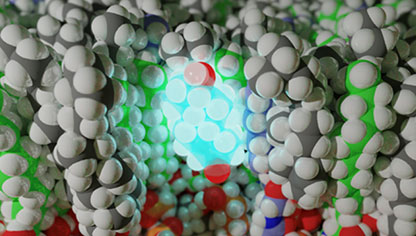
Digital futures: Information and Communication Technology the Next Generation (ICT-TNG)

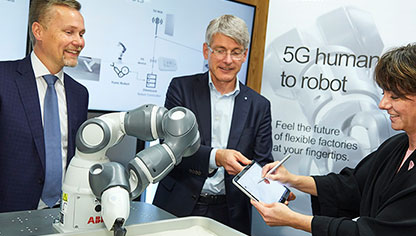
SciLifeLab: Science for Life Laboratory

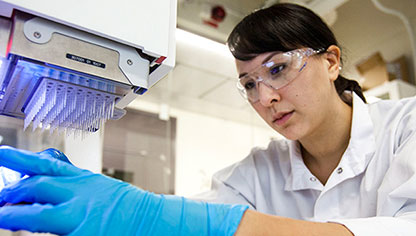
Excellence in Production RESearch (XPreS)


Transport Research Environment with Novel Perspectives (TrENoP)

Research areas where KTH is partner
StratNeuro
Area: Brain
Brain disorders are among the most common causes of disability in high-income countries. The European Brain Council has estimated that one-third of Europe's residents will be affected at some point during their lifetime. StratNeuro integrates research in clinical and basic neurosciences, aiming to reduce the burden of disease from brain disorders.
Coordinator: Karolinska Institutet.
U-CAN
Area: Cancer
The research community U-CAN collects and structures data, biomolecules, tumor, and blood samples from cancer patients before, during, and after treatment. The material is used to develop methods and drugs for diagnosing and treating tumor diseases.
Coordinator: Uppsala University.
ModElling the Regional and Global Earth system (MERGE)
Area: Climate changes
Even though we already have sufficient knowledge of climate change today to justify emission reduction actions, there is still a need to understand better the uncertainties that remain in assessing climate change and its consequences
Coordinator: Lund University.
Stand-Up for Energy (StandUP)
Area: Energy
STand-UP focuses on long-term sustainable energy supply, one of the grand global challenges in the coming decades. The research groups within STand-UP have a shared vision for the future of society with access to renewable, reliable, and cost-effective energy for housing, trade, transport, and industry.
Coordinator: Uppsala University.
Security Link
Area: Security and Emergency preparedness
Security and emergency preparedness cover wireless communication, advanced sensors and detectors, sensor and information fusion, decision support and coordination for crisis management, and related ethical issues.
Coordinator: Linköping University.
Stockholm Centre for Climate Transition (ClimTrio)
Area: Climate-related Research
Coordinator: Stockholm University
The research environment is based on the premise that climate transition is a societal transformation that requires integrated knowledge from multiple disciplines. KTH participates in the initiative together with Stockholm University and Karolinska Institutet.
Swedish Centre for Integrated Polar Research (SCIPolar)
Area: Polar Research
Coordinator: Stockholm University
SCIPolar explores the far-reaching consequences of rapid changes in the Arctic and Antarctic for the global climate system, the cryosphere, ecosystems and societies. KTH participates together with Stockholm University, Umeå University, Luleå University of Technology and Lund University.
Strategic Research Area in Quantum Technology
Area: Quantum Technology
Coordinator: Chalmers University of Technology
The research area brings together researchers from Chalmers University of Technology, KTH and Lund University to conduct research in quantum technology. The initiative aims to strengthen the national research environment in the field.