
GDH Partner Days at KTH: Strengthening Challenge-Driven Education and Collaboration
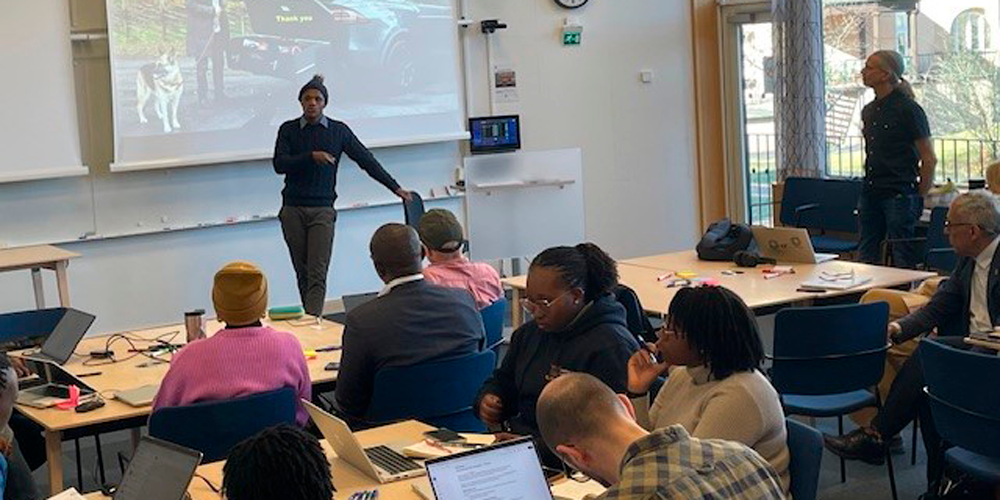
From 2–6 March, partners from African partner universities in the KTH Global Development Hub (GDH) network gathered in Stockholm for a week of exchange, learning, and strategic discussion. The Partner Days brought together students, teachers, and institutional leaders to reflect on Challenge-Driven Education (CDE), mobility, and the future of long-term collaboration across the partnership.
The event was built around a shared goal: to strengthen collaboration through practical experience, mutual learning, and joint planning. Rather than focusing only on formal presentations, the week combined workshops, dialogue, and social activities that allowed participants to exchange ideas, compare experiences, and develop a common understanding of how CDE can contribute to teaching, learning, and broader institutional development.
A major theme throughout the week was how CDE can connect education with real societal challenges. Participants discussed how students can work in multidisciplinary teams on authentic problems, while engaging with external stakeholders from industry, the public sector, and civil society. Student presentations showed that this approach can have a strong impact on learning. Students described how CDE helped them build confidence, improve teamwork, and develop a more active interest in sustainability and societal change. These stories made clear that CDE is not only a teaching method, but also a way of shaping how students see their role as future professionals and citizens.
Participants identified common challenges
Teachers and course coordinators also shared experiences from existing CDE courses and modules. These exchanges highlighted good practices such as clear challenge framing, strong stakeholder involvement, and learning activities that help students deal with complexity. At the same time, participants identified common challenges, including how to manage stakeholder expectations, how to assess both group and individual learning fairly, and how to support students when projects become open-ended or uncertain. These discussions created space for honest reflection on what works well and what still needs improvement.
Another important topic was how to move from individual CDE courses to a broader institutional level. Participants explored how CDE can be mainstreamed across curricula and how it can be embedded more deeply in programmes rather than remaining limited to isolated project courses. This led to discussions about joint labs across universities, where education, research, and societal engagement can be combined in new ways. The idea of joint labs raised questions about governance, resources, equity, and long-term impact, but it also opened up new possibilities for collaboration across institutions and countries.
Mobility was also discussed as a strategic tool for mutual capacity building. Participants reflected on how student and staff exchanges can strengthen personal development, broaden perspectives, and build trust between institutions. The discussions showed that mobility is not only valuable for individuals, but also for universities and the partnership as a whole. It can create stronger networks, support joint initiatives, and deepen the shared work on education and transformation.
The week also included time for informal networking and cultural exchange, which played an important role in strengthening relationships across the GDH network. These moments outside the formal workshop setting allowed participants to continue conversations, build trust, and connect on a more personal level. This social dimension was an important part of the overall experience and contributed to the collaborative spirit of the Partner Days.
The week showed the power of CDE
Overall, the GDH Partner Days at KTH created a valuable space for reflection, exchange, and future planning. The week showed that Challenge-Driven Education has strong potential to support meaningful learning and collaboration, but also that it depends on committed educators, supportive institutional structures, and close partnerships with stakeholders. It also showed that mobility and trust-building are essential for sustainable collaboration over time.
The Partner Days ended with a stronger sense of shared direction and with concrete ideas for the next phase of the GDH partnership. Participants left with a clearer understanding of the opportunities and challenges ahead, and with renewed commitment to working together across institutions and countries.