
AI – the researchers’ new colleague in the lab
Can a laboratory learn to make discoveries on its own? That question lies at the heart of Polaris, a new initiative at KTH in which researchers are building an autonomous research environment to develop the sustainable materials of the future.
The ambition is to give artificial intelligence an active role in the research process – from planning experiments to analysing results and suggesting the next steps.
AI and physics-based models suggest which materials and experiments are most promising. Robotic systems then produce and test the materials, and the results are fed back into the models to improve them.
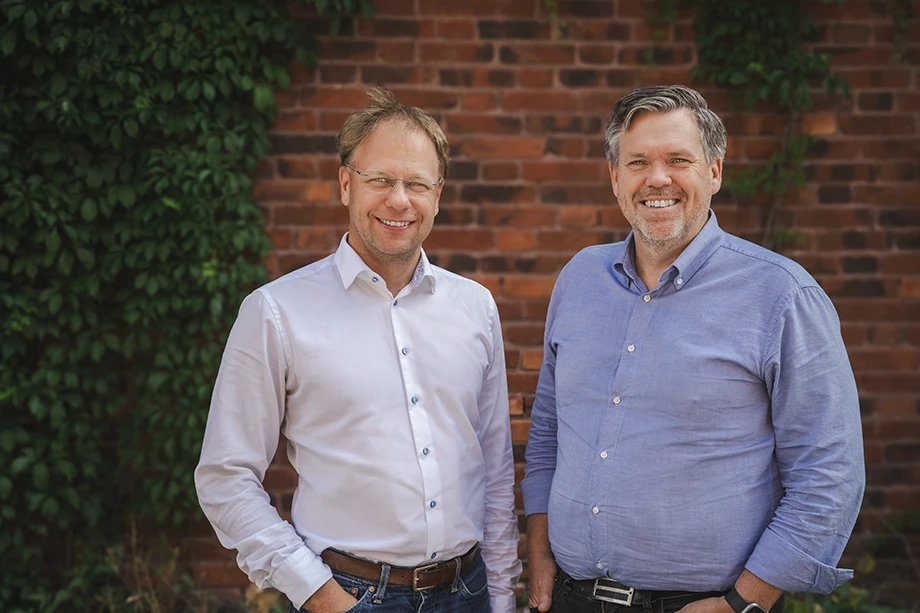
“We hope Polaris will become a national platform where we can develop the polymers and soft materials of the future much faster and more systematically than we can today,” says Daniel Söderberg , Professor of Fibre Processes, who leads the initiative with Fredrik Lundell , Professor of Experimental Fluid Mechanics.
The need is great. Many of the materials intended to replace today’s fossil-based alternatives are complex and difficult to understand. Small changes in how they are produced can have a major impact on their properties. At the same time, traditional methods are increasingly inadequate when researchers want to explore thousands of possible combinations.
More than efficiency
Understanding these types of materials requires far more experiments and data than humans can handle manually, according to the researchers behind the initiative.
“With this platform, we can explore far more combinations than with traditional manual laboratory work and more quickly identify materials with the right properties,” says Daniel Söderberg.
Polaris is based on what is known as a “closed-loop” system, in which experiments, measurements, data analysis and modelling are linked in a continuous learning process. The platform will work with bio-based raw materials such as wood fibres and proteins to develop new functional materials.
The project is about more than improving efficiency. The researchers also hope to answer fundamental scientific questions about how a material’s properties emerge from the interplay between structure, composition and manufacturing processes.
A matter of risk-taking
The initiative also involves a degree of risk. There is no guarantee that all material behaviours can be captured by the models being developed. The researchers believe that this is also where the potential for truly major breakthroughs lies.
“The biggest challenge is getting many advanced components to work together as a coherent system. This requires close collaboration between several disciplines and a platform that is both robust and flexible enough to accommodate different types of materials and research questions,” says Daniel Söderberg. He points out that the initiative requires a long-term commitment and a critical mass of researchers, engineers and industry partners.
Polaris brings together experts at KTH in fields including chemistry, materials science, biotechnology and artificial intelligence. If successful, the initiative could change the way materials research is conducted and, in the longer term, contribute to the faster development of everything from energy technology to medical products.
In the laboratory of the future, researchers may therefore have a new colleague: an AI that never stops experimenting.
Text: Christer Gummeson ( gummeson@kth.se )