
AI as a partner – not just a tool
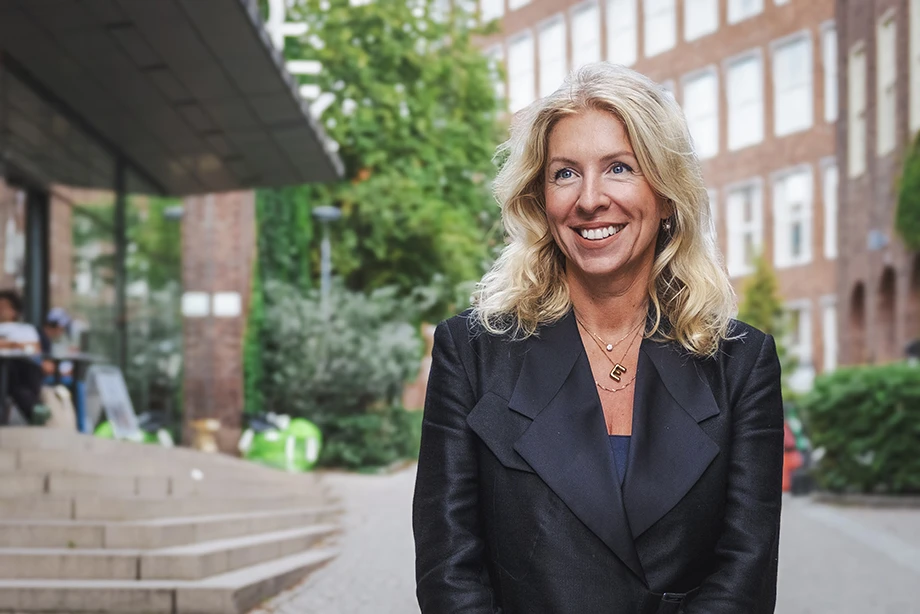
More than 15 years ago, Elena Fersman began developing AI at Ericsson, long before the technology became an established part of the business world. Today, she is a key figure in the company’s AI transformation. As a docent at KTH, she also builds bridges between academia and industry. Now she is the recipient of the KTH Innovation Award 2026.
Based in San Francisco, Elena Fersman leads Ericsson’s work on integrating AI and automation into next-generation mobile networks, including physical AI applications such as robotics and autonomous vehicles. Swedish business media have described her as the telecom giant’s “AI queen”. She leads a global organisation of researchers and developers in the United States, Sweden and India.
The KTH Innovation Award citation notes that she has “contributed to significant technological breakthroughs that have benefited more than one billion subscribers”.
“It was a pleasant surprise,” says Elena Fersman of the news that she had won the award. “At the same time, innovation is never a one-person effort, and I see this as recognition of everyone I’ve worked with, both at Ericsson and at KTH.”
A key part of her work focuses on network autonomy, where AI is used to operate and optimise networks, improve performance and user experience, and reduce energy consumption and carbon emissions.
“Most people only think about mobile networks when something goes wrong. But they are a central part of our digital infrastructure, connecting people, businesses and AI systems. Making them more intelligent, reliable and sustainable is hugely important.”
Embedding intelligence
Part of her mission is to make Ericsson “AI-native” – embedding AI throughout the company.
“It’s a bigger shift than many people realise. Being AI-native means embedding intelligence in how the company works and how our networks behave. Our vision is to achieve fully autonomous networks: networks that largely operate, optimise and heal themselves.”
When it comes to Sweden’s and Europe’s position in the AI race, she argues that there are several different races, and that there is no need to win them all.
“The next phase is about AI that is reliable, energy-efficient and embedded in the physical world – in factories, vehicles, healthcare and critical infrastructure. This is precisely where Sweden and Europe are strong.”
One foot in academia
Alongside her role at Ericsson, Elena Fersman is a docent in cyber-physical systems, specialising in automation, at KTH. She also held an adjunct professorship at the university for seven years.
“I love having one foot in industry and one in academia. The two constantly enrich each other. When I became an adjunct professor at KTH, the idea was to build a smooth, dynamic collaboration between the two organisations, where people could move freely between them.”
What do you think about calls to slow down AI development to prevent potentially dangerous outcomes?
“I take the risks seriously, but I don’t think slowing down is the solution. The real question isn’t whether we move more slowly or more quickly, but whether we build AI responsibly,” she says, adding:
“So I wouldn’t call for a pause. I would focus our efforts on what actually makes AI trustworthy: reliability, transparency, security and clear boundaries for what autonomous systems are allowed to decide on their own.”
What do you think AI use in society will look like in five years?
“AI will be much more present and much less visible, much like electricity or connectivity. It will be woven into the systems around us. At Ericsson, we call this intelligent fabric: connectivity, computing power, data and intelligence woven together, allowing networks to manage themselves and digital agents to handle routine tasks.”
The goal is for AI to enhance human judgement and creativity, and to raise the bar for the tasks it replaces, she emphasises.
“So in five years, I expect AI to feel less like a tool and more like part of the environment we live in. That’s precisely why it’s so important to get the foundations right now.”
Text: Christer Gummeson ( gummeson@kth.se )