
Francis Halzen awarded the Nobel Prize in Physics for the discovery of high-energy neutrinos
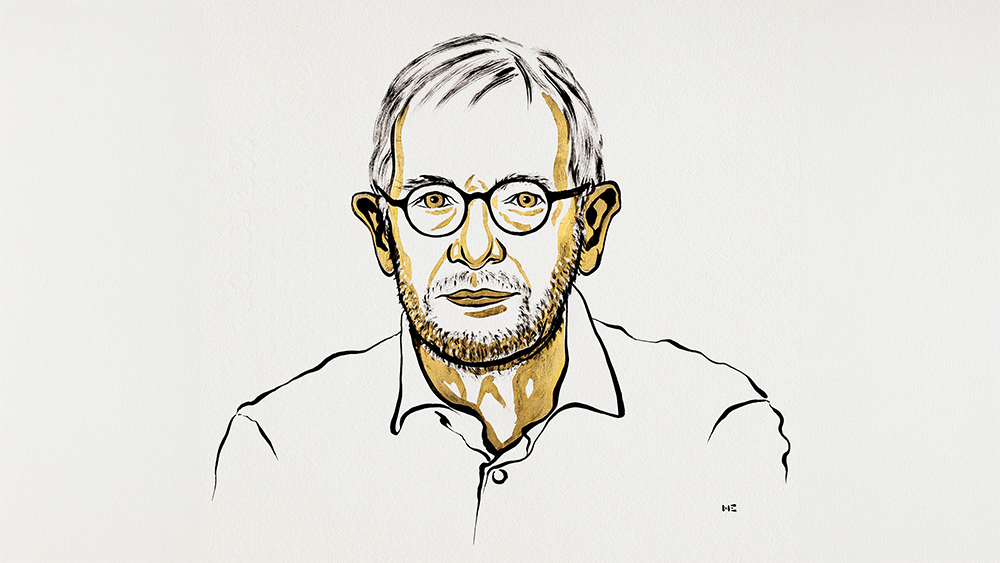
This year's Nobel Prize in Physics is awarded to Francis Halzen for decisive contributions to the IceCube Observatory and the discovery of high-energy neutrinos of astrophysical origin. The discovery has major implications for our understanding of both the most extreme processes in the universe and the fundamental particle physics of neutrinos.
"Neutrinos are electrically neutral elementary particles described by the Standard Model of particle physics. Because they carry no electric charge, their trajectories are not affected by magnetic fields as they travel through the universe", says Tommy Ohlsson, Professor of Theoretical Physics at KTH.
IceCube is a detector embedded deep within the Antarctic ice at the South Pole, where deep holes have been drilled and thousands of photodetectors deployed in the glacier. When a high-energy neutrino interacts in or near the detector, charged particles can be produced, such as muons, which generate light that can be recorded by the photodetectors.
"Their direction can therefore be traced back to the astrophysical environments where they were produced, giving us a unique opportunity to study the processes taking place there", says Mattias Blennow, Professor of Theoretical Physics at KTH.
Studies of neutrinos are also important for fundamental particle physics and may provide information about physics beyond the Standard Model.
Swedish Contributions to the Discovery
The IceCube project has been running for more than 20 years, and Francis Halzen has played a leading role in the international collaboration that developed and operates the experiment.
Several Swedish universities have made important contributions to the project, which has also received substantial support from Swedish research funding agencies.
KTH Research on Neutrino Oscillations
At KTH's Department of Physics, researchers including Tommy Ohlsson, Mattias Blennow and Sandhya Choubey study so-called neutrino oscillations.
"At KTH, we study neutrino oscillations, the phenomenon whereby neutrinos can change type as they travel between their source and a detector. This can be investigated both using neutrinos from space and in accelerator-based experiments", says Sandhya Choubey, Professor of Theoretical Physics at KTH.