
KTH students innovate for civil defence
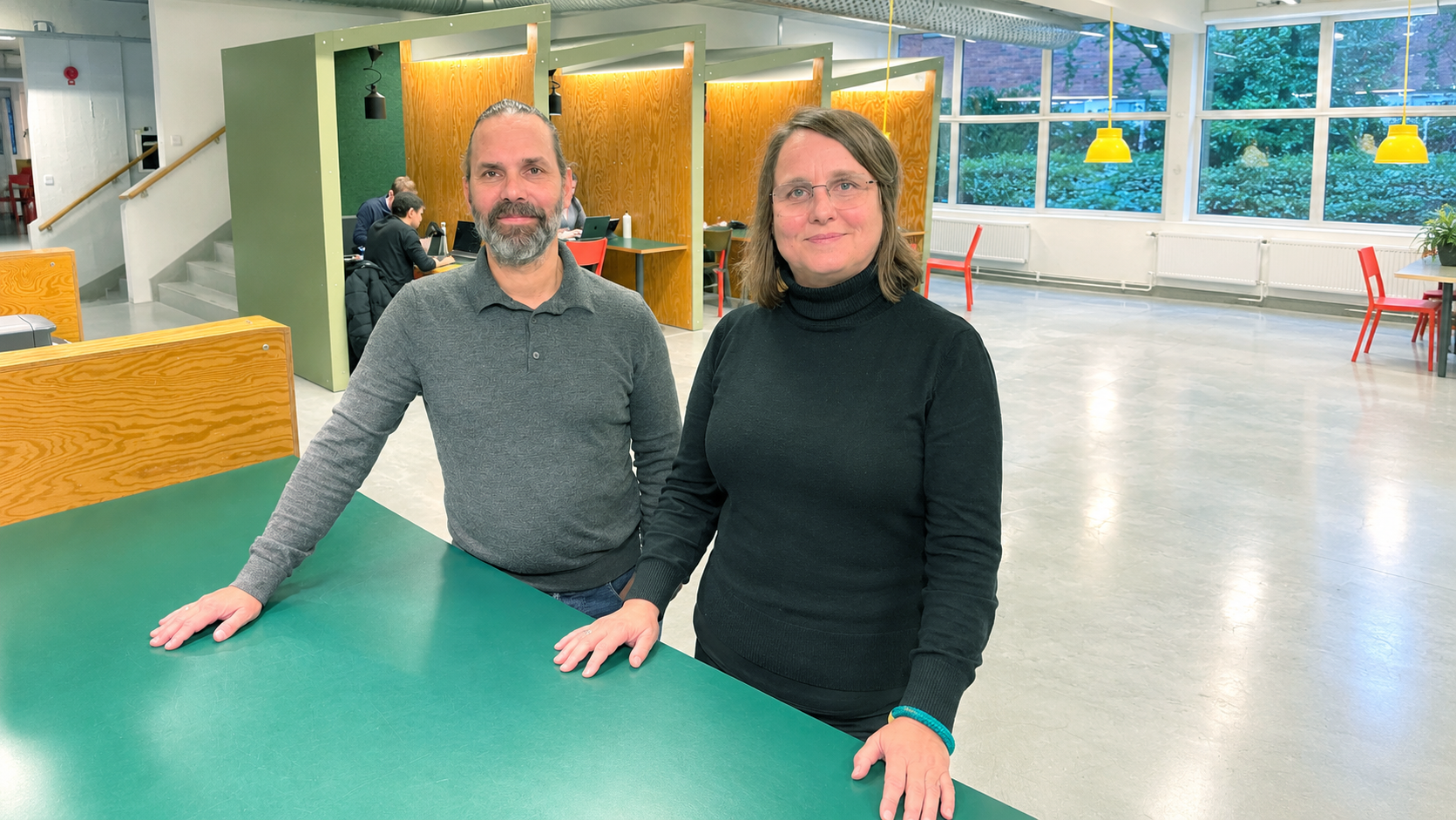
The Swedish Civil Defence and Resilience Agency is working with KTH students to strengthen Sweden’s civil preparedness. The agency’s challenges, which it does not have the resources to address itself, become student projects in which new solutions are developed.
With a deteriorating security situation and a growing number of climate-related crises, Sweden’s civil preparedness faces new challenges. The Swedish Civil Defence and Resilience Agency is responsible for helping ensure that Sweden is prepared for crises, accidents and, in the worst case, war. Developing solutions for a society under pressure requires both resources and fresh perspectives.
Through its collaboration with KTH, the agency can move forward with development projects that might otherwise remain on the shelf.
“We need to rebuild Sweden’s civil defence, and we need to do it quickly. But we cannot solve tomorrow’s problems with yesterday’s solutions. That is where the collaboration with KTH comes in. Students bring entirely new perspectives and ways of approaching problems,” says Daniel Kullgard, Strategic Innovation Coordinator for Civil Defence at the agency.
Over the past year, the agency has collaborated with four courses involving more than 100 students. Their challenges have ranged from improving students’ own preparedness to making the working environment for emergency services personnel less physically demanding and developing protection against drones.
Picking the agency's idea bank
One starting point for the collaboration is the agency’s idea bank, a collection of proposals and problems it has identified but lacks the resources to develop further. KTH’s Susanne Nilsson and Björn Möller bring selected challenges into existing project-based courses, where students work on developing solutions.
“We incorporate selected ideas into existing project courses. Depending on the nature of each idea, we link it to courses in areas such as machine design, mechatronics, integrated product development, design and innovation,” says Susanne Nilsson.
The challenges may involve equipment for emergency services, for example, or how communications, water supplies and electricity can be maintained when ordinary systems are disrupted.
Susanne Nilsson also wants to strengthen students’ ability to respond to challenging situations and develop products when resources are limited. The agency is therefore involved in a newly launched course, Frugal Innovation and Design.
“Frugal innovation is about developing solutions when resources are severely limited, for example when materials, energy or infrastructure are in short supply. This makes it particularly relevant to preparedness,” says Susanne Nilsson.
Real-world challenges
The collaboration between KTH and the agency is not entirely new. Their contacts have developed partly through the FIRE project, a research project led by KTH researcher Fredrik Asplund. FIRE investigates societal changes that contribute to the risk of forest and vegetation fires.
For students, the collaboration offers an opportunity to work on real-world societal challenges and build contacts with organisations involved in Sweden’s civil defence.
“Through this approach, students get to work on real-world problems alongside their theoretical studies,” says Björn Möller.
Susanne Nilsson and Björn Möller have seen a clear increase in demand for technical expertise related to both civil and military defence. But technology alone is not enough, Daniel Kullgard emphasises. It is also essential to understand how a solution will be used, implemented and eventually scaled up.
He also highlights the value of KTH’s collaborations with other organisations involved in Sweden’s total defence.
“These collaborations give us opportunities to carry out joint projects and bridge knowledge gaps between different sectors.”
Text: Anna Gullers