
The Prize in Economic Sciences in Memory of Alfred Nobel for macroeconomic models
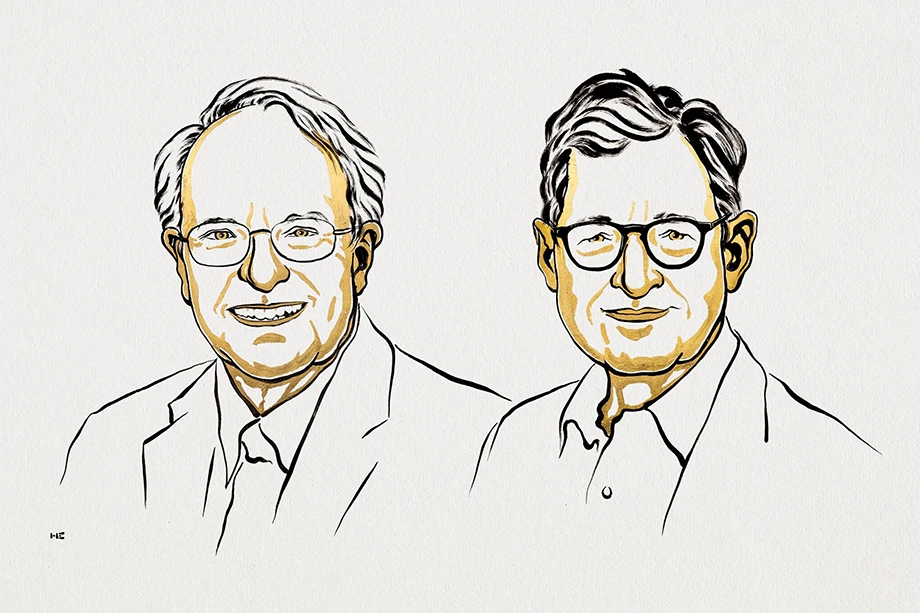
This year’s Prize in Economic Sciences in Memory of Alfred Nobel goes to Robert E. Hall and Michael Woodford, who developed a new type of macroeconomic model that has improved the ability to conduct effective stabilisation policy. These models help policymakers use fiscal and monetary measures to smooth economic fluctuations.
“Their contributions to economic theory have been extremely valuable to society,” says Kent Eriksson , Professor of Economics at KTH.
Economies fluctuate between periods of growth and recession. Stabilisation policy has played an important role in smoothing these fluctuations for nearly a century. However, the oil crises of the 1970s exposed weaknesses in the effectiveness of policy measures.
Robert E. Hall and Michael Woodford showed how economic models could be redesigned to make policy more effective. Rather than relying on relationships between macroeconomic variables such as inflation, output and consumption, they based their models on microeconomic theory. This means taking into account how individual households and firms make decisions, and how their actions affect the economy as a whole.
The models have proved highly useful in addressing recessions. The laureates’ research has provided a solid theoretical foundation for models now used by central banks and governments around the world. These models help policymakers better manage economic shocks, such as energy crises or sudden changes in household consumption.
Kent Eriksson describes the two researchers as pioneers in the field.
“They have helped us build stable economies. Hyperinflation can have devastating consequences, and the tools developed by the laureates have made it possible to achieve greater macroeconomic stability.”
Several research projects at KTH focus on topics related to the laureates’ work, exploring the links between microeconomics and its effects on the economy at a broader, system-wide level. Researchers study, among other things, how household finances affect the ability to rent or buy a home, choices of transport systems and saving behaviour. They also investigate how household finances and new credit options affect the wider economy and inflation.
Both laureates are professors at US universities: Robert E. Hall at Stanford University and Michael Woodford at Columbia University.
Read more about the 2026 Sveriges Riksbank Prize in Economic Sciences in Memory of Alfred Nobel:
Text: Christer Gummeson ( gummeson@kth.se )