
Moss being baked in the researchers' oven
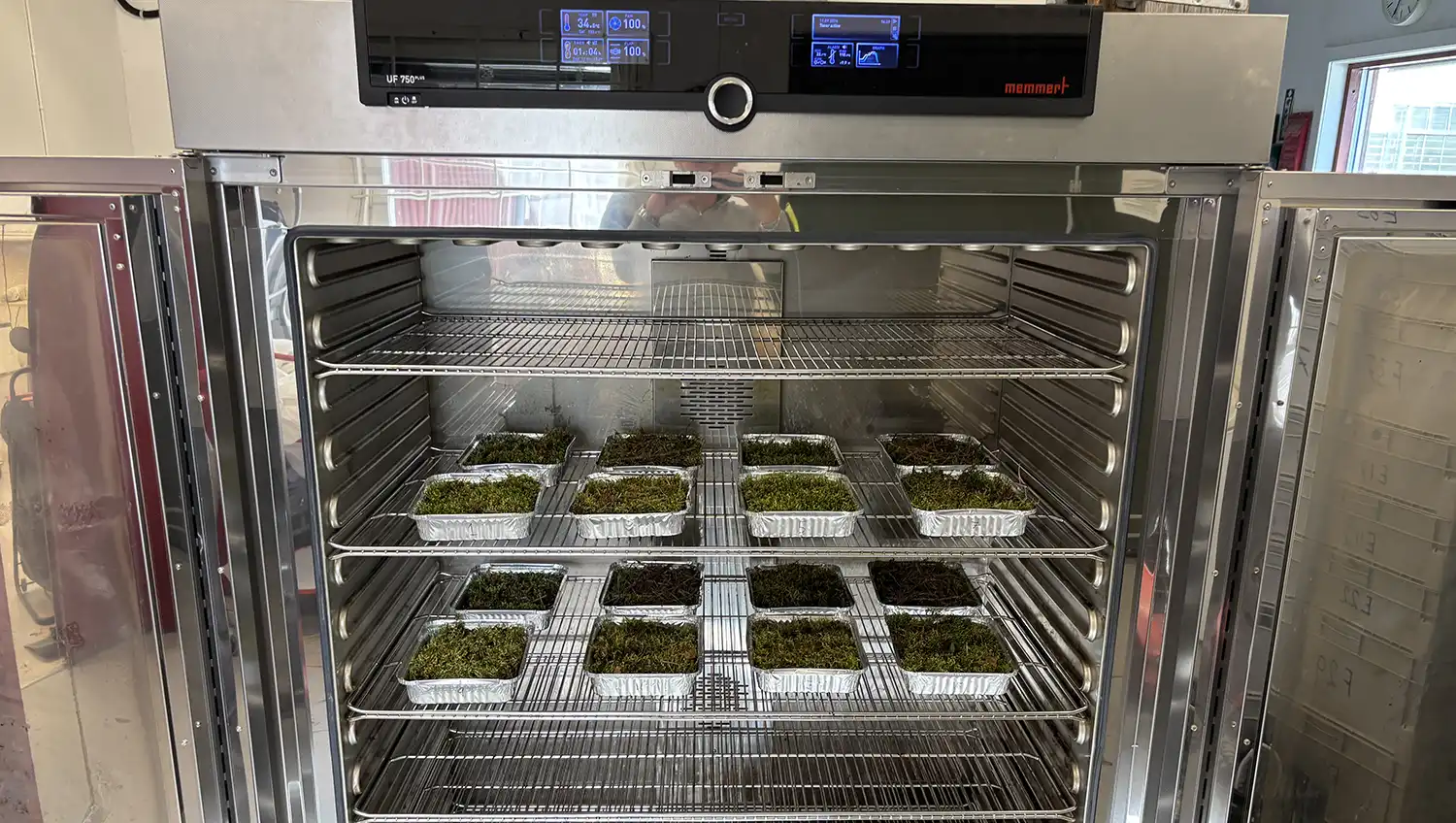
It may look like ordinary moss, but it is the subject of important research. KTH researchers Filip Strand and Fredrik Asplund have been in Umeå to investigate the moisture level in the forest. Why? The moisture of moss can determine whether a spark, for example from forestry work, goes out or develops into a forest fire.


What did you do in the forest?
"We collected moss samples and studied them in the laboratory, from wet to completely dry. We used a hyperspectral camera that measures how the moss reflects light at wavelengths that the human eye cannot see. By combining the camera measurements with precise weighing, we hope to find a fast way to estimate how much water the moss contains.”
Why is this interesting?
“The moisture in the top layer of the forest floor, which largely consists of moss, plays an important role in determining whether a spark dies out or develops into a forest fire. If we can measure moisture content quickly and locally, we could eventually get a much more detailed picture of the risk of ignition – potentially down to the square-meter level. Current fire risk indices rely heavily on weather data from monitoring stations and can therefore miss local variations in the forest. That is exactly the gap we hope to help fill.”
Why did you go to Umeå?
“In Umeå, we have been able to access both a hyperspectral camera and drying ovens through the Swedish University of Agricultural Sciences (SLU) and the Röbäcksdalen research station (which is part of the SITES infrastructure).
So yes … it has been a bit mossy at times, but hopefully this will help us better understand and prevent forest fires,” Fredrik and Filip conclude.


Text: Rita Nõu, photos Filip Strand