
International Recognition for Kristin Kirchner’s ERC-Funded Project FunCalc4Stats
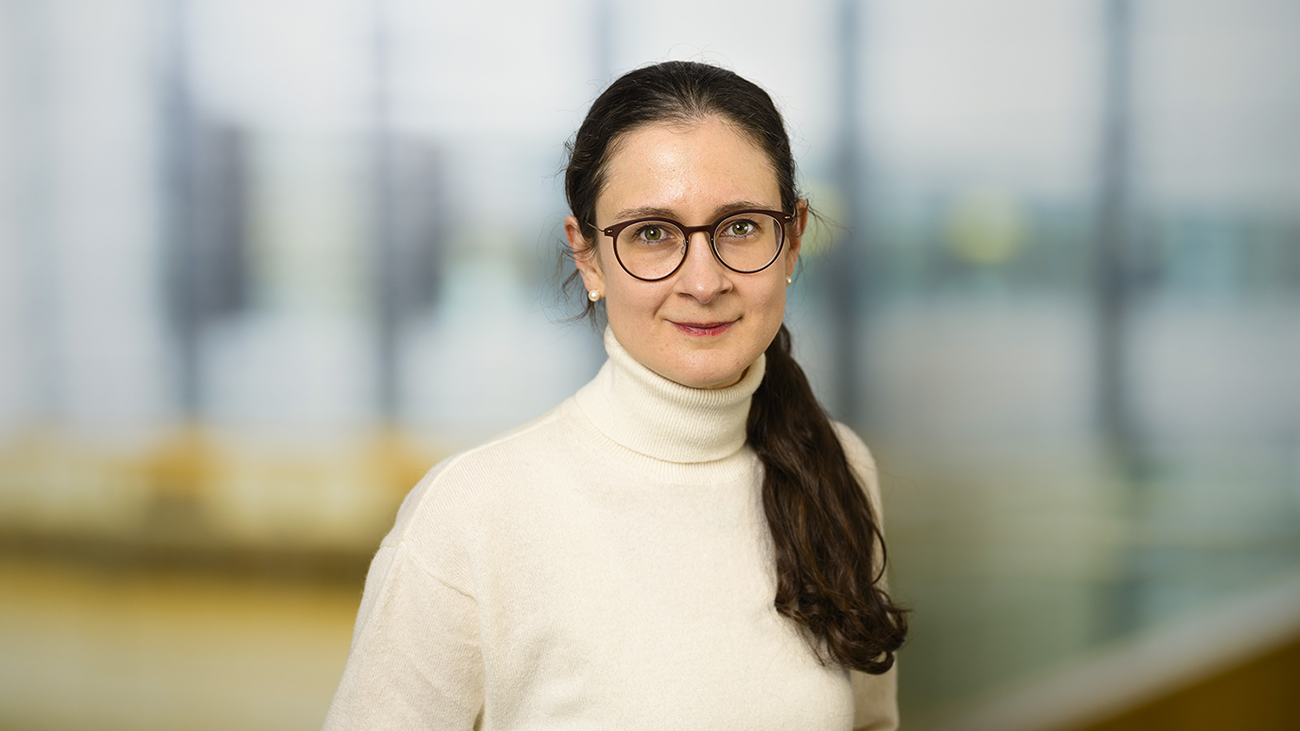
Kristin Kirchner’s ERC-funded project, FunCalc4Stats, aims to develop next-generation statistical methods for analysing large and complex data sets. Combining ideas from mathematics, statistics, and numerical analysis, the research gained international attention when the project was featured in ICM TV’s Thought Leadership Film Series during the International Congress of Mathematicians 2026.
Large and complex data sets are now an integral part of research in fields ranging from climate science to artificial intelligence. To draw reliable conclusions from such data, new mathematical methods are needed that can both handle the sheer size of the data and properly account for uncertainty. Kristin Kirchner explains how the project FunCalc4Stats aims to address this challenge.
Could you briefly describe the project and the most important scientific question you are trying to answer?

In fields such as climatology, demography, and geology, data are collected across both space and time. Rapid technological advances have dramatically increased the volume, complexity, and availability of data, exposing the limitations of many of today's statistical methods. As a result, new approaches are needed that can capture complex spatial and temporal dependencies while remaining computationally efficient for large-scale data sets.
The ERC-funded project FunCalc4Stats aims to develop the mathematical foundations for more realistic statistical models and efficient computational methods for spatial and spatio-temporal data. The central scientific question is: How can we develop new computationally efficient methods for statistical inference that both improve a model's ability to describe real-world phenomena and provide rigorous guarantees of accuracy and reliability?
To address this challenge, the project draws on ideas from pure mathematics, in particular functional calculus for differential operators, a powerful analytical framework that has recently led to major advances in the understanding of partial differential equations.
How do you hope other researchers will use the methods developed in FunCalc4Stats?
FunCalc4Stats develops flexible classes of Gaussian processes for modelling uncertainty, together with algorithms that enable efficient computation and prediction. These methods have particular potential in three key areas:
- Spatial statistics, for modelling random phenomena underlying spatial and spatio-temporal observations.
- Engineering sciences, for quantifying uncertainties in areas such as material parameters, heat sources, and other physical processes.
- Machine learning, where they can be used to build probabilistic models that not only generate predictions but also quantify the uncertainty associated with them.
By introducing approaches inspired by partial differential equations, the project also seeks to strengthen the connection between numerical analysis and statistics, fostering greater interaction between these two areas of applied mathematics.
In what context was the project presented at ICM?
The ERC projectFunCalc4Stats was invited to be featured in the Thought Leadership Film Series on ICM TV, the official broadcast platform of the I International Congress of Mathematicians (ICM) 2026 held in Philadelphia, USA, from 23 to 30 July 2026.
The ICM is the world's largest mathematics conference, bringing together thousands of mathematicians from across the globe. A five-minute documentary about FunCalc4Stats was screened throughout the congress and was also highlighted through several social media activities, including features on the ICM TV YouTube channel.