
Number system and codes. Binary arithmetic. Boolean algebra and boolean functions. Logical operations. Gate logic. Basic CMOS technology. Combinatorial function blocks. Construction of combinatorial circuits. Latches and flip-flops Counter. Synchronous sequential circuits. State diagram. State machines of Mealy type and Moore type. Construction of synchronous sequential circuits. Programmable logic (FPGA). Semiconductor memories.
IE1204 Digital Design 7.5 credits
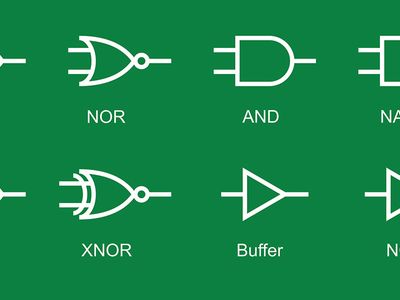
In this course we learn to build combinatorial and sequential digital circuits, which form the basis for building computers in later courses. We learn to both analyze and design with basic building blocks such as OR, NOR, AND, NAND and different flip-flops, and test our circuits in computer simulations and in practical connections.
Information per course offering
Choose semester and course offering to see current information and more about the course, such as course syllabus, study period, and application information.
Course syllabus as PDF
Please note: all information from the Course syllabus is available on this page in an accessible format.
Course syllabus IE1204 (Autumn 2022–)Headings with content from the Course syllabus IE1204 (Autumn 2022–) are denoted with an asterisk ( )
Content and learning outcomes
Course contents
Intended learning outcomes
After passing the course, the student shall be able to
- convert between the decimal, binary, octal and hexadecimal number systems
- calculate addition, subtraction, multiplication and division binary
- use boolean algebra to describe and optimise logical functions
- draw and interpret timetables with the symbols for logical gates and digital standard components
- state the functionality for simple CMOS-circuit timetables
- determine the function of simple combinatorial and sequential logic circuits through analysis
- design simple combinatorial and sequential logic circuits that implement a given function
- implement and troubleshoot combinatorial and sequential logic circuits with standard circuits
- use simulation tools to simulate combinatorial and sequential logic circuits.
Literature and preparations
Specific prerequisites
General entry requirements and Mathematics D, Physics B and Chemistry A
Literature
You can find information about course literature either in the course memo for the course offering or in the course room in Canvas.
Examination and completion
Grading scale
A, B, C, D, E, FX, F
Examination
- TENA - Written Exam, 4.0 credits, grading scale: A, B, C, D, E, FX, F
- LABA - Laboratory Work, 3.5 credits, grading scale: P, F
Based on recommendation from KTH’s coordinator for disabilities, the examiner will decide how to adapt an examination for students with documented disability.
The examiner may apply another examination format when re-examining individual students.
If the course is discontinued, students may request to be examined during the following two academic years.
Examiner
Ethical approach
- All members of a group are responsible for the group's work.
- In any assessment, every student shall honestly disclose any help received and sources used.
- In an oral assessment, every student shall be able to present and answer questions about the entire assignment and solution.
Further information
Course room in Canvas
Registered students find further information about the implementation of the course in the course room in Canvas. A link to the course room can be found under the tab Studies in the Personal menu at the start of the course.
Offered by
Main field of study
Technology
Education cycle
First cycle
Supplementary information
In this course, the EECS code of honor applies, see: http://www.kth.se/en/eecs/utbildning/hederskodex.