KD2320 Spectroscopic Tools for Chemistry 9.0 credits
Spektroskopiska verktyg inom kemi
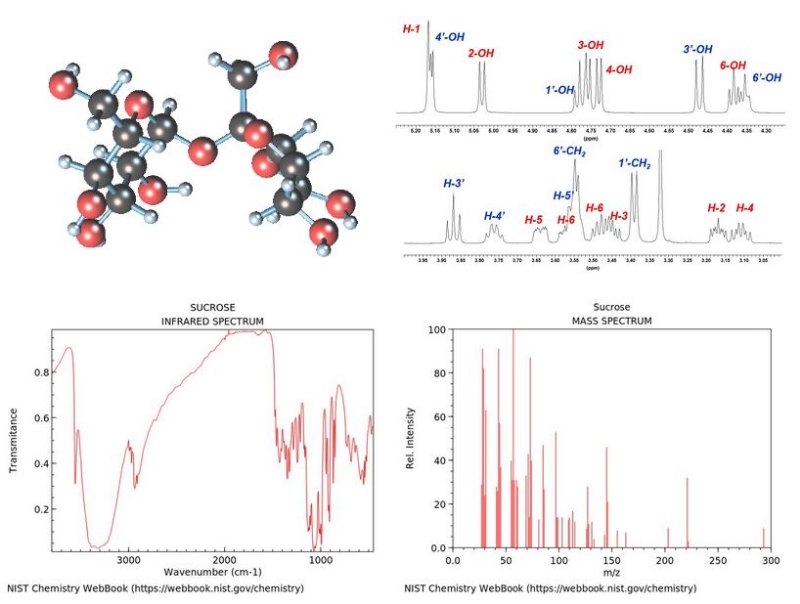
Basic principals of nuclear magnetic resonance spectroscopy (NMR), mass spectrometry (MS), infrared (IR) and Raman spectroscopies. Interpretation of spectra to elucidate molecular structures and dynamics.
The course contains lectures, tutorials and laboratory practices. Tutorials will supplement the lectures and a significant amount of time will be spent on solving problems and answering questions. Regular homework projects of gradually increasing complexity provide the students with working knowledge of the topics.
Educational level
Second cycleAcademic level (A-D)
CSubject area
Chemistry and Chemical Engineering
Grade scale
A, B, C, D, E, FX, F
Course offerings
Autumn 12 for programme students
Periods
Autumn 12 P2 (9.0 credits)
Application code
50610Start date
2012 week: 43End date
2013 week: 1Language of instruction
EnglishCampus
KTH CampusNumber of lectures
Number of exercises
Tutoring time
DaytimeForm of study
NormalNumber of places *
Min. 7*) The Course date may be cancelled if number of admitted are less than minimum of places.
Schedule
Schedule (new window)Course responsible
Zoltan Szabo <zoltan@kth.se>
Teacher
Eric Tyrode <tyrode@kth.se>
Magnus Johnson <magnusj@kth.se>
Zoltan Szabo <zoltan@kth.se>
Åsa Emmer <aae@kth.se>
Target group
TMVTM study year 1, CKEMV (MVT2), CBIOT (MVT2), TMMMM study year 1, CKEMV (MMM), CBIOT (MMM)
Part of programme
- Master (Two Years), Industrial and Environmental Biotechnology, year 1, Recommended
- Master (Two Years), Industrial and Environmental Biotechnology, year 2, Recommended
- Master (Two Years), Macromolecular Materials, year 1, Recommended
- Master (Two Years), Macromolecular Materials, year 2, Optional
- Master (Two Years), Medical Biotechnology, year 1, Recommended
- Master (Two Years), Medical Biotechnology, year 2, Optional
- Master (Two Years), Molecular Science and Engineering, year 1, Conditionally Elective
Autumn 13 for programme students CANCELLED
Periods
Autumn 13 P2 (9.0 credits)
Application code
50008Start date
2013 week: 45End date
2014 week: 3Language of instruction
EnglishCampus
KTH CampusNumber of lectures
Number of exercises
Tutoring time
DaytimeForm of study
NormalNumber of places *
Min. 7*) The Course date may be cancelled if number of admitted are less than minimum of places.
Schedule
Schedule (new window)Course responsible
Zoltan Szabo <zoltan@kth.se>
Teacher
Eric Tyrode <tyrode@kth.se>
Magnus Johnson <magnusj@kth.se>
Zoltan Szabo <zoltan@kth.se>
Åsa Emmer <aae@kth.se>
Target group
TMVTM study year 1, CKEMV (MVT2), CBIOT (MVT2), TMMMM study year 1, CKEMV (MMM), CBIOT (MMM)
Autumn 13 for programme students
Periods
Autumn 13 P2 (9.0 credits)
Application code
50329Start date
2013 week: 45End date
2014 week: 3Language of instruction
EnglishCampus
KTH CampusNumber of lectures
Number of exercises
Tutoring time
DaytimeForm of study
NormalNumber of places *
7 - 32*) The Course date may be cancelled if number of admitted are less than minimum of places. If there are more applicants than number of places selection will be made.
Course responsible
Zoltan Szabo <zoltan@kth.se>
Teacher
Eric Tyrode <tyrode@kth.se>
Magnus Johnson <magnusj@kth.se>
Zoltan Szabo <zoltan@kth.se>
Åsa Emmer <aae@kth.se>
Target group
TIMBM study year 1,TMBIM study year 1, TMVTM study year 1, TMMMM study year 1,
Part of programme
Learning outcomes
The aim of the course is to develop the knowledge and the understanding of nuclear magnetic resonance spectroscopy (NMR), mass spectrometry (MS), infrared (IR) and Raman spectroscopies in order to elucidate molecular structures and dynamics.
After completion of the course the student should be able to
- describe the principles of NMR, MS, IR and Raman methods with special regard to their advantages and limitations,
- analyze the NMR, MS, IR and Raman spectra, interpret and use the relationship between the spectral parameters and the molecular structure,
- make a proper choice and strategy for analysing and solving structural problems,
- recognize and explain the effects of molecular dynamics such as chemical exchange in the spectra.

Course main content
Basic principals of nuclear magnetic resonance spectroscopy (NMR), mass spectrometry (MS), infrared (IR) and Raman spectroscopies. Interpretation of spectra to elucidate molecular structures and dynamics.
The course contains lectures, tutorials and laboratory practices. Tutorials will supplement the lectures and a significant amount of time will be spent on solving problems and answering questions. Regular homework projects of gradually increasing complexity provide the students with working knowledge of the topics.
Eligibility
Admission requirements for programme students at KTH:
At least 150 credits from grades 1, 2 and 3 of which at least 110 credits from years 1 and 2, and bachelor's work must be completed, within a programme that includes:
75 university credits (hp) in chemistry or chemical engineering, 20 university credits (hp) in mathematics and 6 university credits (hp) in computer science or corresponding.
Prerequisites
Basic knowledge in organic chemistry
Literature
Organic Structural Spectroscopy, Prentice Hall, 2001,
J. B. Lambert, H.F. Shurvell, D.A. Lightner and R. G. Cooks.
ISBN: 0-13-258690-8
Examination
- LAB1 - Laboratory Work, 4.0 credits, grade scale: P, F
- TEN1 - Examination, 4.0 credits, grade scale: A, B, C, D, E, FX, F
- ÖVN1 - Home Assignments, 1.0 credits, grade scale: P, F
Requirements for final grade
Laboratory work (LAB1; 4 credits)
Examination (TEN1; 4 credits)
Exercises and Home Assignments (ÖVN1; 1 credits)
The final grade will be grade of the examination
Offered by
CHE/Chemistry
Examiner
Zoltan Szabo <zoltan@kth.se>
Supplementary information
The course has the same content as the courses KD2210 Applied Organic Molecular Spectroscopy and KD2060 NMR-spectroscopy.
Only one of the courses KD2320, KD2210 and KD2060 may be included in the exam.
Version
Course plan valid from:
Autumn 12.
Examination information valid from:
Autumn 10.