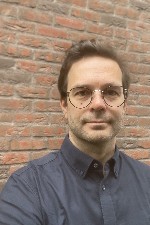
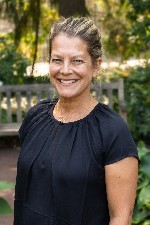
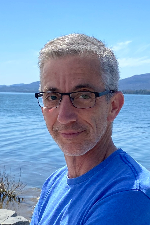
Every year we welcome several visiting scholars and other academic staff. Some come to teach in courses or in other ways collaborate with us, others come mainly to do their own research. One thing they all have in common is that they become a big part of the Division and the EHL
Juha Haavisto
Juha Haavisto is a postdoctoral researcher based in University of Turku, specializing in ideas in environmental history. His work at the KTH focuses Nordic forests thought connecting and comparing the cases of Sweden and Finland. The work is a part of a larger project Economic Utility and Environmentalism in the Nordic Forest Thought in the Twentieth Century running through 2024–2028. His work connects environmental history with contextualist intellectual history by which it is possible to look more closely at key concepts such as ’deforestation’, ’sustainability’ or ’biodiversity’. By analyzing such concepts and their contexts, it is possible to show how the commonly used justifications of extractive policies hide various intentions and motivations.
Haavisto holds a PhD (2022) from the European University Institute in Florence, Italy. His first monograph, Economics, Politics and Prosperity in Restoration England: An Intellectual History of Sir William Temple, was published by Routledge in July 2025.
Period: August 2025-June 2026
Bethany Wiggin
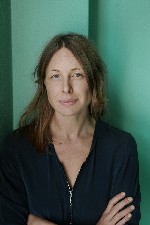
Bethany Wiggin is currently on research leave from the University of Pennsylvania where she is Professor in the Department of Francophone, Italian, and Germanic Studies. While on leave, she is a visiting researcher at KTH Royal Institute of Technology. In 2024-25 she was the Currie C. and Thomas A. Barron Visiting Professor in the Environment and Humanities at Princeton University. From 2014-24, she served as the Founding Director of the Penn Program in Environmental Humanities. Her scholarship bridges fields: environmental and energy humanities, public humanities, critical university studies, anthropocene history, utopianism and future studies, and early modern studies. She has written extensively about trade and migration as well as language and cultural translation since the Columbian exchange across the north Atlantic world; while on leave, she is completing the monograph, Utopia Found and Lost in Penn’s Woods, and doing field work with energy justice activists working to oppose the massive build out of liquid natural gas facilities.
Recent publications include two special issues (in press), one on environmental futures with the World Futures Review and the other on participatory research methods for energy justice with the journal Resistance: A Journal of Radical Environmental Humanities The latter publishes articles made by the
Intersecting Energy Cultures working group
that Wiggin co-led from 2022-2024. Bethany also published an article on activists’ opposition to the expansion of natural gas infrastructure in Europe and the U.S. and the transatlantic networks and stories they’re creating in the volume The Energy Trilemma in the Baltic Sea Region, and she co-authored two articles on the public environmental humanities, one published in the journal Resistance and the other, co-authored with former students and in press in the journal Environmental Humanities. She is currently advising a NSF grant to the National Humanities Alliance designed to document and report on environmental arts-science research projects and is expanding a lecture given at Princeton,
“Toward a Civic Science,”
into an article that may become a book.
She holds research to be a human right and regularly leads public research projects designed to connect academic and community expertise for environmental and climate repair. These projects have been supported by (selected) the National Geographic, Whiting, and Andrew W. Mellon Foundations and include: Intersecting Energy Cultures, An Ecotopian Toolkit for the Anthropocene, Data Refuge, Futures Beyond Refining,and My Climate Story. She has offered testimony about project findings to audiences ranging from school children, to the City Council of Philadelphia, the U.S. Congress, and UNESCO.
Period: August 2025-January 2026
Davide De Lillis
Davide is a multidisciplinary artist, curator, and Feldenkrais practitioner, currently a PhD candidate at Roma Tre University and the Accademia Nazionale di Danza (Italy) in the programme Cultures, Practices and Technologies of Cinema, Media, Music, Theatre and Dance. He holds an MA in Choreographing Live Art from the University of Lincoln (UK) and a postgraduate degree in Environmental Humanities from Roma Tre University.
At the Environmental Humanities Laboratory at KTH, he will further develop his doctoral project, which investigates how representations of nature in screendance can contribute to ecological discourse. During his stay, he will work on the theoretical framework of the project and on the development of an experimental screendance work as part of his practice-based research. He will also facilitate a workshop aimed at fostering interdisciplinary dialogue between artistic research and environmental humanities.
Period; January-June
Jacob Tropp
Jacob Tropp is Professor of History and John Spencer Professor of African Studies at Middlebury College in Vermont (USA). He earned his Ph.D. in African history, with a secondary field in Native American history, at the University of Minnesota, where he was a funded scholar in the MacArthur Interdisciplinary Program on Global Change, Sustainability, and Justice. His dissertation research on social and environmental history in the Eastern Cape of South Africa was the basis for his 2006 monograph Natures of Colonial Change: Environmental Relations in the Making of the Transkei (Ohio University Press) as well as several articles published in African history journals. Over the past several years, his research has concentrated on the transnational dimensions of particular Native American histories in the mid- to late 20th century – focusing on health, the environment, and development. This work has appeared in theJournal of Global History, Comparative Studies in Society and History, the Journal of World History, and a forthcoming special issue (Spring 2026) on "Radioactive Empires" in Regeneration: Environment, Art, Culture. This research has been supported by the American Philosophical Society, the American Council of Learned Societies, and visiting fellowships at the Centre for Humanities Research, University of the Western Cape (Bellville, South Africa) and the Rachel Carson Center (Munich, Germany).
Period: March-April
Philine Schiller
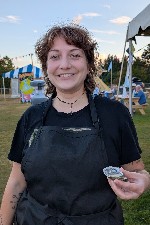
Philine Schiller is a doctoral researcher in the culinary environmental humanities with a background in literary and American studies. She is part of the research group “Off the Menu” at the University of Augsburg, Germany, which interrogates the relationship between eating and ecology – how human appetites transform environments. Her research project examines the rise and fall of North American oyster industries, the gastronomic history of the oyster, the threat of culinary extinction, the narrative potential of recipes and cookbooks, and the ethics of (eating) endangered foods. She holds a teaching degree in English and Spanish Philology from the University of Heidelberg, Germany, and can be reached at philine.schiller@uni-a.de
During her stay at the EHL, she will present her research in an interactive format, work on her dissertation, and familiarize herself with Swedish oysters and their culinary history.
Period: September
Caroline Ektander
Caroline Ektander
is an architect (M.Arch., KTH Stockholm) and Environmental Humanities scholar who has submitted her practice-based doctoral thesis in Art and Design at the Bauhaus University Weimar. The thesis takes the environmental aftermath of German reunification as its empirical point of departure, examining how state-orchestrated industrial clean-up after the fall of the Iron Curtain addressed historical accumulations of pollution while also shaping how that pollution continues to be understood.
Caroline is co-founder of
Toxic Commons
, a transdisciplinary research programme engaging the elusive, complex and often ambiguous dynamics of toxicity and the structures that sustain it. Through long-term, situated inquiries, the programme investigates environmental phenomena that are difficult to perceive, resist any single explanatory frame, and unfold unevenly across bodies and landscapes. These inquiries also explore how the relations sustaining such harm might be recomposed through practice.
During her stay at the KTH Environmental Humanities Laboratory, Caroline will begin fieldwork in Bergslagen, Sweden’s historical centre of early modern mining, exploring how inherited ways of knowing and relating to the underground sustain an extractive common sense amid renewed geopolitical pressures to mine.