
Ibrahim Hasan – Advancing Shoulder Stability Through His Newly Published Scientific Article
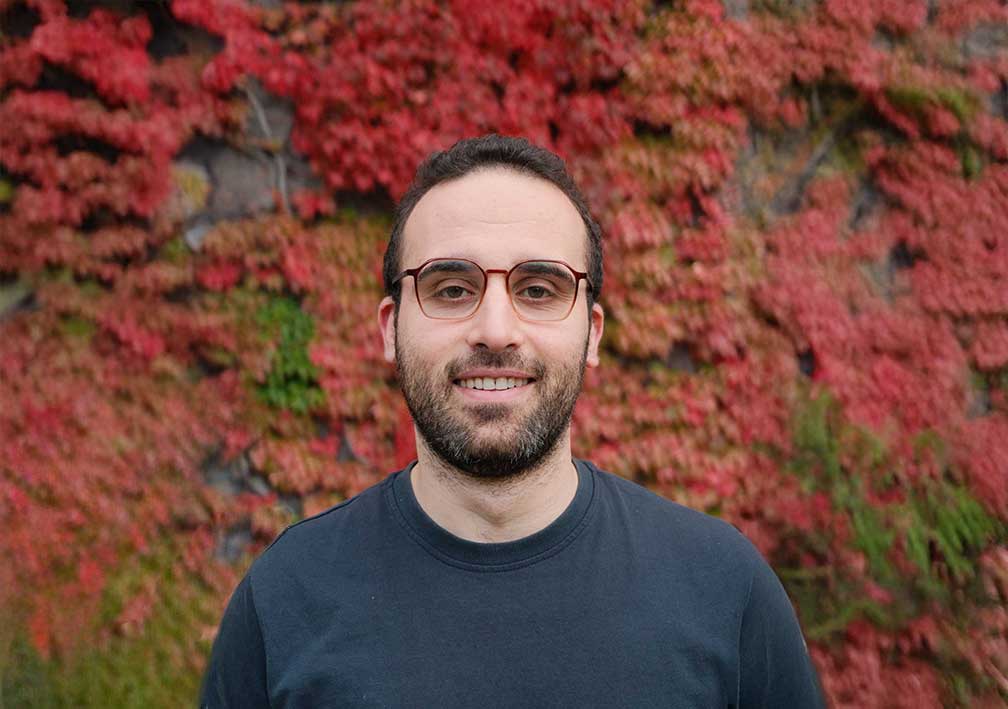
Born in Yemen, raised in Egypt, and educated in the United States, now a final-year doctoral student at KTH Promobilia MoveAbility Lab in Stockholm. Ibrahim Hasan recently published a scientific article that advances understanding of shoulder stability in musculoskeletal simulations. "Shoulders are complex structures, commonly injured among wheelchair users. We need more knowledge to help people stay active without injuries and pain, “he adds. Hasan has chosen to devote his research to a global challenge: shoulder injuries caused by long-term wheelchair use.
Research and Recent Publication on Shoulder Stability
The newly published article (Modeling glenohumeral stability in musculoskeletal simulations : A validation study with in vivo contact forces) addresses the advances in understanding shoulder stability in musculoskeletal simulations. The study reveals that traditional models often reproduce unreasonable directions of the glenohumeral contact forces, which raises concerns about their validity.
“This method provides a realistic representation of shoulder stability and enables reasonable estimates of shoulder loading in musculoskeletal simulations. It is an important step toward reducing overuse injuries in wheelchair users,” Hasan explains.
In many musculoskeletal models, the glenohumeral joint is treated as a joint that only rotates and does not shift or glide. However, real shoulder motion includes both rotation and small amounts of linear displacement, which require stabilizing muscle forces to keep the joint from slipping. Models that estimate muscle forces using a minimal effort strategy, without accounting for this need for stability, may underestimate how much the rotator cuff muscles co-activate. As a result, they may incorrectly predict that the joint contact force is directed outside the surface of the glenoid cavity.
To address this, Hasan and his team introduced a new method that penalizes joint contact forces when their direction deviates from the center of the glenoid cavity. This approach produced more accurate force predictions and realistic levels of muscle co-activation. “With this method, we can now realistically estimate shoulder loading profiles and understand mechanisms of shoulder overuse,” he adds.
From Fulbright Scholar to Biomechanics Expert
Ibrahim Hasan earned his BSc in Mechanical Engineering at Suez Canal University in 2016. Three years later, he was awarded the prestigious Fulbright scholarship to continue his studies in the United States. At Arizona State University, he completed his MSc in Robotics and Autonomous Systems in 2021, where he developed a soft robotic exosuit to assist knee flexion in people with lower limb motor disabilities. "I have always wanted to combine technology and medicine to improve people's lives. When I saw the opportunity to research shoulder biomechanics for wheelchair users at KTH, I knew it was the right path for me," Hasan explains.
Future Plans
Hasan plans to complete his PhD in 2026 and hopes to bring this knowledge into practice: " I am now extending this framework to investigate shoulder overuse in wheelchair users, where everyday tasks such as transfers place substantial demands on the shoulder. By enabling realistic estimates of internal shoulder forces, quantities that cannot be measured experimentally. This framework can help uncover potential mechanisms underlying shoulder overuse. I hope these efforts ultimately lead to technologies that help wheelchair users preserve shoulder health and maintain mobility. That could mean launching a start-up or collaborating with companies that develop solutions for wheelchair users."
MoveAbility is proud to have Ibrahim Hasan on our team. A researcher whose groundbreaking biomechanical research contributes to new solutions for improving shoulder health in wheelchair users.
Biomechanical Simulation of Wheelchair Transfer Using the SITS Framework
Publications by Ibrahim Hasan: www.kth.se/profile/imihasan/publications