Three new doctoral students to the Division of History

Nat, Will, Jakob
Published Dec 11, 2025

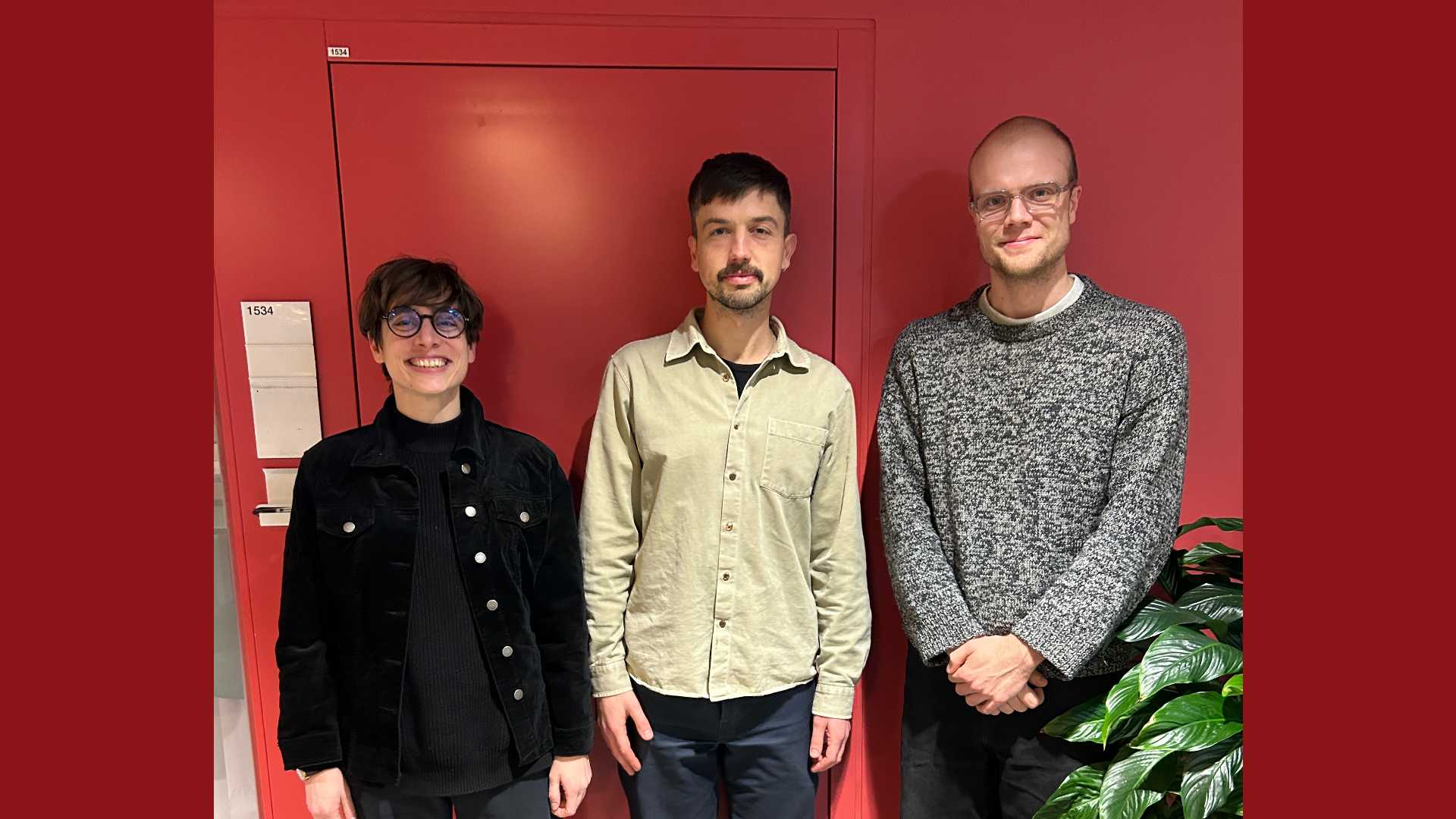
We are pleased to have a new cohort of doctoral students starting this past year at the Division of History of Science, Technology and Environment! We welcome Jakob Henningsson, Will Hilliard and Nat Arslan. We look forward to seeing how their projects develop and asked them all some questions about how it feels to become a doctoral student at the Division

Jakob Henningsson

Jakob Henningsson

Hej Jakob, tell us a little bit about you and your background!

My background is in the history of philosophy. In Gothenburg, I was trained in what has been called the Copenhagen school of medieval philosophy. I defended my master's thesis on early 14th century logic in 2023. During my studies in Gothenburg, I took up an interest in journal and magazine editing. I was the editor-in-chief for IDÉ, a magazine for the history of ideas for a year, and now I am part of a three-person group which runs Meridian, a small cultural magazine. 

What will you work on when you are here?

As much as I enjoyed reading medieval logic, I think I was anxious to do work with practical or, I suppose, political connections to present-day concerns. So, after a few months of archival visits and pondering my topic, I and my supervisors (Nina Wormbs and Adam Wickberg) decided I should attempt to write a history of the field of industrial economics and management. It is one of the most popular programs for engineering students at KTH and other technical universities in Sweden, but not much is known about its history. I presented my PM in June of 2025. 

What excites you about doing a PhD in the Division?

I have often been told that the humanities are a tool sharpest when aimed at power. I am excited to see whether this is true for myself. My dissertation is about power, of course, but I am also in the fortunate position to be part of the division's Future Humanities Initiative. In the context of the Initiative, I get to meet very interesting people and hear their thoughts on what the humanities are, what this kind of knowledge can do and to what ends. Being part of the division for a year, I've started to realize that history has not only critical but also positive, transformative ends. It is exciting to work here. 

Jakob Henningsson's profile

Nat

Nat Arslan

Hej Nat, tell us a little bit about you and your background!

I come from a varied academic background including business administration, data journalism and geospatial data analysis. My intellectual curiosity took me from social sciences to nature sciences and now to the humanities. Personally, I feel engaged in questions related to environmental and human rights activism.

I enjoy life by slowing down and interacting with my surroundings. This interaction happens by a never-ending shift between the micro and macro perspectives by zooming in and out, mentally or instrumentally. This is why I have a microscope and love getting lost on magnified details of life and why I love sleeping under the night sky, where I get lost in meaning of life.

What excites you about doing a PhD in the Division?

The fact that I am not only allowed but also encouraged to explore and shift between the micro and macro perspectives. The Division of History of Science, Technology and Environment at KTH offers something rare, it is filled with people, emotions, events, courses, books and moments that helps me build the intellectual infrastructure I need in order to analyse satellite systems not as neutral tools but as artefacts carrying political and historical choices that determines how we observe earth.

What will you work on when you are here?

My PhD position isn't tied to an existing research project and I am currently in the process of narrowing down my topic. I started exploring the material history of earth observation satellites, epistemology of observation, data standardisation politics and epistemic authority of pixels.

Nat Arslan's profile

Will

Will Hilliard

Hej Will, tell us a little bit about you and your background!

I have an academic background in Geography and Urban Planning, though have taken a meandering route through the worlds of coffee, cycling, and music to get here. I took my MSc in Sustainable Urban Planning and Design here at KTH, later working together with researcher Martin Emanuel (an alumni of this Division) on several projects exploring 20th century mobility and public space in Stockholm. When this PhD position arose, with its focus on urban environmental history, environmental justice, and sustainable cities, it represented an obvious next step. Meeting my future supervisor, Rob Gioielli, only served to seal the deal.  

What will you work on when you are here?

Though it is still very early days, I am keen to explore the urban environmental history of Stockholm’s built environment, particularly through an environmental justice lens. I am interested in active mobility (that is, cycling and walking) and the ways in which the car enables and excludes access across social, economic, and racial divides. I’ve no doubt this will change as the project develops, but this is where I’m starting! 

What excites you about doing a PhD in the Division?

I’ve already met so many inspiring people here and I am excited to use my position as PhD student, as well as my role at the KTH Environmental Humanities Laboratory, to meet a whole load more. For me, life is about those we surround ourselves with, and I'm excited to find people with which to bounce ideas, to learn from, and ultimately to grow alongside. I’ve been made to feel welcome here in the Division and sense it will be a fantastic place in which to spend the upcoming years. 

Will Hilliard's profile