
- Prokaryotic and eukaryotic cell structure, including microbial and plant cells, and cellular compartment functions, including sub-cellular localization of specific metabolic pathways.
- Specific prokaryotic and eukaryotic pathways for the production of complex biomolecules, including cellulose, alginate, chitins, glycoproteins and fatty acids, etc.
- Describe prokaryotic and eukaryotic cell factories, including special features of eukaryotic hosts, such as codon usage, post-translational modifications, protein folding, protein processing, and disulfide bond formation.
- Metabolic engineering of bacteria, fungi, algae, and plant systems, including transformation systems (e.g. plastid targeting, Agrobacterium), with an emphasis on carbohydrate polymers, plasticizers, lipid-derivatives, and biofuel/biomaterial production.
- Exploitation of algal and microbial systems and their metabolic pathways for the integrated production of multiple value-added bio-based products within a biorefinery framework. .
• Emerging technologies in synthetic biology and systems biology, and their impact on the design of efficient bioproduction pathways. - Cost-benefit analysis (including environmental and socio-economic impact) for the sustainable production of bio-based molecules, biomaterials, and fuels within biorefineries.
- Development of microbial/algal fermentation and bioprocesses (e.g., fed-batch, continuous cultivation, integrated biorefineries) aimed at commercial production of bio-based chemicals, fuels, and biomaterials, including scale-up aspects, sustainability, and regulatory considerations.
- Demonstration of a microbial or algal fed-batch bioreactor process for the production of a selected biorefinery product (e.g., bioethanol, bioplastics precursor, biosurfactants).
BB2450 The Cell Factory 7.5 credits
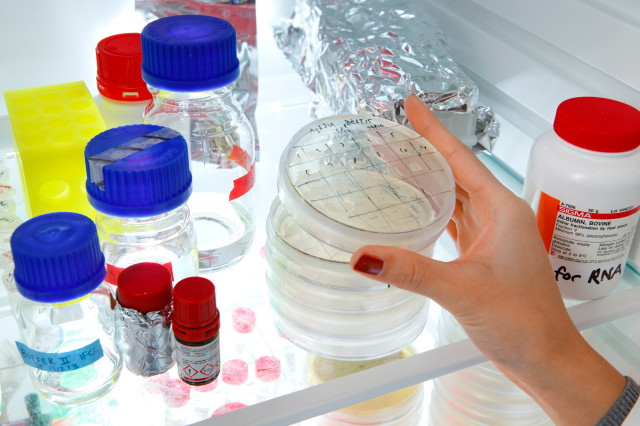
This course focuses on the utilization of microorganisms and eukaryotic cell systems and their biochemical pathways for synthesis and modification of products on an industrial scale. The course is at the intersection of biochemistry, microbiology, eukaryotic cell biology and upscale/industrial bioprocesses.
Information per course offering
Information for Spring 2027 Start 15 Mar 2027 programme students
- Course location
AlbaNova
- Duration
- 15 Mar 2027 - 31 May 2027
- Periods
Spring 2027: P4 (7.5 hp)
- Pace of study
50%
- Application code
10040
- Form of study
Normal Daytime
- Language of instruction
English
- Course memo
- Course memo is not published
- Number of places
Places are not limited
- Target group
- No information inserted
- Planned modular schedule
- [object Object]
- Schedule
- Part of programme
Master's Programme, Medical Biotechnology, year 1, MABT
Master's Programme, Industrial and Environmental Biotechnology, year 1, ENZT
Master's Programme, Medical Biotechnology, year 1, OMIC
Master's Programme, Medical Biotechnology, year 1, CMBT
Master's Programme, Industrial and Environmental Biotechnology, year 1, CBPB, Mandatory
Master's Programme, Industrial and Environmental Biotechnology, year 1, ENBT
Contact
Course syllabus as PDF
Please note: all information from the Course syllabus is available on this page in an accessible format.
Course syllabus BB2450 (Autumn 2026–)Headings with content from the Course syllabus BB2450 (Autumn 2026–) are denoted with an asterisk ( )
Content and learning outcomes
Course contents
Intended learning outcomes
On completion of the course (ILOs), the students should be able to:
- Describe and differentiate microorganisms and eukaryotic cellular systems and their biochemical pathways.
- Discuss with reference to scientific literature the challenges and potential opportunities in using genetically engineered cell factories for the production of biopharmaceuticals/biomolecules/chemicals/fuels at an industrial scale.
- Design a cell factory approach for the production of a given product, with reference to supporting scientific literature.
- Design a cultivation process using microbial, algal, or yeast-based cell factories for the manufacture of bio-based products (e.g., enzymes, biofuels, or platform chemicals) within a biorefinery context, aiming for a robust and reproducible process using appropriate host organisms and expression systems, integrating scale-up constraints, Good Manufacturing Practice (GMP), and sustainability considerations.
- Design, evaluate, execute and present in written form an independent laboratory project report.
Literature and preparations
Specific prerequisites
Completed degree project 15 credits, 7.5 credits in biochemistry. English B/ 6.
Recommended prerequisites
- BB1100 Biochemistry laboratory or equivalent
- BB2020 Molecular enzymology or equivalent
Literature
You can find information about course literature either in the course memo for the course offering or in the course room in Canvas.
Examination and completion
Grading scale
A, B, C, D, E, FX, F
Examination
- TEN1 - Written Exam, 4.5 credits, grading scale: A, B, C, D, E, FX, F
- NÄR1 - Mandatory Participation at Lectures, 1.0 credits, grading scale: P, F
- KON1 - Intermediate Exam 1, 1.0 credits, grading scale: P, F
- LAB1 - Laboratory work, 1.0 credits, grading scale: P, F
Based on recommendation from KTH’s coordinator for disabilities, the examiner will decide how to adapt an examination for students with documented disability. The examiner may apply another examination format when re-examining individual students. If the course is discontinued, students may request to be examined during the following two academic years.
Based on recommendation from KTH’s coordinator for disabilities, the examiner will decide how to adapt an examination for students with documented disability.
The examiner may apply another examination format when re-examining individual students.
If the course is discontinued, students may request to be examined during the following two academic years.
Two intermediate exams (KON1) cover the course content from Module 1-2. Each exam consists of 8-10 questions based on theoretical knowledge and concepts within the course. To pass students need to possess basic knowledge and concepts within the course.
Lab Assignment. To pass, students must be able to hand in the assignment on time and to demonstrate reasonable theoretical and practical knowledge in written form. Peer review is required.
Final exam of BB2450 (TEN1) consists of two parts. TEN1 Part I consists of 5-7 basic questions, and TEN1 Part II consists of 8-12 more advanced questions. The questions from Part I cover the basic knowledge and concepts within the course. Part II questions are based more on the details of knowledge and applications, and students need to be able to demonstrate the understanding and interconnection the complex metabolic pathways, the methods to manipulate them for the bio-production, and the scaling up bioprocessing steps. The latter half of Part II includes particularly advanced questions. Advance knowledge within the content of the course is required for higher grades.
Examiner
Ethical approach
- All members of a group are responsible for the group's work.
- In any assessment, every student shall honestly disclose any help received and sources used.
- In an oral assessment, every student shall be able to present and answer questions about the entire assignment and solution.
Further information
Course room in Canvas
Registered students find further information about the implementation of the course in the course room in Canvas. A link to the course room can be found under the tab Studies in the Personal menu at the start of the course.
Offered by
Main field of study
Biotechnology
Education cycle
Second cycle
Supplementary information
Studenter er forpligtet til at tilmelde sig mindst to uger i forvejen for eksamen.
The course is given provided at least seven students are admitted.