Till KTH:s startsida

BB2446 Immunology 7.5 credits

Understanding the immune system is the central objective of the course, and an important competence for a researcher, developer, or leader in the biomedical industry. Participants should learn to master the basics of immunology, understand immune disorders, and learn about potential applications (hybridoma technologies, new vaccines, immuno-modulating treatments etc).

Information per course offering

Termin

Information for Spring 2027 Start 15 Mar 2027 programme students

Course location

AlbaNova

Duration
15 Mar 2027 - 31 May 2027
Periods

Spring 2027: P4 (7.5 hp)

Pace of study

50%

Application code

10039

Form of study

Normal Daytime

Language of instruction

English

Course memo
Course memo is not published
Number of places

Places are not limited

Target group
No information inserted
Planned modular schedule
[object Object]

Contact

Examiner
No information inserted
Course coordinator
No information inserted
Teachers
No information inserted

Course syllabus as PDF

Please note: all information from the Course syllabus is available on this page in an accessible format.

Course syllabus BB2446 (Spring 2027–)
Headings with content from the Course syllabus BB2446 (Spring 2027–) are denoted with an asterisk ( )

Content and learning outcomes

Course contents

The course provides theoretical knowledge of the structure and function of the immune system, including innate and adaptive immunity, the development and activation of B and T cells, clonal selection, generation of receptor diversity, antigen recognition, T-cell-mediated immunity, humoral immunity, cytokine signaling and the complement system, as well as central immune molecules such as antibodies, T-cell receptors and MHC molecules.

The course also covers immune responses to infection, principles of vaccination, transplantation, and examples of immune dysfunction, including autoimmunity, allergy, hypersensitivity reactions and immunodeficiency. In addition, the course introduces how the immune system can be studied and manipulated in research and medicine.

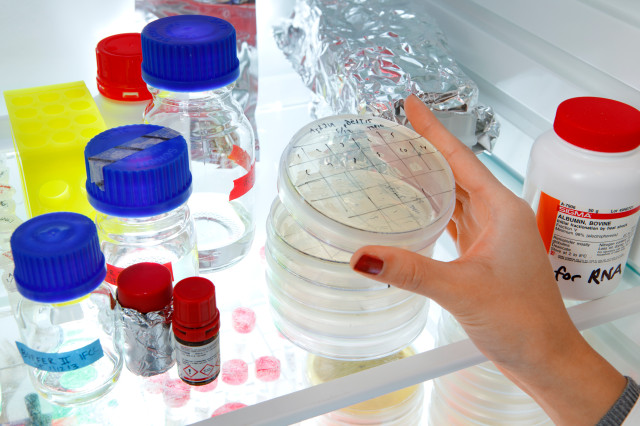
The course includes a practical laboratory component that introduces examples of how immunological knowledge can be generated, interpreted and applied in biomedical research.

Intended learning outcomes

The course provides a fundamental understanding of the structure, function and role of the immune system in health and disease, with relevance to biotechnological and biomedical applications.

At the end of the course, the student shall be able to:

  • Describe the cells and organs of the immune system and explain the structure and function of key immune molecules, including immunoglobulins, major histocompatibility complex molecules, T-cell receptors, cytokines and complement components.
  • Demonstrate detailed understanding of innate and acquired immunity, including immunogenicity of different antigens, antigen recognition, antigen processing and antigen presentation.
    • Explain central processes in immunology, including T-cell activation, maturation and differentiation, generation of the humoral immune response, cell-mediated immunity, and the action and regulation of the complement system.
  • Describe and discuss the immunological basis of major disease conditions, including autoimmunity, allergy, hypersensitivity reactions, infectious diseases and immunodeficiencies.
  • Describe the basis for vaccination.
  • Demonstrate the ability to combine knowledge of different immunological principles to reason about how an immune response arises, for example how a vaccine can be designed or how monoclonal antibodies with desired specificity can be produced.
  • Discuss how immunological knowledge can be applied in research and medicine.

Literature and preparations

Specific prerequisites

Completed degree project 15 credits, 20 credits in biochemistry, microbiology and genetics/molecular biology. 20 higher education credits (hp) chemistry. English B/ 6.

Literature

You can find information about course literature either in the course memo for the course offering or in the course room in Canvas.

Examination and completion

Grading scale

A, B, C, D, E, FX, F

Examination

  • TEN2 - Written exam, 6.5 credits, grading scale: A, B, C, D, E, FX, F
  • LAB1 - Laboratory work, 1.0 credits, grading scale: P, F

Based on recommendation from KTH’s coordinator for disabilities, the examiner will decide how to adapt an examination for students with documented disability.

The examiner may apply another examination format when re-examining individual students.

If the course is discontinued, students may request to be examined during the following two academic years.

The examination is based on the intended learning outcomes and covers content addressed in lectures, and the course literature. The intended learning outcomes and the level of knowledge required to achieve them are further clarified and contextualized during the lectures.

Other requirements for final grade

Attendance and active participation in the laboratory work are compulsory for a passing grade.

Examiner

Ethical approach

  • All members of a group are responsible for the group's work.
  • In any assessment, every student shall honestly disclose any help received and sources used.
  • In an oral assessment, every student shall be able to present and answer questions about the entire assignment and solution.

Further information

Course room in Canvas

Registered students find further information about the implementation of the course in the course room in Canvas. A link to the course room can be found under the tab Studies in the Personal menu at the start of the course.

Offered by

Main field of study

Biotechnology

Education cycle

Second cycle