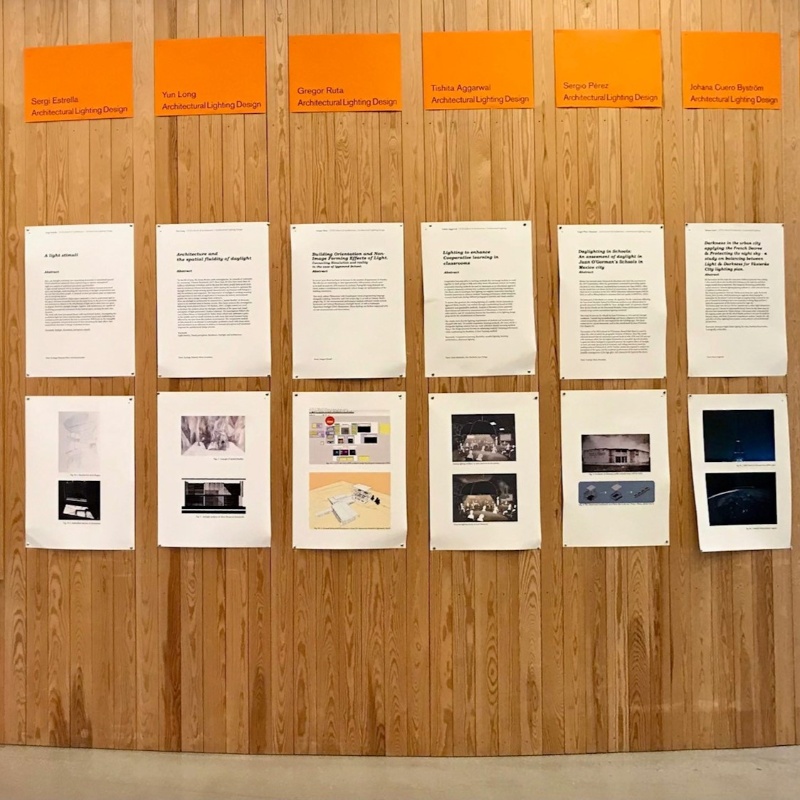
Kursen utformas som ett begränsat forskningsprojekt.
Examensarbetet omfattar projektbeskrivning, halvårspresentation, utkastinlämning, slutinlämning och slutlig presentation. Kursstrukturen kan innefatta bl.a. litteraturstudier, problemformulering, insamling och sammanställning av data och analys.
Examensarbetet ska redovisas vid ett slutseminarium. Examensarbetet ska skrivas och presenteras på engelska. Examensarbetsrapporten ska plagiatgranskas.
Examensarbetet skall utgöra en del av en fördjupning inom valt ämnesområde på avancerad nivå för att uppfylla kraven för en magisterexamen. Det innebär att examensarbetet skall genomföras inom området ljusdesign. Undantag kan beviljas.
Efter avslutat examensarbete ska studenten kunna
- Visa kunskap om det inom ljusdesign valda ämnesområdets vetenskapliga grund och beprövade erfarenhet, fördjupad insikt i aktuellt forsknings- och utvecklingsarbete, samt fördjupad metodkunskap.
- Visa förmåga att med helhetssyn, kritiskt och systematiskt, söka, samla och integrera kunskap samt identifiera sitt behov av ytterligare kunskap
- Visa förmåga att identifiera, analysera, bedöma och hantera komplexa företeelser, frågeställningar och situationer även med begränsad information
- Visa förmåga att planera och med adekvata metoder genomföra kvalificerade uppgifter inom givna tidsramar samt att utvärdera detta arbete
- Visa förmåga att utveckla och utvärdera produkter, processer, system, metoder eller tekniska lösningar med hänsyn till människors förutsättningar och behov och samhällets mål för ekonomiskt, socialt och ekologiskt hållbar utveckling
- Visa förmåga att muntligt och skriftligt i dialog med olika grupper klart redogöra för och diskutera sina slutsatser och den kunskap och de argument som ligger till grund för dessa
- Visa förmåga att göra bedömningar med hänsyn till relevanta vetenskapliga, samhälleliga och etiska aspekter
- Visa sådan färdighet som fordras för att delta i forsknings- och utvecklingsarbete eller för att självständigt arbeta i annan kvalificerad verksamhet.
- Visa förmågan att följa och gå igenom moment av en specifik arbetsprocess inom en given tidsram.