
Till KTH:s startsida

BB1030 Microbiology 9.0 credits

The course handles micro-organism morphology and structure along with their occurrence in nature.  Taxonomical and physiological aspects of viruses, bacteria, protozoon, algae and fungi are covered.  Special consideration is given to the bacteria cell, its nourishment demands and growth.  Control of growth is clarified through sterilization, disinfection and antibiotics.  The basics of bacterial genetics are covered along with bacterial genetic development toward modern phylogenetics with the help of gene sequencing of 16s rRNA.  Mechanisms for sickness, for example: toxins and bacteria which are resistant against the body’s defenses, are also covered.  Some meaningful microbial sicknesses are given as examples.  Significant microbial processes for application within traditional and modern biotechnology are also covered.  A couple of examples of such processes are biological water purification and ground-decontamination.    

Information per course offering

Choose semester and course offering to see current information and more about the course, such as course syllabus, study period, and application information.

Termin

Information for Spring 2027 Start 12 Jan 2027 programme students

Course location

AlbaNova

Duration
12 Jan 2027 - 12 Mar 2027
Periods

Spring 2027: P3 (9 hp)

Pace of study

67%

Application code

10019

Form of study

Normal Daytime

Language of instruction

Swedish

Course memo
Course memo is not published
Number of places

Min: 7

Target group
No information inserted
Planned modular schedule
[object Object]
Schedule
Schedule is not published

Contact

Examiner
No information inserted
Course coordinator
No information inserted
Teachers
No information inserted

Course syllabus as PDF

Please note: all information from the Course syllabus is available on this page in an accessible format.

Course syllabus BB1030 (Autumn 2026–)
Headings with content from the Course syllabus BB1030 (Autumn 2026–) are denoted with an asterisk ( )

Content and learning outcomes

Course disposition

Lectures

The course consists of 16 lectures with specified learning outcomes.

Labs

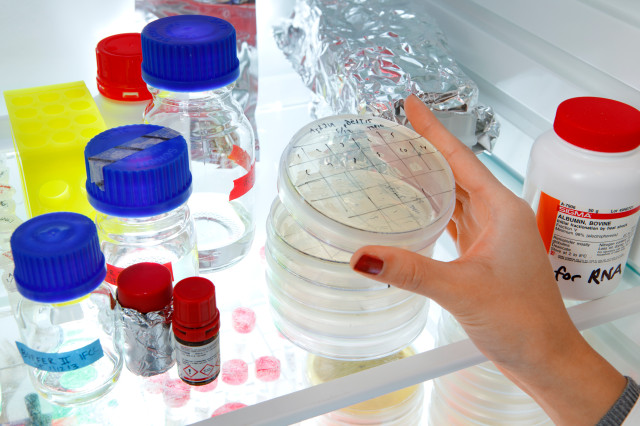
The course begins with light and phase contrast microscopy, general sterilization techniques and measurements of bacterial concentration. Next comes a connected, coherent lab which consists of planning and execution: isolation, clean cultivation, and characterization of bacteria from a natural environment with the help of microscopy, cultivation on selective and differentiated mediums, proof by enzymes and other microbial products along with antibiotic spectrum. Also, in this lab, nourishment mediums and substrates are to be prepared to cultivate aerobically and anaerobically as well as searching for information about isolated bacteria being cultivated. The results are presented in a seminar orally,

in a written report, and as a poster. A modern technique to color bacteria’s ribosome with the help of fluorescent-labeled probes is taught. This technique, FISH, is used to see specific bacteria in their natural environment. With this, 16s rRNA is isolated and sequenced for further work with the bioinformatics course.

Practice assignments

During the exercises, the students work with questions where the serach information online, in scientific literature and in the course literature. 

Group exercise

Students will work in groups to write an in-depth work around a topic where microorganisms play a fundamental role in creating a sustainable society.

Course contents

The microbiology course deals with microorganisms, i.e. bacteria, viruses, protozoa, algae, and fungi that occur naturally in the body and in the environment, as well as those that we use as tools for various processes (in medicine, food production, technology, etc.). You will, for example, learn why fruits and berries keep better in sugar solution, what resistant bacteria actually are, and how biological water purification works. In the course, you will study the taxonomy, morphology, and physiology of microorganisms. A major focus is placed on the bacterial cell, its genetics, nutritional requirements, and growth, as well as how sterile techniques, disinfection, and antibiotics work to control growth. In the section on infectious diseases, you will learn about disease mechanisms such as toxins and how bacteria avoid the body’s immune response.

Intended learning outcomes

  • Describe our common microorganisms with respect to:
  • structure and growth
  • occurrence in nature
  • identification techniques
  • basic taxonomy
  • interactions and harmful effects on other living organisms
  • Select and apply methods for controlling microbial growth
  • Describe examples of how microbial activity affects the environment, humans, and society
  • Give an in-depth description of societal factors that have led to widespread development of antimicrobial resistance and strategies to counteract this
  • Give an in-depth explanation of how microorganisms are used as tools and producers in science and industry

Literature and preparations

Specific prerequisites

No information inserted

Recommended prerequisites

CB1040 Introduction to Biotechnology, BB1050 Biotechnology or BB1150 Biochemistry 1

Literature

You can find information about course literature either in the course memo for the course offering or in the course room in Canvas.

Examination and completion

Grading scale

A, B, C, D, E, FX, F

Examination

  • TENB - Written exam, 5.5 credits, grading scale: A, B, C, D, E, FX, F
  • PROA - Advanced study, 0.5 credits, grading scale: P, F
  • LABA - Laboratory Work, 3.0 credits, grading scale: P, F

Based on recommendation from KTH’s coordinator for disabilities, the examiner will decide how to adapt an examination for students with documented disability.

The examiner may apply another examination format when re-examining individual students.

If the course is discontinued, students may request to be examined during the following two academic years.

Other requirements for final grade

Passed examination (TENA; 5,5 credits, grading scale A-F), passed laboratory exercises (LABA; 3 credits, grading scale Pass/Fail) and passed group exercise (PROA; 0.5 credits, grading scale Pass/Fail)

Examiner

Ethical approach

  • All members of a group are responsible for the group's work.
  • In any assessment, every student shall honestly disclose any help received and sources used.
  • In an oral assessment, every student shall be able to present and answer questions about the entire assignment and solution.

Further information

Course room in Canvas

Registered students find further information about the implementation of the course in the course room in Canvas. A link to the course room can be found under the tab Studies in the Personal menu at the start of the course.

Offered by

Main field of study

Biotechnology, Technology

Education cycle

First cycle

Supplementary information

Students are required to sign up at least two weeks in advance for examination.

The course is given provided at least seven students are admitted.