Till KTH:s startsida

HS2010 Light and Science 9.0 credits

Information per course offering

Termin

Information for Autumn 2026 Start 26 Oct 2026 programme students

Course location

KTH Campus

Duration
26 Oct 2026 - 11 Jan 2027
Periods

Autumn 2026: P2 (9 hp)

Pace of study

50%

Application code

50197

Form of study

Normal Daytime

Language of instruction

English

Course memo
Course memo is not published
Number of places

Min: 5

Target group
Mandatory for TLODM
Planned modular schedule
[object Object]

Contact

Examiner
No information inserted
Course coordinator
No information inserted
Teachers
No information inserted

Course syllabus as PDF

Please note: all information from the Course syllabus is available on this page in an accessible format.

Course syllabus HS2010 (Autumn 2026–)
Headings with content from the Course syllabus HS2010 (Autumn 2026–) are denoted with an asterisk ( )

Content and learning outcomes

Course disposition

Content’s structure:

Visual and Physical approach
(Light, Colour, Space, Time )

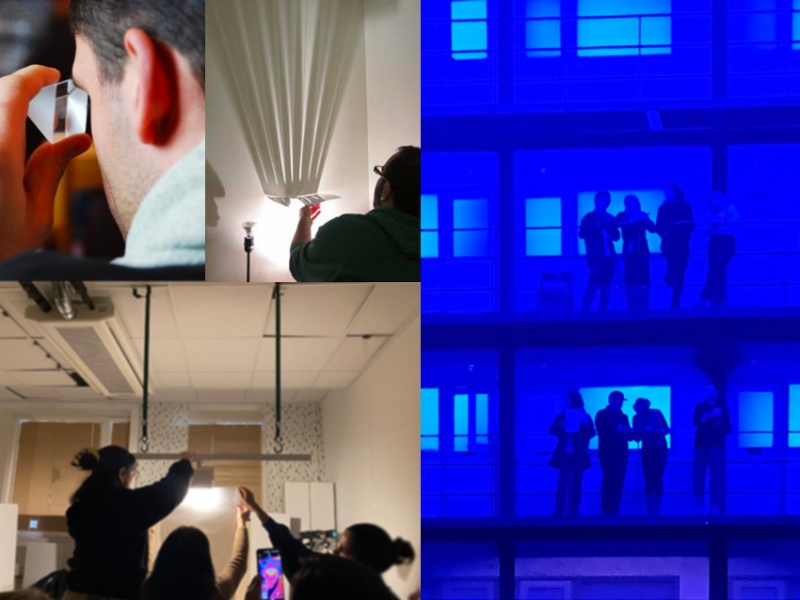
Laboratory experiments
(Visual-physical evaluation and measurement)

Visual Ergonomics and Health
(Methods, evaluation)

Literature Seminar

(Scientific approach and academic writing styles)

Case Study
(Paper)

Course contents

  • Physics of light radiation
  • Visual, perceptual based theory and definition of the concept of light
  • The function of the perceptual system from stimuli to information
  • Basics concepts of color and color system
  • Basis of photometry and measurements
  • Academic writing and case study paper development
  • Basics concepts of Lighting and Health

Intended learning outcomes

  • Students should be able to handle theoretically the relations between the physics of light radiation, the visual based theory definition of light and the function of the perceptual system.
  • Students shall apply methods of observation and analysis of lighting conditions, based on the understanding of a scientific approach to light and lighting and the orchestration of the multiple theoretical bases.
  • Students shall train the ability to apply scientific based knowledge and adopt relevant standpoints in the lighting design process.
  • Students should train and develop the ability to structure and write academic papers in a given time frame.

Literature and preparations

Specific prerequisites

The eligibility as required for the programme, or the equivalent knowledge in Architecture or related field. * *For exchange students not enrolled on the programme, specific entry requirements apply in the form of a portfolio, which must be approved by the course examiner.

Literature

You can find information about course literature either in the course memo for the course offering or in the course room in Canvas.

Examination and completion

Grading scale

A, B, C, D, E, FX, F

Examination

  • INLA - Workbook, 4.5 credits, grading scale: A, B, C, D, E, FX, F
  • INLB - Assignment, 4.5 credits, grading scale: A, B, C, D, E, FX, F

Based on recommendation from KTH’s coordinator for disabilities, the examiner will decide how to adapt an examination for students with documented disability.

The examiner may apply another examination format when re-examining individual students.

If the course is discontinued, students may request to be examined during the following two academic years.

The final grade for the course is based on a combined assessment of the analysis, process and results from the two assessment components, INLA and INLB.

In INLA, the personal learning process is assessed according to the following criteria: completeness, structure, depth of reflection, critical thinking and research.

In INLB, the personal learning process is also assessed. The student must submit, follow and complete all steps in the assignment description, including fieldwork (description and presentation), draft essay, final essay and defence/seminar. INLB is assessed on the basis of the following criteria: content, style and structure.

Other requirements for final grade

To receive a final grade for this course, students must achieve a grade of E or higher in both INLA and INLB and have an attendance rate of at least 80%.

Examiner

Ethical approach

  • All members of a group are responsible for the group's work.
  • In any assessment, every student shall honestly disclose any help received and sources used.
  • In an oral assessment, every student shall be able to present and answer questions about the entire assignment and solution.

Further information

Course room in Canvas

Registered students find further information about the implementation of the course in the course room in Canvas. A link to the course room can be found under the tab Studies in the Personal menu at the start of the course.

Offered by

Main field of study

Technology and Health

Education cycle

Second cycle