
The Monte Carlo and molecular dynamics methods. Simulations in different statistical mechanical ensembles. Computation of free energies. Stochastic dynamics. Applications to spin systems, fluids, polymers and biological macromolecules.
SI2530 Computational Physics 7.5 credits
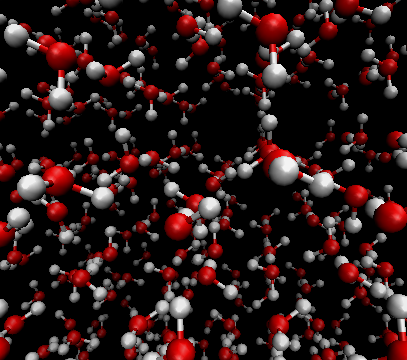
Simulation methods, mainly MonteCarlo and molecular dynamics.
Information per course offering
Information for Autumn 2026 Start 24 Aug 2026 programme students
- Course location
AlbaNova
- Duration
- 24 Aug 2026 - 23 Oct 2026
- Periods
Autumn 2026: P1 (7.5 hp)
- Pace of study
50%
- Application code
51466
- Form of study
Normal Daytime
- Language of instruction
English
- Course memo
- Number of places
Places are not limited
- Target group
- No information inserted
- Planned modular schedule
- [object Object]
- Schedule
Contact
Course syllabus as PDF
Please note: all information from the Course syllabus is available on this page in an accessible format.
Course syllabus SI2530 (Autumn 2026–)Headings with content from the Course syllabus SI2530 (Autumn 2026–) are denoted with an asterisk ( )
Content and learning outcomes
Course contents
Intended learning outcomes
The course aims to provide an introduction to computational physics, the area of physics that has emerged alongside experimental and theoretical physics. The objective is that, upon completion of the course, students shall:
- Be able to identify the difference between simulations and other approximate and analytical methods.
- Be able to perform simulations and calculations using a number of existing programs.
- Have sufficient insight into the structure of the programs to be able to write simple programs themselves and modify existing ones.
- Be able to describe the significance and limitations of a number of fundamental models with very broad applications.
- Be able to critically assess the results, taking into account the limitations of the models and the statistical nature of the methods.
Literature and preparations
Specific prerequisites
English B / English 6
Recommended prerequisites
Statistical mechanics corresponding to SI1162, modern physics, and some familiarity with computers and computer programming.
Literature
You can find information about course literature either in the course memo for the course offering or in the course room in Canvas.
Examination and completion
Grading scale
A, B, C, D, E, FX, F
Examination
- LAB1 - Laboratory Work, 3.0 credits, grading scale: P, F
- PRO1 - Project, 4.5 credits, grading scale: A, B, C, D, E, FX, F
Based on recommendation from KTH’s coordinator for disabilities, the examiner will decide how to adapt an examination for students with documented disability.
The examiner may apply another examination format when re-examining individual students.
If the course is discontinued, students may request to be examined during the following two academic years.
Examiner
Ethical approach
- All members of a group are responsible for the group's work.
- In any assessment, every student shall honestly disclose any help received and sources used.
- In an oral assessment, every student shall be able to present and answer questions about the entire assignment and solution.
Further information
Course room in Canvas
Registered students find further information about the implementation of the course in the course room in Canvas. A link to the course room can be found under the tab Studies in the Personal menu at the start of the course.
Offered by
Main field of study
Physics, Engineering Physics
Education cycle
Second cycle