Material production and treatment processes including preparation of raw materials,
production of metals,
heat and mechanical treatments of metal products.
Basic knowledge of physicochemical processes in metallurgy including application of thermodynamic and kinetic processes, ternary phase diagrams, mass and energy balances for calculations in metallurgical processes.
MH2039 Process Engineering 6.0 credits
This course will be discontinued.
Decision to discontinue this course:
The course will be discontinued at the end of the spring term 2028, in accordance with Faculty Board decision PA-2026-011.
Date of decision: 26 August 2026
The course was last taught in the autumn term 2023. The final examination for the course took place in the autumn term 2025.
The final opportunity to sit the examination for the course will be in the spring term 2028.
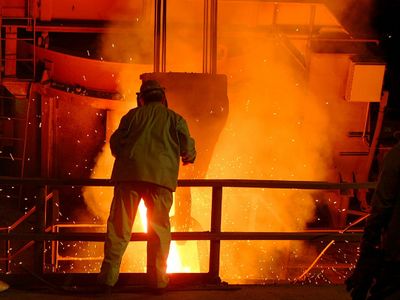
This course provides an overview of typical metallurgical processes to convert mined ores and minerals to metals ready for sale. This is a key part of Sweden's economy and it is therefore important to understand the context, challenges and fundamental calculations of the industry. The course is not intended to discuss mining or manufacturing.
Participants will learn to design processes using thermodynamic methods and perform a group project to study the production of one metal in detail and present your findings at the end of the course.
Despite the information provided below, ternary phase diagrams are NOT part of this course - that information has been out of date for three years, but it can only be updated by central KTH administration and the English version of the text has not been updated. The Swedish version is, however, correct. Furthermore, there are new intended learning outcomes related to gender equality in the metals industry and sustainable development that are not shown below.
Information per course offering
Course offerings are missing for current or upcoming semesters.
Course syllabus as PDF
Please note: all information from the Course syllabus is available on this page in an accessible format.
Course syllabus MH2039 (Autumn 2026–)Headings with content from the Course syllabus MH2039 (Autumn 2026–) are denoted with an asterisk ( )
Content and learning outcomes
Course contents
Intended learning outcomes
Having finishing the course the student will be able to:
- Describe and analyze the production chain for the production of metals from metal/ore raw material to final product.
- Describe, analyze and compare high temperature processes in metal production, for both liquid and solid phase.
- Identify relevant information for a production chain based on available databases and scientific literature to compare and evaluate these.
- Apply heat and mass balances in metallurgical processes.
- Analyze and discuss basic concepts in the theory of organization and gender.
- Explain and discuss what the concept of sustainable development within the metal industry means and how the metal industry is part of a circular economy
Literature and preparations
Specific prerequisites
Basic knowledge in thermodynamics, heat and mass balances in metallurgical processes.
Recommended prerequisites
Fundamental principles of process metallurgy corresponding to what is taught in the course MH1029 Sustainable process technology
Literature
You can find information about course literature either in the course memo for the course offering or in the course room in Canvas.
Examination and completion
Grading scale
A, B, C, D, E, FX, F
Examination
- PRO2 - Project, 3.0 credits, grading scale: A, B, C, D, E, FX, F
- TEN1 - Written exam, 2.0 credits, grading scale: A, B, C, D, E, FX, F
- ÖVN1 - Exercise, 1.0 credits, grading scale: P, F
Based on recommendation from KTH’s coordinator for disabilities, the examiner will decide how to adapt an examination for students with documented disability.
The examiner may apply another examination format when re-examining individual students.
If the course is discontinued, students may request to be examined during the following two academic years.
Examiner
Ethical approach
- All members of a group are responsible for the group's work.
- In any assessment, every student shall honestly disclose any help received and sources used.
- In an oral assessment, every student shall be able to present and answer questions about the entire assignment and solution.
Further information
Course room in Canvas
Registered students find further information about the implementation of the course in the course room in Canvas. A link to the course room can be found under the tab Studies in the Personal menu at the start of the course.
Offered by
Main field of study
Materials Science, Materials Science and Engineering
Education cycle
Second cycle
Transitional regulations
Contact the course coordinator