
- modelltyper
- översikt över olika fysiska domäner (fysik, mekanik, elektronik)
- modellförenkling, differential-algebraiska ekvationer
- systematiska modelleringsmetoder
- objektorienterat modellbygge
- störningar och störningsmodeller
- parameterskattning och statistiska egenskaper
EL282U Modellering av dynamiska system 7,5 hp
Denna kurs är under avveckling.
Sista planerade examination: HT 2026
Avvecklingsbeslut:
Kursen avvecklas vid utgången av HT 2026 enligt fakultetsnämndsbeslut: J-2024-3141.
Beslutsdatum: 2024-12-10
Kursen gavs sista gången HT 2023. Sista möjlighet till examination i kursen ges HT 2026.
Kontakta examinator om du vill bli examinerad under avvecklingsperioden.
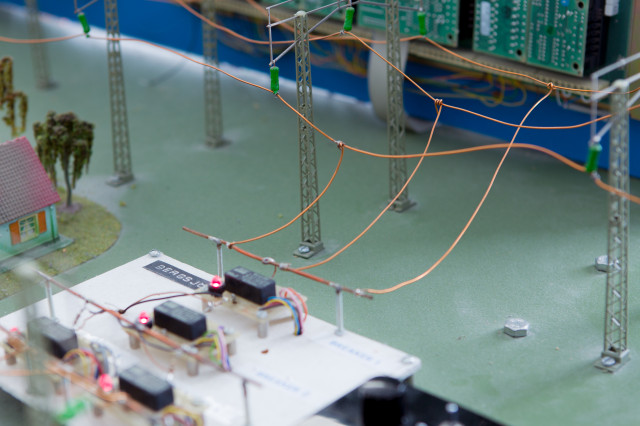
Kursen behandlar systematiska metoder för att konstruera matematiska modeller av tekniska system baserat på fundamentala fysikaliska samband och uppmätta data.
Information per kursomgång
Kursomgångar saknas för aktuella eller kommande terminer.
Kursplan som PDF
Notera: all information från kursplanen visas i tillgängligt format på denna sida.
Kursplan EL282U (HT 2024–)Rubriker med innehåll från kursplan EL282U (HT 2024–) är markerade med en asterisk ( )
Innehåll och lärandemål
Kursinnehåll
Lärandemål
Efter godkänd kurs ska studenten kunna
- formulera grundläggande teori och definitioner av viktiga begrepp inom matematisk modellering av dynamiska system
- ta fram matematiska modeller för tekniska system baserat på fundamentala fysiska samband och baserat på mätdata.
Kurslitteratur och förberedelser
Särskild behörighet
Ingen information tillagd
Kurslitteratur
Du hittar information om kurslitteratur antingen i kursomgångens kurs-PM eller i kursomgångens kursrum i Canvas.
Examination och slutförande
Betygsskala
A, B, C, D, E, FX, F
Examination
- LAB2 - Laboration 2, 0,5 hp, betygsskala: P, F
- LAB3 - Laboration , 2,0 hp, betygsskala: P, F
- LABA - Laboration, 2,0 hp, betygsskala: P, F
- TENA - Skriftlig tentamen, 3,0 hp, betygsskala: A, B, C, D, E, FX, F
Examinator beslutar, baserat på rekommendation från KTH:s handläggare av stöd till studenter med funktionsnedsättning, om eventuell anpassad examination för studenter med dokumenterad, varaktig funktionsnedsättning.
Examinator får medge annan examinationsform vid omexamination av enstaka studenter.
När kurs inte längre ges har student möjlighet att examineras under ytterligare två läsår.
Examinator
Etiskt förhållningssätt
- Vid grupparbete har alla i gruppen ansvar för gruppens arbete.
- Vid examination ska varje student ärligt redovisa hjälp som erhållits och källor som använts.
- Vid muntlig examination ska varje student kunna redogöra för hela uppgiften och hela lösningen.
Ytterligare information
Kursrum i Canvas
Registrerade studenter hittar information för genomförande av kursen i kursrummet i Canvas. En länk till kursrummet finns under fliken Studier i Personliga menyn vid kursstart.
Ges av
Huvudområde
Elektroteknik
Utbildningsnivå
Avancerad nivå
Övrig information
Överlappar helt med EL2820.