
Kursens huvudaktivitet utgörs av ett projekt där studenten självständigt angriper ett företags datornätverk i syfte att exfiltrera specifik information. Det angripna nätverket är riggat av kursledningen i en virtuell miljö. För att utföra angreppet är studenterna fria att använda sin fantasi och verktyg tillgängliga på Internet. Verktyg för nätverksskanning och sårbarhetsskanning, plattformar för utveckling av exploits, fjärrstyrning av datorer, lösenordsknäckning, m.m. presenteras under kursens gång, men det står kursdeltagare fritt att välja metoder och verktyg efter eget huvud.
EP282U Etisk hackning 7,5 hp
Denna kurs är under avveckling.
Avvecklingsbeslut:
Kursen avvecklas vid utgången av VT 2028 enligt fakultetsnämndsbeslut: HS-2026-0786.
Beslutsdatum: 2026-05-19
Kursen gavs sista gången VT 2026. Sista möjlighet till examination i kursen ges VT 2028.
Kontakta examinator för att bli examinerad efter att kursen getts för sista gången.
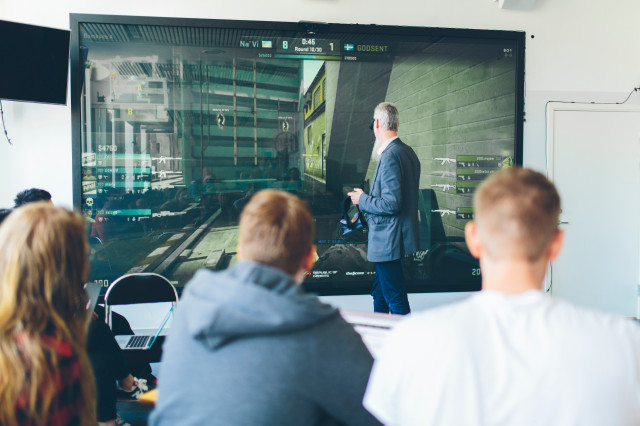
Etiska hackare anlitas för praktisk utvärdering av informationssäkerheten i datornätverk. För ett effektivt försvar mot IT-angrepp krävs också omfattande kännedom om angriparens möjligheter.
Information per kursomgång
Välj termin och kursomgång för att se aktuell information och mer om kursen, såsom kursplan, studieperiod och anmälningsinformation.
Kursplan som PDF
Notera: all information från kursplanen visas i tillgängligt format på denna sida.
Kursplan EP282U (VT 2026–)Rubriker med innehåll från kursplan EP282U (VT 2026–) är markerade med en asterisk ( )
Innehåll och lärandemål
Kursinnehåll
Lärandemål
Efter godkänd kurs ska studenten på en grundläggande nivå kunna
- upprätta resurser för att stödja offensiva säkerhetsoperationer
- utföra spaning och inhämtning för att planera operationer
- tillägna sig tillträdesuppgifter, t.ex. kontonamn, lösenord och åtkomsttoken
- etablera initialt fotfäste i nätverk och system
- exekvera skadlig kod på fjärrenheter
- upprätta kanaler för kommunikation med infekterade system
- eskalera rättigheter i system för att erhålla högre behörigheter
- bibehålla närvaro i nätverk efter avbrott
- förflytta sig lateralt i datornätverk
- undvika att upptäckas av nätverksförsvarare
- samla in och exfiltrera data från datornätverk
- bedöma säkerheten av datorsystem, tillämpningar och it-tjänster
- utföra lagliga och etiska säkerhetstester.
Detta kommer att ge studenterna en praktisk förståelse för angriparens möjligheter och förmågor, i syfte att utvärdera cybersäkerheten i datornätverk.
Kurslitteratur och förberedelser
Särskild behörighet
Ingen information tillagd
Rekommenderade förkunskaper
Vi rekommenderar starkt att du har kännedom om kommunikationsnätverk och operativsystem. Om du saknar den kunskapen är det viktigt att planera för en avsevärt mer tidskrävande kurs.
Kurslitteratur
Du hittar information om kurslitteratur antingen i kursomgångens kurs-PM eller i kursomgångens kursrum i Canvas.
Examination och slutförande
Betygsskala
A, B, C, D, E, FX, F
Examination
- PROA - Projekt, 7,0 hp, betygsskala: A, B, C, D, E, FX, F
- INL2 - Inlämningsuppgift, 0,5 hp, betygsskala: A, B, C, D, E, FX, F
Examinator beslutar, baserat på rekommendation från KTH:s handläggare av stöd till studenter med funktionsnedsättning, om eventuell anpassad examination för studenter med dokumenterad, varaktig funktionsnedsättning.
Examinator får medge annan examinationsform vid omexamination av enstaka studenter.
När kurs inte längre ges har student möjlighet att examineras under ytterligare två läsår.
Examinator
Ytterligare information
Kursrum i Canvas
Registrerade studenter hittar information för genomförande av kursen i kursrummet i Canvas. En länk till kursrummet finns under fliken Studier i Personliga menyn vid kursstart.
Ges av
Huvudområde
Elektroteknik, Datalogi och datateknik
Utbildningsnivå
Avancerad nivå
Övergångsbestämmelser
Den tidigare inlämningsuppgiften INL1 har ersatts av INL2.
Kursen avvecklas vid utgången av VT 2028 enligt fakultetsnämndsbeslut: HS-2026-0786.
Beslutsdatum: 2026-05-19
Kursen gavs sista gången VT 2026. Sista möjlighet till examination i kursen ges VT 2028.
Kontakta examinator för att bli examinerad efter att kursen getts för sista gången.