
- Element inom kvantstatistisk mekanik: braketnotation, kommutatoralgebra, densitetsmatrisformalism (densitetsoperator, statistiska ensembler, von Neumanns ekvation, kvant-BBGKY-hierarki), fasrumsformalism (Wigner-Weyl-transform, Moyal-bracketen, von Neumanns ekvation och kvant-BBGKY-hierarki), andra kvantisering (Fockrums- och ockupationsnummerrepresentation, annihilations-/skapandeoperatorer för fermioner och bosoner, kommuteringsregler, fermioniska/bosoniska fältoperatorer).
- Linjär responsteori: Kubo-formel, Lehmann-representation, Kramers-Kronig-relationer, fluktuations-dissipationssats, egenskaper hos responsfunktioner, frekvensmomentsummeregler, styvhetssats, Matsubara-summering, Fourier-Matsubara-expansion, icke-linjära responsutvidgningar.
- Uniform elektrongas (UEG): Konvergent Hamiltonian, dimensionslösa parametrar, nolltemperaturfasdiagram, varm tät materia, Wigner-kristallisation, magnetiska fasövergångar, laddningstäthetsvågor, spinntäthetsvågor, rotonminimum, lågdimensionella utvidgningar.
- Grundläggande UEG-egenskaper: Mikroskopiska storheter: taltäthet, strömtäthet, spinn-täthet och momentumflödestäthetsoperatorer, täthets-täthetsresponsteori, imaginära tidskorrelationsfunktioner (ITCF), dynamisk strukturfaktor (DSF), statisk strukturfaktor (SSF), radiell fördelningsfunktion (RDF), inre energi, adiabatisk förbindningsformel, kompressibilitetssummeregel, frekvensmomentsummeregler (invers, noll, fsumma, tredje), Kimball-cusprelationer, utvidgningar av ström-strömresponsteori.
- Icke-interagerande UEG: Fermi-Dirac-fördelning, kemisk potential, ideal Lindhard-täthetsrespons, gränser för lång och kort våglängd, gränser för hög och låg frekvens, icke-interagerande DSF, icke-interagerande SSF, icke-interagerande RDF, icke-interagerande ITCF, utvidgningar med låg dimensionalitet.
- Självkonsistent dielektrisk formalism: Lokala fältkorrigeringar (statiska eller dynamiska), byggstenar i den dielektriska formalismen, slumpmässig fasapproximation (RPA), Singwi-Tosi-Land-Sjolander-schema (STLS), Vashishta-Singwi-schema (VS), faltningsapproximation (CA), hypernetted-chain-baserat schema (HNC), integralekvationsbaserat schema (IET), kvant-STLS-schema (qSTLS) och kvant-HNC/IET-scheman (qHNC/qIET).
- Andra formalismer: Dharmawardana-Perrots klassiska avbildningsmetod, Dufty-Duttas klassiska avbildningsmetod, summeregelmetoder, kontinuerade fraktionsmetoder, kvantkinetisk teori och kollisionsintegraler, kvanthydrodynamik.
FEF3390 Kvantplasmor 8,0 hp
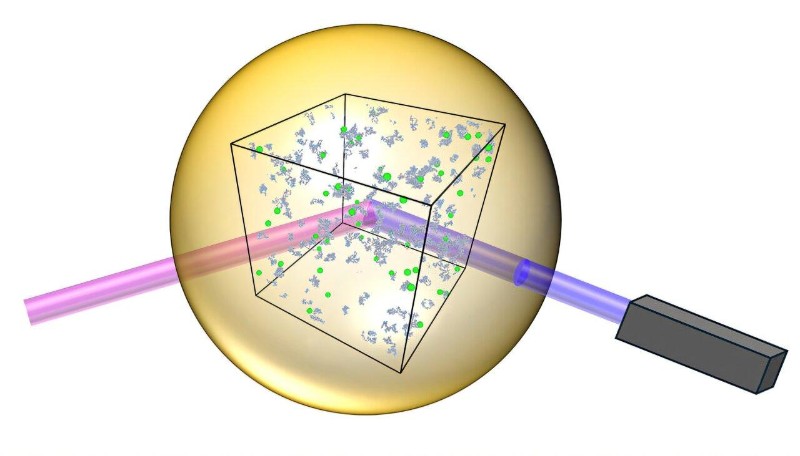
Kvantplasman är plasman där kvanteffekter blir avgörande för de laddade partiklarnas beteende. Detta inträffar typiskt vid höga densiteter och relativt låga temperaturer, där elektronerna blir degenererade, så att utbyteseffekter och kvantmekanisk diffraktion inte längre kan försummas, ofta i kombination med måttliga till starka Coulombkorrelationer. Sådana förhållanden förekommer i varm tät materia, täta astrofysikaliska objekt och materia som utsätts för extrem kompression, och studeras i allt större utsträckning i avancerade laboratorieexperiment. Kursen introducerar de grundläggande begreppen samt de teoretiska och beräkningsmässiga verktyg som behövs för att förstå dessa system, och knyter samman plasmafysik med kvantstatistisk mekanik och mångkroppsfysik, samtidigt som den utforskar hur mikroskopiska kvanteffekter och partikelkorrelationer bestämmer kollektivt beteende och makroskopiska egenskaper.
Information per kursomgång
Information för HT 2026 Start 2026-08-24 programstuderande
- Studielokalisering
KTH Campus
- Varaktighet
- 2026-08-24 - 2027-01-11
- Perioder
HT 2026: P1 (4 hp), P2 (4 hp)
- Studietakt
25%
- Anmälningskod
12874
- Undervisningsform
Normal Dagtid
- Undervisningsspråk
Engelska
- Kurs-PM
- Kurs-PM är inte publicerat
- Antal platser
Ingen platsbegränsning
- Målgrupp
- Ingen information tillagd
- Planerade schemamoduler
- [object Object]
- Schema
- Del av program
- Ingen information tillagd
Kontakt
Kursplan som PDF
Notera: all information från kursplanen visas i tillgängligt format på denna sida.
Kursplan FEF3390 (HT 2026–)Rubriker med innehåll från kursplan FEF3390 (HT 2026–) är markerade med en asterisk ( )
Innehåll och lärandemål
Kursinnehåll
Lärandemål
Efter kursen ska studenten kunna
- förklara begrepp som används för teoretisk beskrivning av den ändliga temperaturen likformiga elektrongasen;
- tillämpa metoder som används för teoretisk beskrivning av den ändliga temperaturen likformiga elektrongasen;
- diskutera för- och nackdelar med densitetsoperatorformalism, fasrumsformalism och andra kvantiseringsformalism inom kvantkinetisk teori;
- uppskatta de termodynamiska, statiska, dynamiska och fasövergångsegenskaperna hos den ändliga temperaturen likformiga elektrongasen;
- tillämpa den självkonsistenta dielektriska formalismen på den likformiga elektrongasen och utvidga den till andra homogena system;
- bedöma den teoretiska bakgrunden för kvantplasma och varm tät materia.
Kurslitteratur och förberedelser
Särskild behörighet
- Kvantmekanik (SI2380 Avancerad kvantmekanik eller motsvarande)
- Statistisk mekanik (SI1162 Statistisk fysik eller SI2510 Statistisk mekanik eller motsvarande)
Kurslitteratur
Du hittar information om kurslitteratur antingen i kursomgångens kurs-PM eller i kursomgångens kursrum i Canvas.
Examination och slutförande
Betygsskala
P, F
Examination
- INL1 - Linjär responsteori, 1,5 hp, betygsskala: P, F
- INL2 - Likformig elektrongas, 1,5 hp, betygsskala: P, F
- INL3 - Dielektrisk formalism, 2,0 hp, betygsskala: P, F
- SEM1 - Seminarier om kvantplasma, 3,0 hp, betygsskala: P, F
Examinator beslutar, baserat på rekommendation från KTH:s handläggare av stöd till studenter med funktionsnedsättning, om eventuell anpassad examination för studenter med dokumenterad, varaktig funktionsnedsättning.
Examinator får medge annan examinationsform vid omexamination av enstaka studenter. När kurs inte längre ges har student möjlighet att examineras under ytterligare två läsår.
Seminarpresentationer (3hp)
- Individuellt eller i grupper om två (studentens val).
- Kamratbedömning.
Hemuppgifter (5hp)
- Teoretiska och numeriska uppgifter.
- Individuellt arbete och grupparbete.
- Lösningar diskuteras med läraren.
Examinator
Etiskt förhållningssätt
- Vid grupparbete har alla i gruppen ansvar för gruppens arbete.
- Vid examination ska varje student ärligt redovisa hjälp som erhållits och källor som använts.
- Vid muntlig examination ska varje student kunna redogöra för hela uppgiften och hela lösningen.
Ytterligare information
Kursrum i Canvas
Registrerade studenter hittar information för genomförande av kursen i kursrummet i Canvas. En länk till kursrummet finns under fliken Studier i Personliga menyn vid kursstart.
Ges av
Huvudområde
Denna kurs tillhör inget huvudområde.
Utbildningsnivå
Forskarnivå