
Content’s structure:
Daylight and artificial lighting
(Concept, terminology, definitions)
Human Perception
(Visual, non visual, psychological)
Design Basics
(Observation, synthesis, process and tools)
Lighting machine
(Mock-up, design-process)
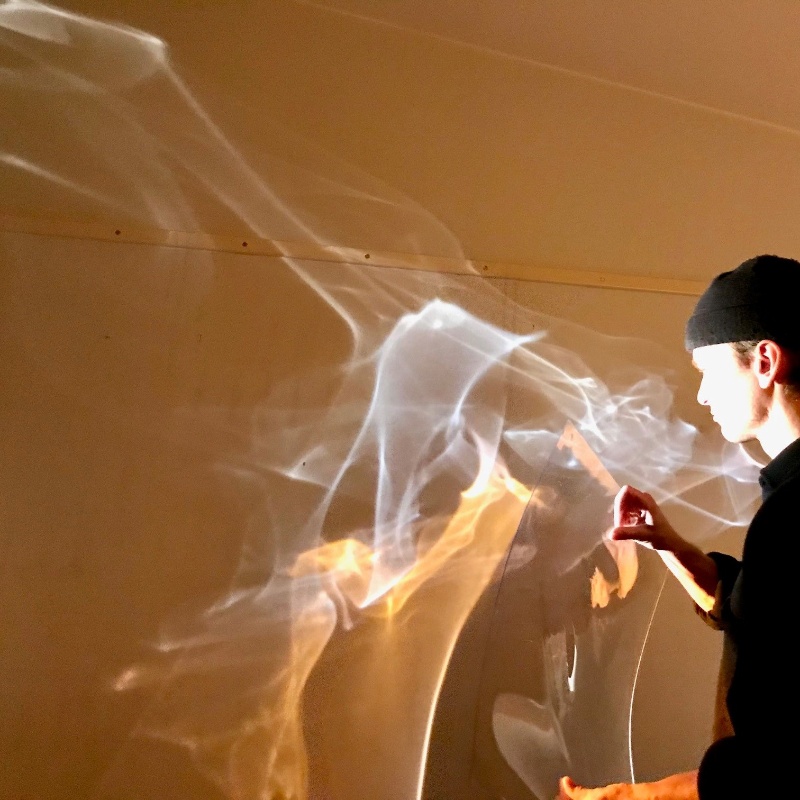
The dynamic relationship between lighting and the built environment is shaped through their mutual impact on the human experience.
In the first course of the Architectural Lighting Design Master’s program, "Light and Humans," you will explore this essential connection, discovering how light influences our perception, behaviour, and well-being. This course offers an exciting journey from understanding light as a technological, social, and perceptual phenomenon to applying this knowledge in hands-on, real-world scenarios. You will also have the chance to challenge your own perception via the laboratory experiments.
Through immersive, full-scale lighting applications, you will not only learn but experience the transformative power of light in shaping spaces and lives. This is the first step into the world of architectural lighting design, where you will engage with light as a creative, powerful tool to enhance human environments.
Apart from the Lighting Design Division teachers and tutors, you will meet as part of your educational journey some of the regular guests that take part on this course like the lighting design practitioners Jan Ejhed, Colin Ball and Yael Erel.
#Perception, lighting basics, full-scale application
KTH Campus
Autumn 2026: P1 (9 hp)
67%
50199
Normal Daytime
English
Min: 5
Please note: all information from the Course syllabus is available on this page in an accessible format.
Course syllabus HS2007 (Autumn 2026–)Content’s structure:
Daylight and artificial lighting
(Concept, terminology, definitions)
Human Perception
(Visual, non visual, psychological)
Design Basics
(Observation, synthesis, process and tools)
Lighting machine
(Mock-up, design-process)
Students should gain a basic light and lighting vocabulary.
Students will learn and discuss the importance of light and lighting for human beings' cultural, historical and social development.
Students should be able to solve a lighting design task using light and materials as shaping elements of the physical environment and reflect over their communicative possibilities.
Students must work on the solution of design tasks establishing connections between conceptual ideas and real life situations.
Students should be able to justify design choices in terms of the relation between light sources, materials and human experience and the relevant conditions of the site.
The eligibility as required for the programme, or the equivalent knowledge in Architecture or related field. For exchange students not enrolled on the programme, specific entry requirements apply in the form of a portfolio, which must be approved by the course examiner.
A background in basic sketching and design techniques is recommended. Students should also possess the ability to abstract and conceptualize ideas. Skills in observation and an understanding of space design will further support successful learning in this course. In addition, familiarity with basic technical skills related to light and lighting is advantageous.
Based on recommendation from KTH’s coordinator for disabilities, the examiner will decide how to adapt an examination for students with documented disability.
The examiner may apply another examination format when re-examining individual students.
If the course is discontinued, students may request to be examined during the following two academic years.
The final grade for the course is based on a combined assessment of the analysis, process and results from the two assessment modules, INLA and PROA, as well as an evaluation of the student’s learning process.
In INLA, the personal learning process is assessed according to the following criteria: completeness, structure, depth of reflection, critical thinking and research.
In PROA, the group’s collaboration and individual performance are assessed. To pass PROA, students must carry out, follow and complete the two steps specified in the task description. The grade takes into account both reinterpretation aspects; Analysis, Results, Process, Tools, Final Result – and design aspects; Vision and Concept, Process, Final Result, Presentation.
To receive a final grade for this course, students must achieve a grade of E or higher in both INLA and PROA and have an attendance rate of at least 80%.