
- Leaders that function as transmission lines
- System design and component modelling
- System noise and noise budgets
- Signal integrity in high speed electronic systems
- Power supply Noise, delivery, distribution and protection
- Basic RF design and impedance matching
- High speed PCB level design and higher levels design
- Basic EMC/EMI and shielding
- Performance modeling and conceptual design of electronic systems
IL2237 Electronic Systems Design 7.5 credits
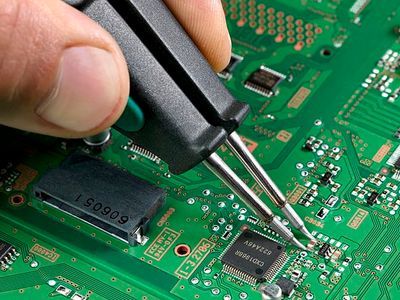
Unlock the critical skills needed to design and optimize high-speed, complex electronic systems with our comprehensive course in Electronic System Design. In today's technology-driven world, the performance of electronic systems hinges on the precision and integrity of every design element—from printed circuit boards (PCBs) to system-level architectures. This course is designed for aspiring engineers and professionals who want to master the principles and techniques behind high-performance electronics design.
Information per course offering
Information for Autumn 2026 Start 26 Oct 2026 programme students
- Course location
KTH Campus
- Duration
- 26 Oct 2026 - 11 Jan 2027
- Periods
Autumn 2026: P2 (7.5 hp)
- Pace of study
50%
- Application code
10839
- Form of study
Normal Daytime
- Language of instruction
English
- Course memo
- Course memo is not published
- Number of places
Min: 25
- Target group
- Open to all master's programmes as long as it can be included in your programme.
- Planned modular schedule
- [object Object]
- Schedule
Contact
Course syllabus as PDF
Please note: all information from the Course syllabus is available on this page in an accessible format.
Course syllabus IL2237 (Autumn 2026–)Headings with content from the Course syllabus IL2237 (Autumn 2026–) are denoted with an asterisk ( )
Content and learning outcomes
Course contents
Intended learning outcomes
After passing the course, the student should be able to:
- explain and apply basic principles and guidelines for physical architectural design for complex electronic systems from the level printed circuit boards (PCB) to higher levels
- design PCBs considering signal integrity and impedance matching
- analyse and budget system noise
- design power distribution and analyse noise related to power supply
- design impedance matching networks for electronic systems for radio frequency
- analyse the influence of interconnects at different levels on the performance of electronic systems
- analyse EMC/EMI-disturbance in electronic systems
- model the performance of electronic system
- explain how the production of electronics influences the global heating and consumption of natural resources, and how life-cycle analysis and the global aims can be used
in order to obtain coherent knowledge and practical tips about physical (i.e. hardware) architectural design (on PCB and higher levels) of complex electronic systems.
Literature and preparations
Specific prerequisites
Knowledge in digital design, 6 credits, equivalent to completed course IE1204/IE1205.
Knowledge in electrical circuit analysis, 6 credits, equivalent to completed course EI1110/EI1120/IE1206.
The above knowledge may also have been acquired in a completed advanced level course of at least 7.5 credits that combines digital design and electrical circuit analysis/analog electronics, equivalent to IL2246.
Literature
You can find information about course literature either in the course memo for the course offering or in the course room in Canvas.
Examination and completion
Grading scale
A, B, C, D, E, FX, F
Examination
- TEN1 - Examination, 4.5 credits, grading scale: A, B, C, D, E, FX, F
- LAB1 - Laboratory, 3.0 credits, grading scale: P, F
Based on recommendation from KTH’s coordinator for disabilities, the examiner will decide how to adapt an examination for students with documented disability.
The examiner may apply another examination format when re-examining individual students.
If the course is discontinued, students may request to be examined during the following two academic years.
TEN1 is an oral examination.
Examiner
Ethical approach
- All members of a group are responsible for the group's work.
- In any assessment, every student shall honestly disclose any help received and sources used.
- In an oral assessment, every student shall be able to present and answer questions about the entire assignment and solution.
Further information
Course room in Canvas
Registered students find further information about the implementation of the course in the course room in Canvas. A link to the course room can be found under the tab Studies in the Personal menu at the start of the course.
Offered by
Main field of study
Electrical Engineering
Education cycle
Second cycle
Supplementary information
In this course, the EECS code of honor applies, see: http://www.kth.se/en/eecs/utbildning/hederskodex.