
Till KTH:s startsida

MJ2386 Energy Storage Technology 6.0 credits

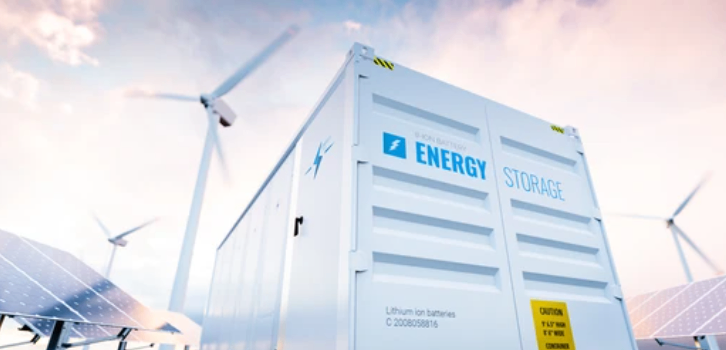
This course covers different energy storage technologies encompassing mainly mechanical storage, thermal storage and electrochemical storage.

Information per course offering

Choose semester and course offering to see current information and more about the course, such as course syllabus, study period, and application information.

Termin

Information for Autumn 2026 Start 24 Aug 2026 programme students

Course location

KTH Campus

Duration
24 Aug 2026 - 11 Jan 2027
Periods

Autumn 2026: P1 (3 hp), P2 (3 hp)

Pace of study

17%

Application code

11563

Form of study

Normal Daytime

Language of instruction

English

Course memo
Course memo is not published
Number of places

Min: 1

Target group
Elective for all programs as long as it can be included in your program. Open for exchange students.
Planned modular schedule
[object Object]
Schedule
Schedule is not published

Contact

Examiner
No information inserted
Course coordinator
No information inserted
Teachers
No information inserted

Course syllabus as PDF

Please note: all information from the Course syllabus is available on this page in an accessible format.

Course syllabus MJ2386 (Autumn 2022–)
Headings with content from the Course syllabus MJ2386 (Autumn 2022–) are denoted with an asterisk ( )

Content and learning outcomes

Course disposition

After passing the course, students should be able to:

  1. Classify energy storage technologies
  2. Conceptualise and design energy storage systems with appropriate control strategies
  3. Evaluate techno-economic, social and environmental performance with Performance Indicators (Key Performance Indicators, KPI)
  4. Suggest business scenarios with energy storage technologies

Course contents

Energy storage technologies for integration of renewable energy, improvement of energy efficiency and energy handling for reduction of emissions are in focus. This course covers different categories of energy storage technologies that mainly include mechanical storing, thermal storing and electrochemical storing. The students will work with techno-economic aspects in
1. work principles
2. evaluation of performance and
3. control strategies for systems integration.

Intended learning outcomes

After passing the course, students should be able to:

  1. Classify energy storage technologies
  2. Conceptualise and design energy storage systems with appropriate control strategies
  3. Evaluate techno-economic, social and environmental performance with Performance Indicators (Key Performance Indicators, KPI)
  4. Suggest business scenarios with energy storage technologies

Literature and preparations

Specific prerequisites

Degree of Bachelor/3 year engineering degree, prior knowledge in thermodynamics (equivalent to the course MJ1112), electrical engineering and heat transfer (equivalent to the course MJ1401) and energy engineering.

Literature

You can find information about course literature either in the course memo for the course offering or in the course room in Canvas.

Examination and completion

Grading scale

A, B, C, D, E, FX, F

Examination

  • TENA - Exam written, 2.0 credits, grading scale: A, B, C, D, E, FX, F
  • PROA - Project, 2.0 credits, grading scale: A, B, C, D, E, FX, F
  • LABA - Lab work, 2.0 credits, grading scale: P, F

Based on recommendation from KTH’s coordinator for disabilities, the examiner will decide how to adapt an examination for students with documented disability.

The examiner may apply another examination format when re-examining individual students.

If the course is discontinued, students may request to be examined during the following two academic years.

Examiner

Ethical approach

  • All members of a group are responsible for the group's work.
  • In any assessment, every student shall honestly disclose any help received and sources used.
  • In an oral assessment, every student shall be able to present and answer questions about the entire assignment and solution.

Further information

Course room in Canvas

Registered students find further information about the implementation of the course in the course room in Canvas. A link to the course room can be found under the tab Studies in the Personal menu at the start of the course.

Offered by

Main field of study

Mechanical Engineering

Education cycle

Second cycle