
An introductory course to web application programming, with a focus on user experience and responsive web applications. The course provides basic Model-View-Presenter architecture principles for developing interactive applications. Such principles can be applied to desktop, mobile, or web apps and frameworks. The course applies the principles to web applications using JavaScript, JSX, HTML, CSS, and UI frameworks such as React and Vue.js, as well as state management and frameworks such as Mobx, Redux, Jotai, Recoil, Pinia, Zustand. These front-end applications use data from back-end systems on the web using web APIs. Students who have previously studied ID2216 may choose to learn new frameworks at the interface or state management level and reflect on the differences between web/HTML and mobile interactive elements and the types of interactive apps and designs they enable.
DH2642 Interaction Programming and the Dynamic Web 7.5 credits
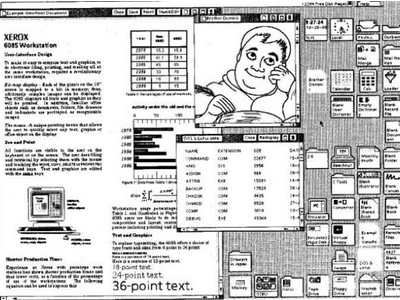
Interaction programming gives the basic Model-View-Presenter principles for developing interactive applications. These principles can be applied to many desktop, mobile or web apps frameworks. The course currently applies these principles to web applications, using JavaScript, JSX, HTML, CSS and frameworks like React and Vue.js. These front-end applications use data from remote back-ends using web APIs.
Information per course offering
Choose semester and course offering to see current information and more about the course, such as course syllabus, study period, and application information.
Information for Spring 2027 iprogd programme students
- Course location
KTH Campus
- Duration
- 12 Jan 2027 - 31 May 2027
- Periods
Spring 2027: P4 (3 hp), P3 (4.5 hp)
- Pace of study
25%
- Application code
11115
- Form of study
Normal Daytime
- Language of instruction
English
- Course memo
- Course memo is not published
- Number of places
Min: 1
- Target group
- Open for all programs from year 3, and for students admitted to a master's program, provided that the course can be included in the program.
- Planned modular schedule
- [object Object]
- Schedule
- Part of programme
Master's Programme, ICT Innovation, year 1, VCCN
Master's Programme, ICT Innovation, year 1, HCIN, Mandatory
Master's Programme, Industrial Engineering and Management, year 1, PUET
Master's Programme, Industrial Engineering and Management, year 1, IAVN
Master's Programme, Machine Learning, year 2
Master's Programme, Interactive Media Technology, year 1
Contact
Course syllabus as PDF
Please note: all information from the Course syllabus is available on this page in an accessible format.
Course syllabus DH2642 (Autumn 2026–)Content and learning outcomes
Course contents
Intended learning outcomes
Having passed the course, the student will be able to
- choose appropriate technical platforms or JavaScript frameworks to create useful data persistent interactive web applications or native applications
- program interactive web applications according to Model-View-Controller or related architectures
- program systems that read data from, and send data to, web interfaces with good use qualities
- assess and improve the usability of existing interactive web applications
- cooperate with others to implement interactive web applications.
Literature and preparations
Specific prerequisites
Knowledge and skills in programming, 6 credits, equivalent to completed course DD1337/DD1310-DD1319/DD1321/DD1331/DD1333/DD100N/ID1018/ID1022.
Recommended prerequisites
Corresponding to the course Human-Computer Interaction, introductory course (DH1620/DH2620) and programming competence, elements of object-oriented programming.
Literature
Examination and completion
Grading scale
Examination
- PRO1 - Project, 4.5 credits, grading scale: A, B, C, D, E, FX, F
- LAB1 - Lab, 3.0 credits, grading scale: P, F
Based on recommendation from KTH’s coordinator for disabilities, the examiner will decide how to adapt an examination for students with documented disability.
The examiner may apply another examination format when re-examining individual students.
If the course is discontinued, students may request to be examined during the following two academic years.
Students who have studied ID2216 need to complete an extra laboratory assignment within the framework of LAB1 because DH2642 and ID2216 overlap in terms of parts of the architecture (such as Model and Persistence).
Examiner
Ethical approach
- All members of a group are responsible for the group's work.
- In any assessment, every student shall honestly disclose any help received and sources used.
- In an oral assessment, every student shall be able to present and answer questions about the entire assignment and solution.
Further information
Course room in Canvas
Offered by
Main field of study
Education cycle
Supplementary information
In this course, the EECS code of honor applies, see:
http://www.kth.se/en/eecs/utbildning/hederskodex