
Det finns 8 teorilektioner pa tva timmar var, och 4 laboratorieovningar med matningar i Albanova Nanolabbet. Varje labb kraver dataanalys och en skriftlig labbrapport som betygsatts. Varje student ska presentera, infer klassen, en forskningsartikel dar SPM tekniken anvands inom deras forskningsfalt. Presentationen ska innehalla en detaljerad analys av SPM tekniken.
FSK3741 Introduktion till Svepprobsmikroskopi 7,5 hp
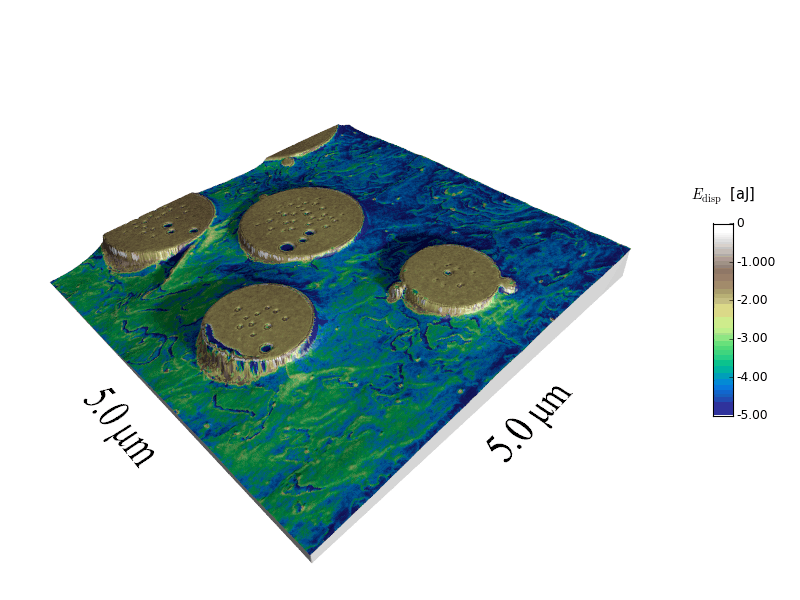
Kursen ger en introduktion till Scanning Probe Microscopy (SPM), utformad för doktorander i fysik, kemi eller biologi som använder SPM för forskningsprojekten. Tonvikten ligger på förståelse av teorin bakom SPM och praktisk användning i laboratoriet.
Information per kursomgång
Kursomgångar saknas för aktuella eller kommande terminer.
Kursplan som PDF
Notera: all information från kursplanen visas i tillgängligt format på denna sida.
Kursplan FSK3741 (VT 2022–)Rubriker med innehåll från kursplan FSK3741 (VT 2022–) är markerade med en asterisk ( )
Innehåll och lärandemål
Kursupplägg
Kursinnehåll
Kursen är riktad mot studenter med bakgrund inom Fysik, Kemi eller Biologi, med en vilja att lära sig om Svepprobsmikroskopi (SPM), dess funktion och hur man tolkar SPM-bilder av ytor. Fokus ligger på Atomkraftmikroskopi (AFM) och dess olika moder. Detta inkluderar
- Scanners, sensorer och reglersystem.
- AFM cantilevers, spetsar och avbildningsartefakter.
- Fluktuationer, brus och fundamentala begränsningar i kraftmätningar.
- Kraft-avståndskurvor och kvasistatiska kraftmätningar.
- Ickelinjär dynamik och dynamiska kraftmätningar.
- Ytkraft, bulkelastiska krafter i AFM.
- Laterala krafter och friktionsmätning med AFM.
- Elektrostatisk kraft och mätning av ytpotential med AFM.
Lärandemål
- Teoretisk förståelse för hur SPM fungerar.
- Tolkning av bilder skapade av SPM
- Praktisk erfarenhet av att använda SPM.
Kurslitteratur och förberedelser
Särskild behörighet
Antagning till ett Mastersprogram, eller en avlagd Master i Fysik, Kemi eller Biologi. Erfarenhet av komplex laboratorieutrustning.
Rekommenderade förkunskaper
Goda datorkunskaper. Formaga att skriva en klar, kort och korrekt text pa engelska
Kurslitteratur
Du hittar information om kurslitteratur antingen i kursomgångens kurs-PM eller i kursomgångens kursrum i Canvas.
Examination och slutförande
Betygsskala
P, F
Examination
- LAB1 - Laborationer, 1,5 hp, betygsskala: P, F
- LAB2 - Laboration, 1,5 hp, betygsskala: P, F
- LAB3 - Laboration, 1,5 hp, betygsskala: P, F
- LAB4 - Laboration, 1,5 hp, betygsskala: P, F
- TENA - Muntlig tentamen, 1,5 hp, betygsskala: P, F
Examinator beslutar, baserat på rekommendation från KTH:s handläggare av stöd till studenter med funktionsnedsättning, om eventuell anpassad examination för studenter med dokumenterad, varaktig funktionsnedsättning.
Examinator får medge annan examinationsform vid omexamination av enstaka studenter.
När kurs inte längre ges har student möjlighet att examineras under ytterligare två läsår.
Examinator
Etiskt förhållningssätt
- Vid grupparbete har alla i gruppen ansvar för gruppens arbete.
- Vid examination ska varje student ärligt redovisa hjälp som erhållits och källor som använts.
- Vid muntlig examination ska varje student kunna redogöra för hela uppgiften och hela lösningen.
Ytterligare information
Kursrum i Canvas
Registrerade studenter hittar information för genomförande av kursen i kursrummet i Canvas. En länk till kursrummet finns under fliken Studier i Personliga menyn vid kursstart.
Ges av
Huvudområde
Denna kurs tillhör inget huvudområde.
Utbildningsnivå
Forskarnivå