
Oscar Alexander Hartman Davies
Postdoc
Details
Researcher
About me
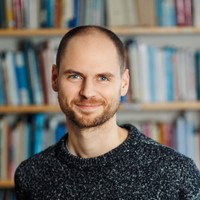
Oscar Hartman Davies is an environmental and cultural geographer from London. He is currently a postdoctoral researcher at the Centre for Anthropocene History, and Acting Coordinator for the Environmental Humanities Laboratory, both at the KTH Division of History of Science, Technology and Environment. Oscar received a DPhil in Geography and the Environment from the University of Oxford in 2024, and has previously held positions at the Research Institute for Humanity and Nature (Japan), the University of Oslo, the University of Helsinki, and the Royal Swedish Academy of Sciences.
Oscar's research is concerned with the rapidly growing role of digital technologies in how we experience, know, and govern more-than-human life; the politics and histories of nature conservation practice and science; and the ecological dimensions of the Anthropocene. His current research centres on several topics, including:
Digital Ecologies
Together with colleagues, Oscar has worked to develop 'Digital Ecologies' as a geographical research area focused on the digital mediation of more-than-human worlds. Recent work has focused on theorising the 'technonatural present', arts-research collaborations employing digital tools to envision conservation futures, and the Digital Dimensions of Nature Recovery (see below). A forthcoming publication focuses on the ecological implications and entanglements of Artificial Intelligence.
Anthropocene Histories
Within the Centre for Anthropocene History, Oscar is exploring the materials, methods, and concepts relevant to this emerging interdisciplinary field, which historicises recent changes to the Earth System and human-environment relationships and connects history with pressing contemporary environmental governance challenges. A forthcoming collaborative publication, Doing Anthropocene History: Notes on methods, materials and concepts, reflects on questions of practice for this emerging field. Oscar also leads a collaborative project exploring the Anthropocene histories embedded in natural history museum collections, with an interactive website and museum trail through the Swedish Museum of Natural History under development.
Ocean Science and Governance
Building on his PhD research, Oscar is interested in the changing character of ocean science and governance, particularly in relation to fisheries and marine conservation. Recent work with colleagues from the Digital Oceans Governance Lab has focused on knowledge pluralism within the UN Ocean Decade and fishers' experiences with novel digital monitoring technologies. Earlier work explored the spatial and socio-technical imaginaries supporting the creation of large-scale marine protected areas (LSMPAs), and how animals are enrolled as sentinels or indicators of environmental change in scientific research and novel approaches to marine conservation. A recent publication explores the changing role of seabirds as environmental sentinels since the mid-20th century. Oscar is also working with a new science-policy platform, the International Platform for Ocean Sustainability (IPOS), to support the responsible and ethical use (and non-use) of AI tools in their work.
River Health and Human Health
In recent work, Oscar has explored the ways in which advocacy groups, citizen scientists, and other concerned citizens understand and work towards healthy rivers in the UK, in the context of extensive sewage and agricultural pollution. The project, Bodies in the River, River in the Bodies, funded by the Oslo Centre for Environmental Humanities, worked with communities caring for the River Avon, in Bristol, to produce an illustrated narrative zine exploring the relationships between river health and human health.
Nature Recovery
Oscar is the co-founder of a UK-based nature recovery organisation, Youngwilders, and has worked to strengthen the conncections between nature recovery research and practice. Recent work has focused on young people and rewilding, and the growing role of digital technologies within the practices of nature recovery. Oscar is guest editor for a special feature of the journal People and Nature focused on the Digital Dimensions of Nature Recovery, building on a conference of the same name held at the University of Oxford in 2024. With colleagues from the University of Oxford and the University of Durham, Oscar is also investigating the new spatial configurations, partnerships, and funding models supporting landscape-scale conservation and nature recovery in the UK.