

An anthropocene paradigm shift?
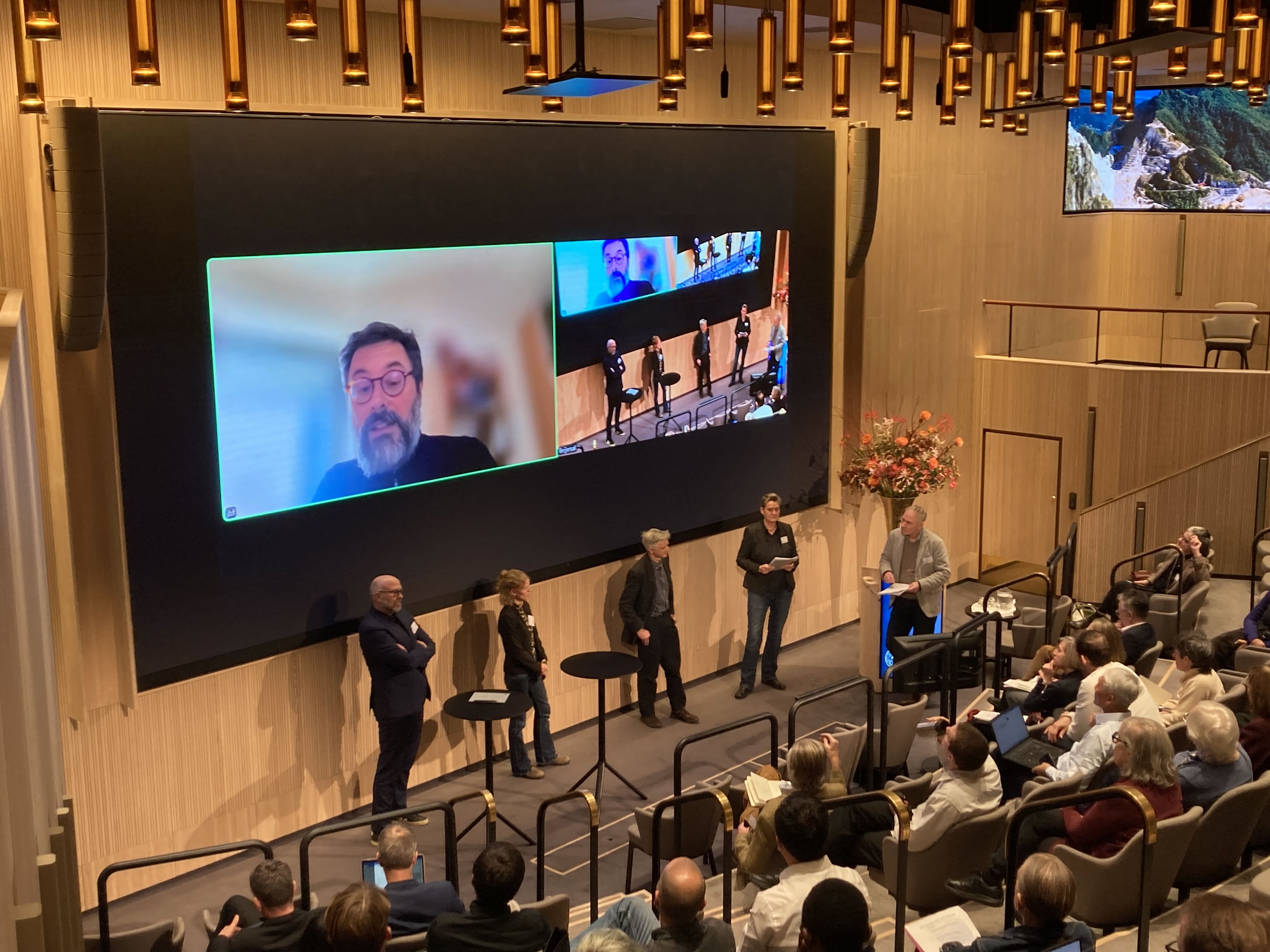
A symposium on December 1st at the Royal Academy of Sciences celebrates a birthday of sorts, and asks what next for the Anthropocene as a phenomenon and a concept.
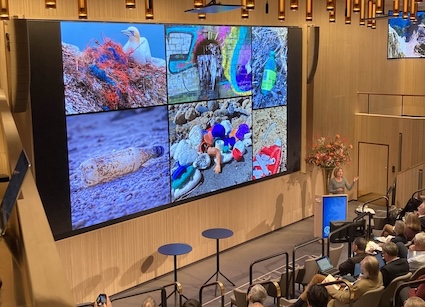
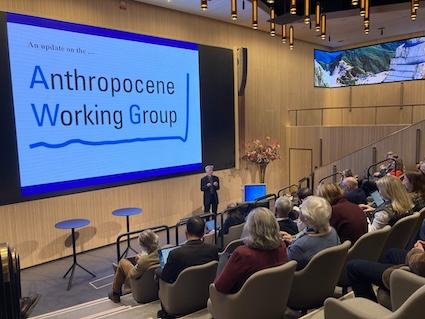
The team at the KTH Center for Anthropocene History were part of organising the symposium “The Anthropocene Paradigm Shift” on December 1st at the royal academy of sciences. The event adressed crucial questions, including: What now for the Anthropocene? Now that it has not been formally defined as a geological time period, what is its meaning, what is it being used for, and what should it be used for? What are the important dimensions of the unfolding Anthropocene we find ourselves living in?
These are also questions we ask at the Center for Anthropocene History. We recently were co-signatories to this comment in Nature which takes up this line of inquiry. And our new journal Anthropocene History aims to advance knowledge in this area, launching October 2026 with Duke University Press. The call for papers is open now.
"Human activity is reshaping the Earth on a planetary scale: from record-breaking heat and disappearing species to dramatic shifts in ecosystems and landscapes. Since Nobel Laureate Paul Crutzen first introduced the concept of the Anthropocene 25 years ago, it has sparked debate, inspired new research, and challenged us to rethink humanity’s role in the Earth system. Today, the idea has grown into a powerful lens for understanding the present and our future." - from the KVA event page .
The symposium was timed to align with the 25th birthday of Paul Crutzens apparent coining of the term Anthropocene at a conference in Mexico in 2000, and subsequent publications that used it. (Although Russian scientist Aleksei Pavlov first suggested a similar concept in 1922). The event covered a range of ideas and research directions related to the Anthropocene, after openings from Johan Rockström and others, and the day was delivered in four multifaceted parts.
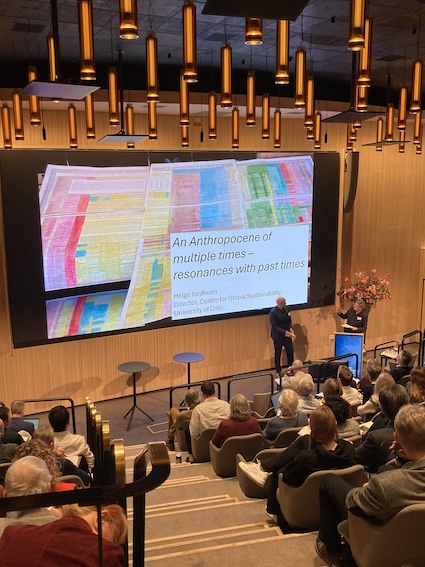
Part 1 “The trajectory of the Anthropocene: The Great Acceleration”
This part was chaired by Wendy Broadgate of Future Earth and Owen Gaffney, of the Nobel Foundation. Speakers offered new perspectives on the "
Great Acceleration
", including perspectives from Asia on the usually Eurocentric Anthropocene discussion, and a picture of a future in which the life of our produced artefacts stretch out thousands of years and exist in the fossil record.
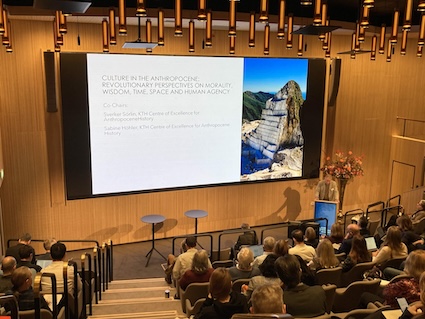
Part 2 “Culture in the Anthropocene: Revolutionary perspectives on morality, wisdom, time, space and human agency“
Historians and scholars of science and technology Sverker Sörlin and Sabine Höhler from the Center for Anthropocene History at the KTH Division of History of Science Technology and Environment chaired this second part. Speakers focused on an ‘elemental’ history; seeing the materials of the earth as having an agency in history. They also looked at temporalities of the Anthropocene, in contrast to the Geological notion of time as linear epochs. And in a talk in which the idea of energy transition was refuted in favour of an energy accumulation in which “
more and more and more
” of every energy source is being consumed.
Part 3 “The Anthropocene as a scientific paradigm shift: Perspectives from geology, Earth systems and science
history”
Chairs were the Geologists Alasdair Skelton, Stockholm University and Jan Zalaziewicz, University of Leicester. In this part, the down-vote by the geological establishment of the Anthropocene as a geological era was examined. And the question of “What now for the Anthropocene” was in the air. Geologists presenting argued that there was better evidence for the Anthropocene than for other already established eras, and that the evidence from other fields should be taken into geological determinations. Speakers also discussed bringing insights of the Anthropocene beyond disciplinary boundaries and into public life and organisational management.
Part 4 “Anthropocene as a paradigm shift for governance and stewardship”
Per Olsson, Stockholm Resilience Centre and Owen Gaffney of the Nobel Foundation chaired. This final part took up beyond-growth economics, studies of cognition in the Anthropocene, and studies of "obedience to authority" in conflict situations. It ended with a list of key challenges for those working on and in and for the Anthropocene, including the challenge of who and what is responsible (as opposed to “all of humanity”), and the political dimensions of the science.
Here you will find full program for "the Anthropocene paradigm shift" symposium day including all speakers, and more information about the event.
The new journal Anthropocene History will take up some of these themes and many more. Call for papers is open now.