
Machine Learning for Physics-Based Force Fields Using the Alexandria Chemistry Toolkit
Hillert Materials Modeling Colloquium series XXIII
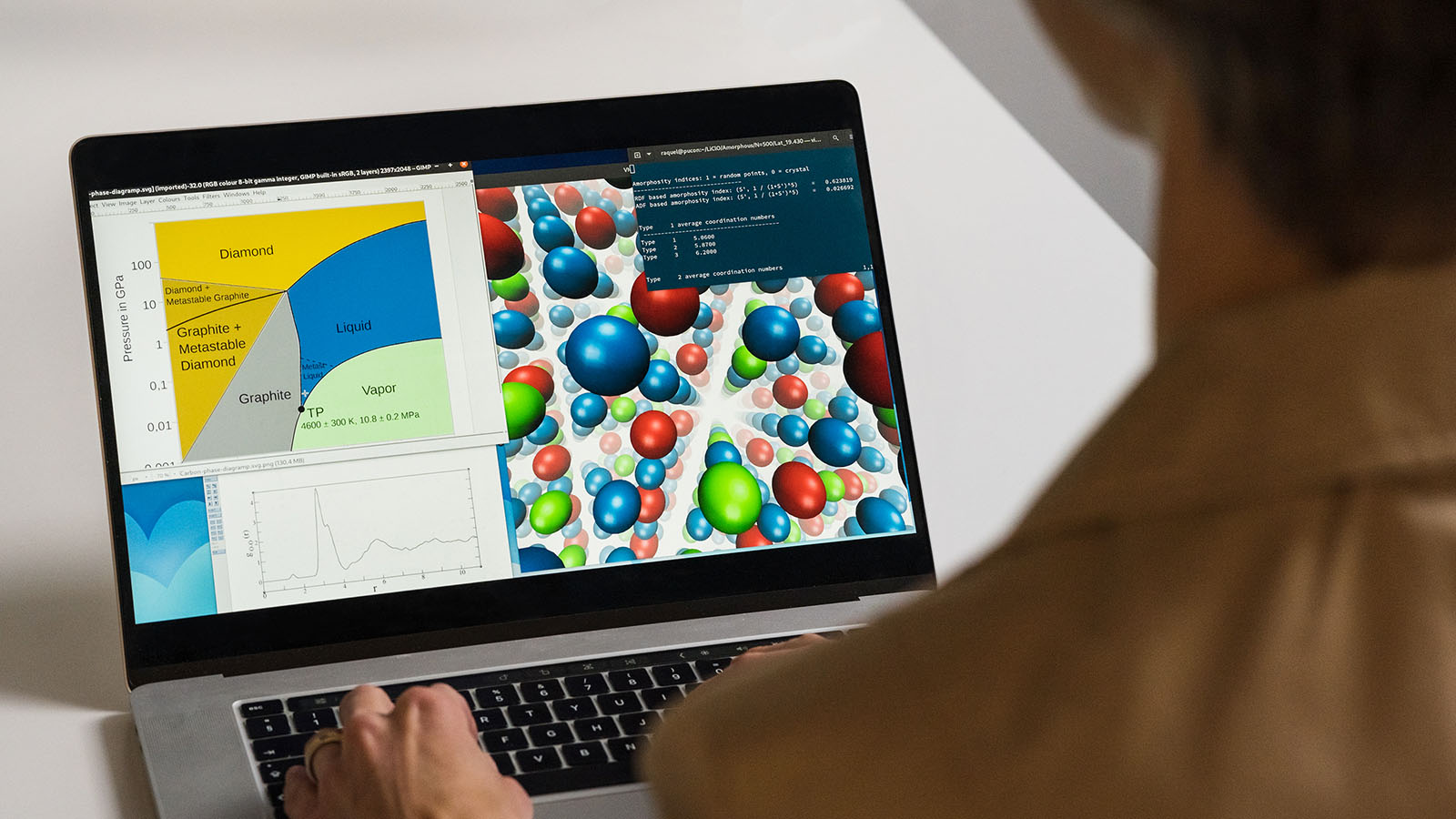
In this seminar, David van der Spoel describes the new software, Alexandria Chemistry Toolkit, for training force fields. He also shows preliminary applications, for instance on modeling the exchange interaction in hydrogen-halides and water.
Time: Tue 2024-11-26 15.00 - 16.00
Video link: https://kth-se.zoom.us/j/65770380959 Meeting ID: 657 7038 0959
Many popular force fields rely on compensation of errors between terms, including the electrostatic energy due to the charge distribution in molecules, dispersion, exchange and induction. This means that errors in the description of electrostatic interactions are compensated by errors with the opposite sign in the other terms. By using symmetry adapted perturbation theory it is possible to decompose the interaction energy from high level quantum chemistry calculations into the terms mentioned above. Force fields can then be trained to reproduce these components rather than the total interaction energy, and in this manner stay closer to the underlying physics.
In the seminar I will describe our new software, the Alexandria Chemistry Toolkit for training force fields and show preliminary applications, for instance on modeling the exchange interaction in hydrogen-halides and water in J. Phys. Chem. Letters 15 (2024) 9974-9978.