

Visa version
Visa
< föregående
Jämför
< föregående
Lecture #11: Tools for Energy Planning and GHG Mitigation Assessment
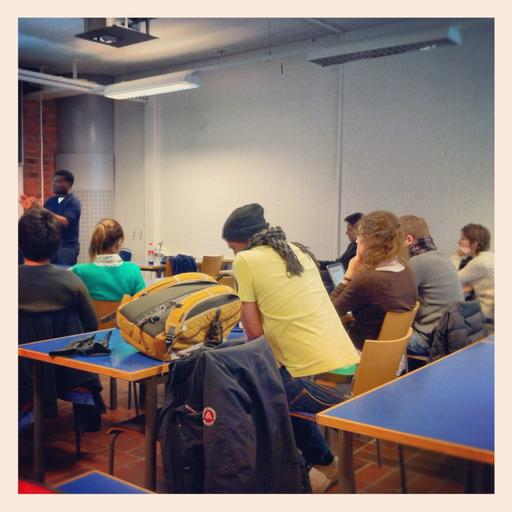
Mr. Adegbaiye Temidayo, gave his presentation on modelling tools. The key message of the lecture was that there are 3 basic models:
Optimization Models
Typically used to identify least-cost configurations of energy systems based on various constraints (e.g. a CO2 emissions target). These models select among technologies based on their relative costs. Some examples are:
- MARKAL
- TIMES
- MESSAGE
- OSeMOSYS
Pros:
- Powerful & consistent approach for a common type of analysis called Backcasting. For example: What will be the costs of meeting a certain policy goal?
- Especially useful where many options exist. For example: What is the least cost combination of efficiency, fuel switching, pollution trading, scrubbers and low sulfur coal for meeting a SOx emissions cap?
Cons:
- Complex, opaque and data intensive: hard to apply for less expert users, so less useful in capacity building efforts.
- Questionable fundamental assumptions (e.g. perfect foresight): Not well suited to simulating how systems behave in the real world.
- Assumes energy cost is only factor in technology choice.
- Tends to yield extreme allocations, unless carefully constrained.
- Not well suited to examining policy options that go beyond technology choice, or hard-to-cost options.
Simulation Models
Simulate behavior of consumers and producers under various signals (e.g. prices, incomes, policies). However, it may not be “optimal” behavior. Typically these models use iterative approach to find market clearing demand-supply equilibrium. One important fact is that energy prices are endogenous. Some examples are:
- ENPEP
- Various Systems Dynamics Models
Pros:
- Not limited by assumption of “optimal” behavior.
- Do not assume energy is the only factor affecting technology choice (e.g. market share algorithms may be based on both price and quality of energy service).
Cons:
-
Tend also to be complex and data intensive.
-
Behavioral relationships can be controversial and hard to parameterize.
-
Future forecasts can be sensitive to starting conditions and parameters.
Accounting Frameworks
Rather than simulate the behavior of a system in which outcomes are unknown, instead asks user to explicitly specify outcomes. The main function of these modelling tools is to manage data and results. Some examples are:
- LEAP
- RETScreen
Pros:
- Simple, transparent and flexible
- Lower data requirements
- Does not assume perfec tcompetition
- Capable of examining issues that go beyond technology choiceor are hard to cost
- Especially useful in capacity building applications
Cons:
- Does not automatically identify least-cost systems
- Less suitable where systems are complex and a least cost solution is needed
- Does not automatically yield price-consistent solutions (e.g. demand forecast may be inconsistent with projected supply configuration)