
Till KTH:s startsida Till KTH:s startsida

Lecture #12: Climate change mitigation in the transport sector
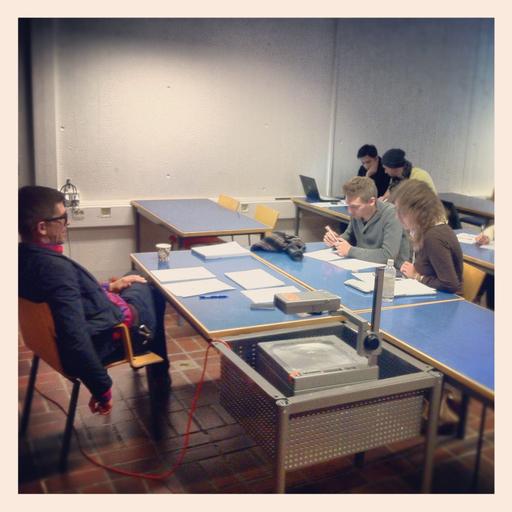
carl hamilton lecture

Dr Carl Hamilton from KTH's Centre for Transport Studies gave a lecture on climate change mitigation in the transport sector. 

Recommended readings

Westin, J. & Kågeson, P. (2012). Can high speed rail offset its embedded emissions? Transportation Research Part D, 17(1). 1-7. 

Suggested readings

Harford, T. (2005). The Undercover Economist. United Kingdom: Little, Brown.

Harford, T. (2011). Adapt: Why Success Always Starts with Failure.New York: Farrar, Straus and Giroux.

Lärare Alessandro Sanches Pereira skapade sidan 29 oktober 2012

Alessandro Sanches Pereira redigerade 29 oktober 2012

carl hamilton lecture

Dr Carl Hamilton from KTH's Centre for Transport Studies. gave a lecture on climate change mitigation in the transport sector. 

Recommended readings Westin, J. & Kågeson, P. (2012). Can high speed rail offset its embedded emissions? Transportation Research Part D, 17(1). 1-7. 

Suggested readings Harford, T. (2005). The Undercover Economist. United Kingdom: Little, Brown.

Harford, T. (2011). Adapt: Why Success Always Starts with Failure.New York: Farrar, Straus and Giroux.

Lärare Alessandro Sanches Pereira ändrade rättigheterna 29 oktober 2012

Kan därmed läsas av alla och ändras av lärare.
kommenterade 29 oktober 2012

My main outcomes from the lecture were as follows:

  • Importance of considering the background of depicted information – often demonstration of data that fits best the intended purpose
  • Transportation issues need to be addressed on a system level – a lot of data is required to give a valuable guideline that results in a policy that actually resolves the issues
  • Often solutions to transportation issues act counter intuitive, meaning that our common senses are not enough to judge available options – huge problem for large part of the society having no access/time/will/perspective to analyze the entire system
En användare har tagit bort sin kommentar
kommenterade 29 oktober 2012

   I had a good impression of fresh ideas from today's recture. In every topic, we focused on a question, "Is that really worth it?" I haven't imagined about it. For example, thinking of which is better for reduction of CO2 emission, tomato in Sweden or imported tomato, and whether or not we should avoid buying production with high energy. The concrete examples helped me to consider about it deeply.
   I learned how to estimate electricity power to use for infrastructures with consumer in an example of build a new rail road. I also understood how electricity companies dicide the price of electricity with marginal price including their profit.

kommenterade 30 oktober 2012

I really enjoyed the concept of the lecture with more dialoge than usual and the small exercises. Some lecturers say they want dialoge, but it requires the lecturer to ask good questions, which was the case here . If you just read from the slides, at least I lose interest quickly.

kommenterade 30 oktober 2012

I really liked the lecture a lot, especially that it involved us students. It was more like a dialog and it really got me started thinking. There were interesting things pointed out, combined with basic knowledge in a very nice way (what do we have to consider when we see a pie chart). It was always given very nice background information, which made a complete picture and helped to understand everything. As I mentioned earlier I also liked the thought-provoking impulse a lot, in general but especially about the climate consciousness. The following discussion about climate consciousness, weather we look at the train rail, tomato, green electricity or what have you, was very interesting!

kommenterade 31 oktober 2012

He taught us not to make pre-assumptions in any information given. Not for daily life, but for writing scientific papers we have to crosscheck any information given. We could work on an idea that we assume to be necessarily true, but going one step further we suddenly realize about our huge mistake. Clearly seen in tomato's example.

Besides, it was interesting to notice that people's awareness about climate change it is not closely linked to their will in acting actively against climate change mitigation. Government has to take active measures such as the economic measure shown in the example below (Transport energy efficiency, IEA) if real results are expected:

Labels showing fuel economy and CO2 emissions values and displayed on vehicles are necessary to inform consumers about the fuel efficiency characteristics of the vehicle in question. However, experience in the European Union shows that labels in isolation do not reduce vehicle emissions. A review of EU labelling policy demonstrated that the highest level of success in influencing consumers’ vehicle purchasing behaviour occurred when fuel economy and CO2 emissions labels were combined with fiscal incentives.