
Our Futures Beyond Transition workshop gathered perspectives from the energy humanities
The Workshop
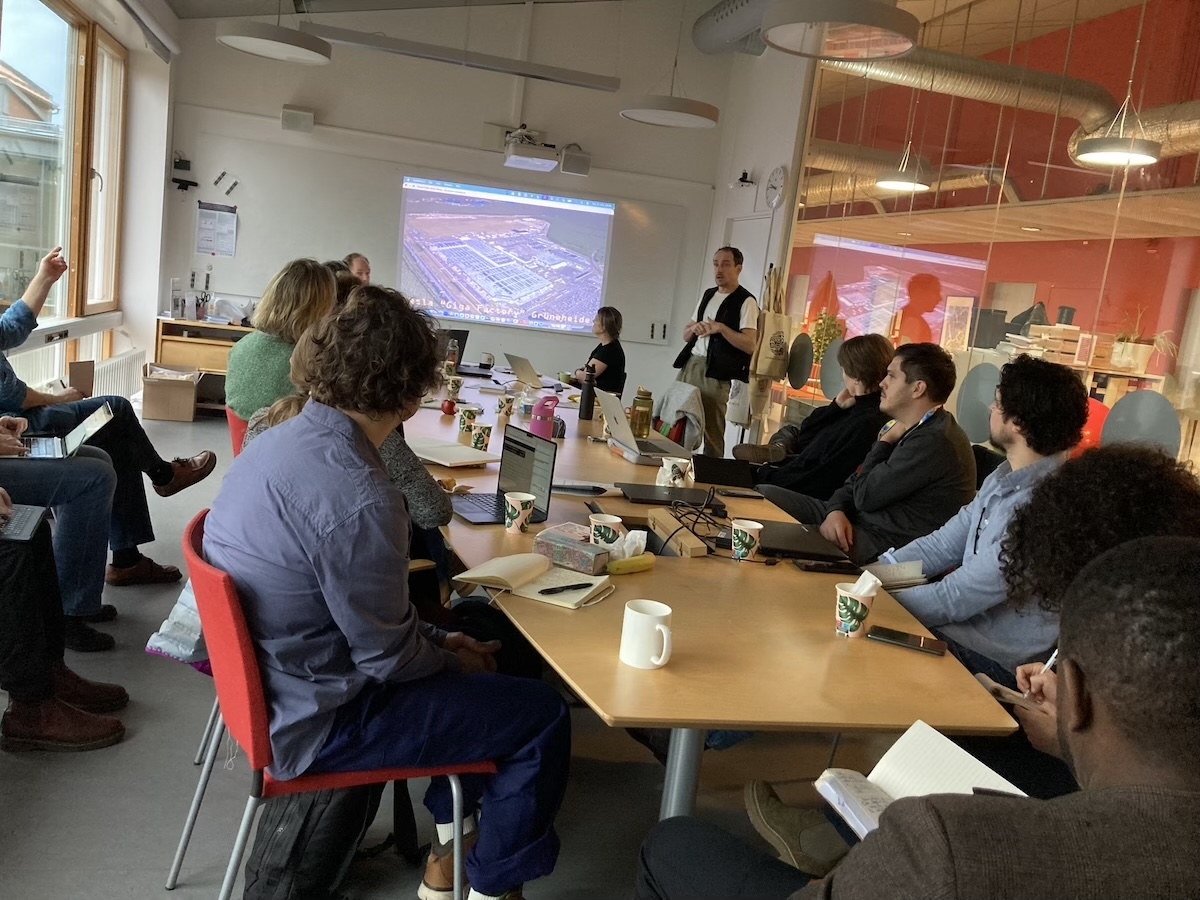
In November 2025, we gathered humanities and social science energy researchers working across disciplines and beyond for a workshop at the Center for Anthropocene History at the Division of History of Science, Technology and Environment at KTH Royal Institute of Technology, Stockholm. The aim was to offer an iterative ideating and writing/creating process supported by in-depth feedback and robust dialogue during the workshop days.
We also included several activities that helped to anchor the discussions in the local area and allowed for connections and dialogues to emerge between researchers at the workshop. The two days of presentation and in-depth discussions from all participants, an Energy History walk through Stockholm, and a guided tour of a bioenergy carbon capture and storage facility.
Below you can find a text describing the workshop framing and motivation, and download the full program here (pdf 2.1 MB) , including a list of all speakers and participants.
Day 1 kicked off with three sessions of paper presentations. The first that looked at futures Beyond Techno-Optimism including consideration of critical practices for worlds beyond transition. The second session focused on Carbon Modernity and the CO₂ Problem, focsigoin on rethinking and historicising the green transition and its key ideas and technologies. and the third session was entitled simply Discomfort, looking at various tensions arising in visions of the green transition and their implementation.
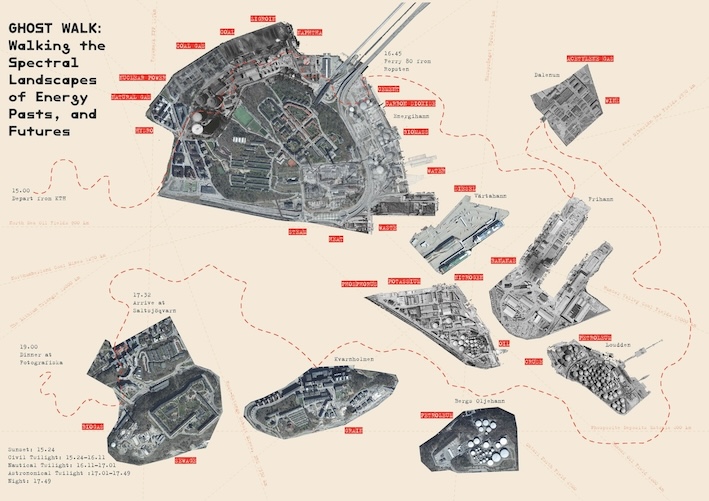
Later in the afternoon we embarked on an Energy History “Ghost Walk” through the landscape of Stockholm, in particular around the Frihamn area. The walk was lead by Matt Ashton, who’s PhD work used walks as a method of examining environmental history of landscapes.
Day 2 began with a guided tour of the Exergi BECCS Carbon Capture and Storage facility (it is yet to deploy Carbon Capture) guided by its chief engineer. A fascinating study up close and personal, of a technology of the (supposed) green transition.
After lunch, we had part four of our paper presentations and in-depth comments & discussions. This session focused on The Politics of the Green Transition, looking at moral entanglements, extractivism, and political economy in green transition, including studies in Africa, Venezuela, and the UK.
Workshop Framing and Motivation
See the original event page.
As climate impacts accelerate and both fossil fuel emissions and new investments in fossil infrastructure climb, the climate emergency intensifies. Across the scientific, social scientific, and humanistic research communities, increasingly dire warnings resound, and frontline communities struggle to cope. Yet business as usual not only continues. It’s expanding.
A growing body of scholarship has begun to challenge the optimistic imaginaries that have long shaped notions of the green transition. This two-day gathering aims to expand this growing critique through a series of invited presentations about research and teaching projects and collaborations that explore the intellectual and material roots of the green transition discourse, its present inertia, and futures beyond transition.
We thus invite scholars and activists working on energy-related themes to explore diverse epistemologies, conceptual approaches, and methodologies and practices to critique and imagine histories and futures beyond green transition narratives and practices. We welcome diverse contributions, including—but not limited to—perspectives from local communities, activist movements, and critical field sites central to reimagining energy futures. Presentations, workshops, or other modes of engagement might show and/or tell about energy humanities research creation projects, campus-community partnerships for energy justice, theorizations beyond transition, art-science activisms working for worlds beyond transition, and more.
The gathering will serve as an incubator for a special issue dedicated to thinking beyond transition and its fossil logics. Together we aim to build open access conceptual and practical tools to support futures beyond transition.