
Torkel Berglund
About me
Research interests
In my research, as Associate Professor at Industrial Biotechnology, investigation of stress and defense in plants - from molecules to the field - has been a main theme.
In close collaboration with Associate Professor Anna Ohlsson, nicotinamide/nicotinic acid (vitamin B3) has been suggested to constitute a stress signal in the cells, released via for example poly(ADP-ribose) polymerase (PARP) in connection to stress, especially oxidative stress. We have shown that nicotinamide and nicotinic acid have defense promoting effects and also an epigenetic effect in plants (see Publications). Oxidative stress and glutathione play important roles in the establishment of these stress responses.
This proposed idea is found in a recent Hypothesis publication in FEBS Letters (Berglund and Ohlsson, 2025, doi:10.1002/1873-3468.70146). Here we have put together data (own results and information from the literature) regarding defense effects of nicotinamide, pointing at a possible role for nicotinamide as a stress signalling compound in connection to oxidative stress. This hypothesis paper is a follow-up of a hypothesis published in 1994 (Berglund, doi:10.1016/0014-5793(94)00850-7).
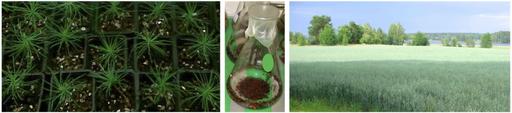
Stress signalling and epigenetics are central research topics. This is basic research, aiming at applications within forestry and agriculture. An overall goal is to decrease pesticide use, which may be harmful to users as well as other organisms exposed, particularly water living organisms. The strategy is to treat seeds and young seedlings with natural nontoxic compounds to promote defense capacity in the seedlings months later. The compounds are selected via basic research, partly performed in plant cell culture studies.
This means, understanding molecular biochemical processes as a basis for applied plant defense.
Cooperation with plant breeders, ecologists and analytical chemists has enabled investigation of the possibility to increase conifer defense against Hylobius abietis (large pine weevil) attack via seed treatment, which is a method also suited as a large scale strategy. The studies include induced defense against drought stress and also volatile communication between insects and treated plants. Our studies also include for example Salix (willow) and strawberry. It is known that plants can establish an epigenetic "memory" of earlier environmental stress which can result in more rapid and stronger responses when attacked again. We see the possibility to influence memory functions in plants without a primary stress, for example via molecules involved in plant stress signalling.
In addition, we suggest it is possible that nicotinamide/nicotinic acid has a stress signalling function based on epigenetics also in animal cells.
Teaching
Part of my time has been dedicated to teaching and course development, for example as course responsible for the course in Environmental toxicology at Industrial Biotechnology. The course has a special relation to my research because it points at risks with the use and spread of toxic compounds and how we should try to avoid that. This optional course has attracted many master students each year, which may be seen as an indication of what students think is important.