
Greenland, the United States, and the Global Order: How Useful is History in Understanding our Current Moment?
Welcome to a discussion/workshop with Professor Ronald E. Doel, Smithsonian Institution and Florida State University
Time: Tue 2026-01-20 14.00 - 15.00
Location: Teknikringen 74D, Level 5, Divison of History of Science Technology and Environmnent
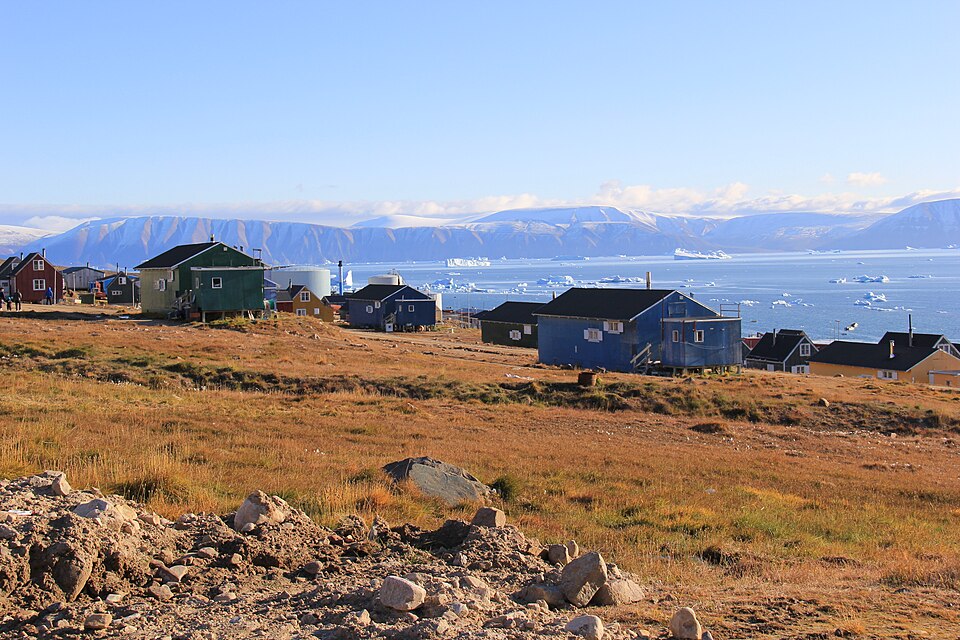
Greenland–the world’s largest island–has returned to the world stage, as U.S. President Donald J. Trump declared Greenland vital for America’s national security purposes. Subsequent international reactions and turmoil have focused primarily on ultimate control of Greenland’s strategic mineral resources and access to sea routes as Arctic warming accelerates. But Greenland–and the Arctic as a whole–has been a globally strategic region since the start of World War II, and central to military planners in the West and East by the start of the Cold War. What insights can we gain about our contemporary geopolitical tensions by looking at how the United States government handled diplomatic relations with Denmark and Canada amid the Cold War era? What might we gain by looking at the experiences of Western settler and indigenous communities in Alaska, which became the 49th U.S. state in 1959? What can we learn by putting key Arctic developments at this time within the larger global experience of decolonization?
Ronald E. Doel held the Charles Lindbergh Chair of Aerospace History at the Smithsonian Institution (2024-25) and is now a Smithsonian Research Associate; he is also Professor of History at Florida State University where teaches the history of science and technology, as well as environmental policy. He served as Project Leader of the nine-member, seven-nation team “Colony, Empire, Environment: A Comparative International History of Twentieth Century Arctic Science” (BOREAS initiative, European Science Foundation) and helped direct “Exploring Greenland: Science and Technology in Cold War Settings” (Carlsberg Foundation, Aarhus University, Denmark). He has published widely on the physical environmental sciences and international relations of science in the twentieth century.