The Royal Danish Academy of Sciences and Letter, founded in 1742, is a learned society composed of elected members. In March the Academy elected Sverker as corresponding member of the Humanities and Social Sciences Class.
The task of the Academy is to strengthen the position of scholarship in Denmark and further inter-disciplinary understanding. The Royal Danish Academy has about 250 national members and about 250 international members. The members are prominent scientists within both the humanities and social sciences as well as the natural sciences. Each year, a number of new members are elected, and these members will then either belong to the Class of the Humanities and Social Sciences or the Class of Natural Sciences. In even years, 9 new members of the Class of Natural Sciences are elected. In odd years, 6 new members of the Class of Humanities and Social Sciences are elected.
Sverker was elected into the Humanities and Social Sciences Class, in recognition of his academic excellence.
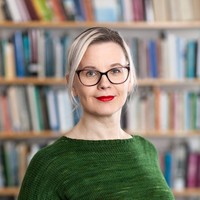
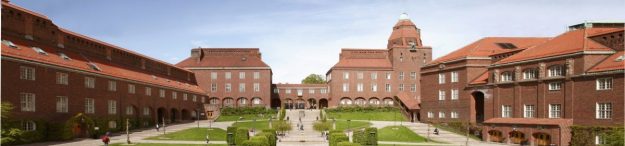
Please be warmly welcome to attend Klara Müller’s mid-seminar in doctoral education, here at KTH Campus on Monday April 24.
The Qualitization of the Humanities: Changing Articulations of Research Quality
“Placed at the intersection between research policy, STS and the history of humanities, the project aims to analyze quality articulations on both the micro-level and the macro-level of the humanities since the 1980s. This is done through a combination of various methodological approaches such as archival research, oral history and bibliometrics.”
Doctoral student: Klara Müller, Division of History of Science, Technology and Environment, KTH
Supervisor: Sverker Sörlin, KTH & Linus Salö, Stockholm University
Opponent: Vera Schwach, Doctor and Research Professor at NIFU, Nordisk Institutt for Studier av Innovasjon, Forskning og Utdanning
Time: Mon 2023-04-24 13.15 – 14.45 Location: the seminar room at the Division (Teknikringen 74 D, level 5) Language: English
It has been a few months since I came back from my stay in the U.S. And I have to say, I miss it sometimes. But being back in Sweden, I can reflect on the things I have learned and experienced.
I arrived in Washington, D.C. in August 2022, Typical for the summer there, the temperatures were tropical, the humidity excruciating, and the mosquitos everywhere. That is how I learned D.C. is actually a part of “The South.”
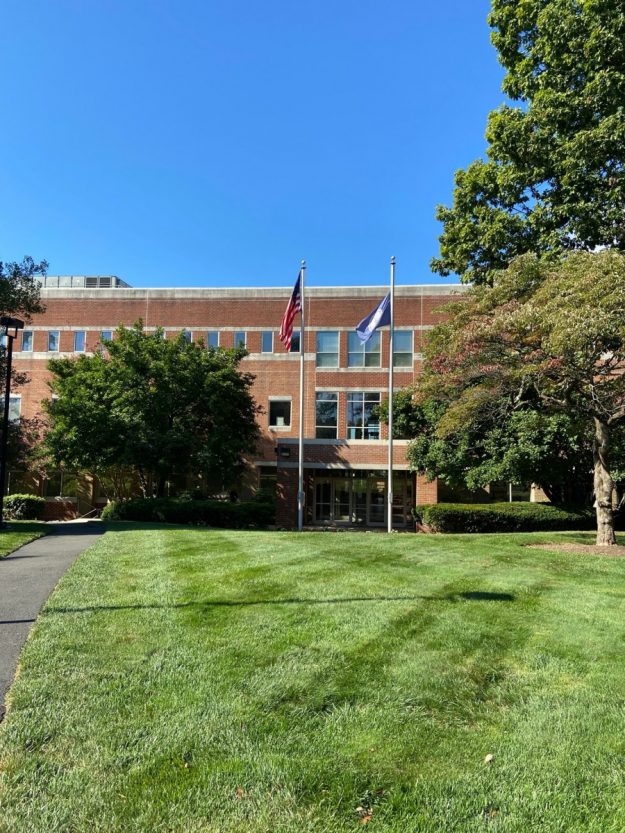
I stayed at Virginia Tech, a technical university with a campus in the suburbs of the D.C. area. Although small and often compared to a prison or asylum, the campus had a certain charm. There were also many events for graduate students, with free food and ping-pong! It was a great way to meet other graduate students, of which most worked in engineering and computer science.
For four months, I was part of the STS Department of Virginia Tech as a guest Ph.D. student, hosted by professor Sonja Schmid. My aim was to get to know STS more and to learn from Sonja Schmid, who has worked extensively on nuclear safety and contributes actively to nuclear policy in the U.S.
One of the aims of my stay was to take part in a project-based STS graduate course. This year, the theme was ‘Nuclear Facilities in Armed Conflict.’ Together with six other American STS students, with varying backgrounds ranging from nuclear engineering to law, we wrote a policy report with recommendations on how to prevent situations like the Zaporizhzhia nuclear power plant in Ukraine. We also presented our work in a public session for policy-makers, government officials, and industry experts. We are working on a policy publication right now.
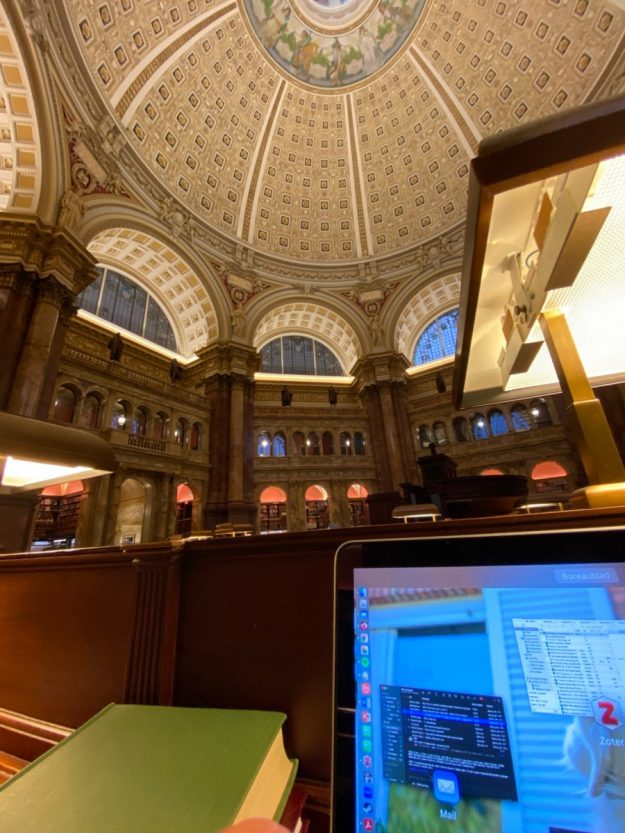
Washington, D.C. has many archives that are relevant for nuclear historians like me. Although they are not always easy to get into, I came back with thousands of scans from the Library of Congress, the National Academy of Sciences, the National Archives, and – most importantly – the NRC Public Documentation Room. At the NRC, I was helped a lot by the NRC historian, professor Thomas Wellock.
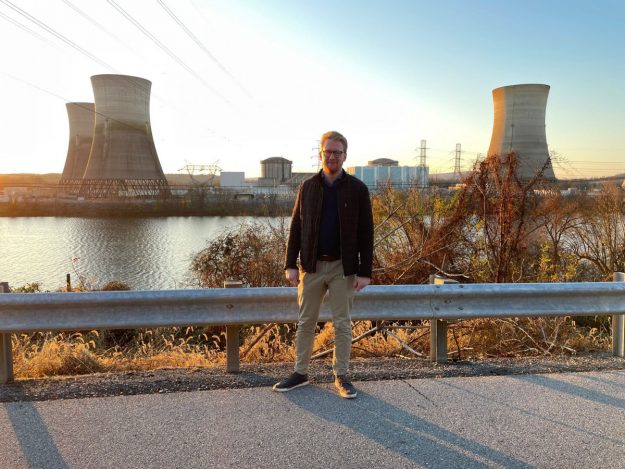
Staying in D.C. was a great opportunity to travel around. I attended the Society of History of Technology (SHOT) conference in the stunning city of New Orleans. I presented my work in the college town of Blacksburg, where the main campus is located, and received great feedback from the STS scholars there. And in an act of ‘dark tourism’, I drove up to the Three Mile Island nuclear plant, which is only a two-hour drive away from D.C.
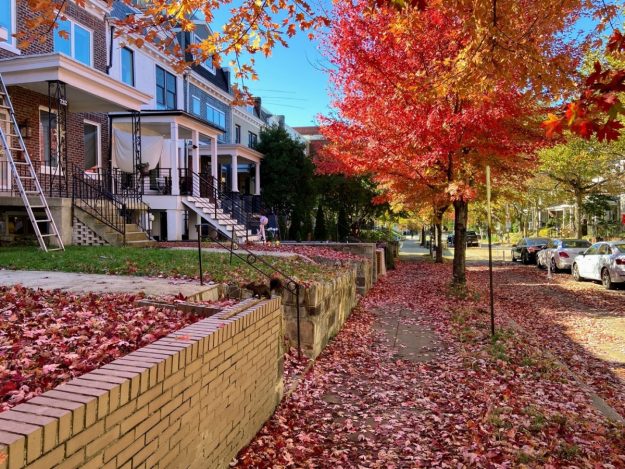
But after each trip, I was also happy to be back in D.C. It is a marvelous place to live. Paradoxically, the capital of the U.S. has a very European feel: wide sidewalks, beautiful architecture, good public transport, lush parks, and so many great pubs and restaurants. I lived in Columbia Heights, a beautiful historic area with small row houses built after the Civil War to house new civil servants.
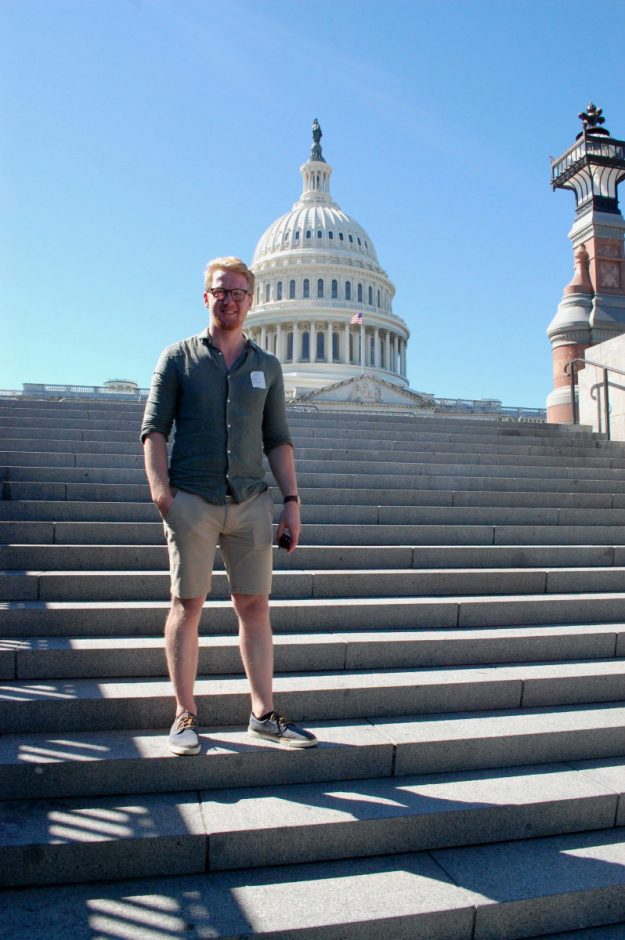
Yet, at the same time, the abundance of museums, monuments, and sports stadiums – but at the same time also the stark racial and social inequalities in the city – remind you of American history and culture every day. American politics is never far away either: when you talk to people, see politicians or “staffers” in the streets, or when walk on the National Mall and cannot get the intro tune of House of Cards out of your head.
Nuna Marques, postdoctor at the Division and the KTH Centre EHL, attended a eco poetry reading during the Ecopoetry Workshop at the #APHELEIA 2023 seminar on Adaptation and Transformation: Community-based Practices in Mação, Portugal. Read his full performance below.
Author: Nuno Marques, postdoctoral researcher at the Division
at an ecopoetry workshop I was invited to say something about this poem as ecopoem. Here is what I said:[1]
this poem is a composition about/with killing and eating animals and the violence inherent to human and family relationships. It is also about tenderness.
It deals with the killing of pigs in Portugal done in traditional ways, not in slaughterhouses where animals that are industrially raised – the actual term is produced– are killed.
I based it on my experiences during childhood and adolescence with taking part in killing pigs and cutting them; preparing sausages, and in all the processes that happen after the animal is dead.
I used some specific vocabulary of the Center region of Portugal, where I am from, for names of tools, body parts of pigs, gestures, plants, food. This is the area of Portugal where almost all the meat that is eaten in the country is produced – pig, chicken, turkey and others.
Lack of regulation on waste waters has turned the river Lis that crosses the region in one of the most polluted rivers of Portugal from wastewater coming from animal production but also from leather and grain production units.[2]
This is a long poem created by several sections that can be read separately but that work better in relation. I mostly use verbs. Sometimes verbs as adjectives and verbs as nouns. This I learned, as translator and researcher, from North American poets as Brenda Hillman; Evelyn Reilly; Allison Cobb; John Cage; Gary Snyder; Michael McClure; Charles Olson; Susan Howe.[3]
Vegan ecofeminism is important as well – Carol J. Adams’ The Sexual Politics of Meat – for the distinction between corpse/cadaver and meat – which is a cultural construction operated by separation and differentiation:
to cut bodies into meat to cut the word
verb as action
I also wanted to work with rhythm and sound, so I use repetitions. Hopefully these create, through interrelations within the poem, sets of frequencies that distribute the action of cutting in long time frames: from childhood till today.
The title Dia do Não [Day of No] refers to the day before the killing in which the pig has no water and no food:
a time and space of negativity
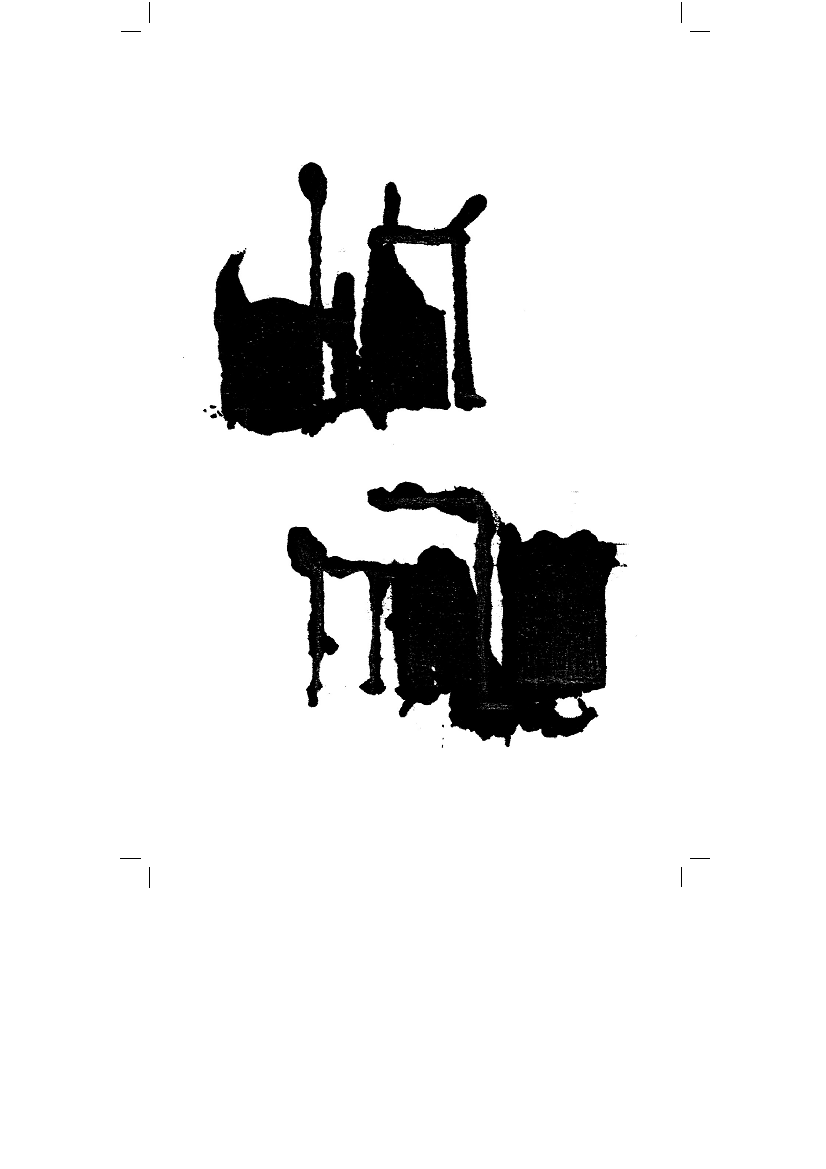
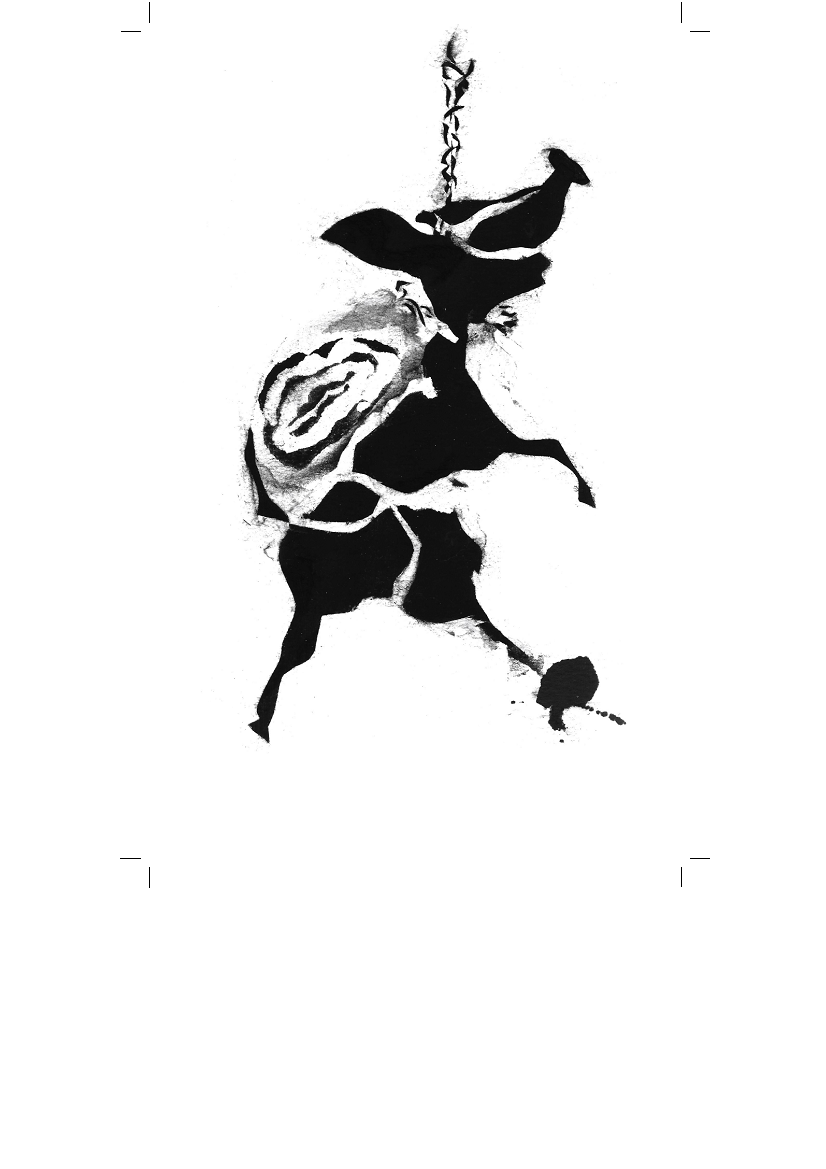
The poem is accompanied by images by the Portuguese artist André Alves. Images and words follow different directions:
the text starts from the whole body and ends with the cut pieces; from concrete to abstract; the image from abstract parts to the whole body. I have Rita Barreira to thank for this idea as well as for suggesting working with André.
I consider this an ecopoem because by engaging the cultural constructions of animals as non-others in the Center region it brings forth the environmental history of animal production in this area. The poem entangles culture and nature; flesh meat tendons muscles smiles love cross between pigs and humans, knifes separate, as Evelyn Reilly asks in Echolocation: “And why should our bodies end at our skin?”
Drawings by André Alves
Dia do Não was published as a full-length book in Portugal by Douda Correria in 2018. Some sections have been published at: Revista Inefável15 (online). Other sections are forthcoming in the Ibero-American anthology Futuros Multiespecie edited by Azucena Castro for Bartlebooth (in press); and the Brazilian, African, and
Portuguese ecopoetry anthology O Livro do Verso Vivo (in press), edited by Thássio Ferreira and Maurício Vieira.
[1] The reading took place during the Ecopoetry Workshop at the #APHELEIA 2023 seminar on Adaptation and Transformation: Community-based Practices in Mação, Portugal. It was organized by BRIDGES UNESCO Sustainability Science Coalition. Poets attending: Esthela Calderon (Nicaragua), Juan Carlos Galeano (Colombia & USA), Nuno Marques (Portugal), José Manuel Marrero Henríquez (Canary Islands), Bernard Quetchenbach (USA) and Catarina Santiago Costa (Portugal).