Restoration of marine ecosystems is high on the agenda in the EU and equally in Sweden. To make progress, we need better restoration methods, better monitoring, and a stronger understanding of how coastal and marine ecosystems recover. But equally, we need to solve financing and distribution of responsibilities.
New, or growing, activities in the blue economy are often portrayed as win-win solutions in the sense that they may generate direct economic output as well as restorative environmental effects. Three examples from my own research could be seaweed cultivation for food, which also helps clean the ocean from excessive amounts of nitrogen and phosphorus; the harvesting of stranded seaweed on beaches, which makes beaches more attractive for recreation and simultaneously provides use potential in agriculture; and the harvesting of pacific oysters that are an invasive species in Sweden needing management, and are simultaneously an obvious food resource (the pacific oyster is exactly the oyster that you would get at a restaurant, just that it is not native to Sweden).
These, and many other restoration activities in the marine environments can generate many benefits at the same time: improved water quality, biodiversity, carbon storage, coastal protection, recreation, and greater resilience. In economic terms, restoration creates bundled value. The difficulty is not necessarily seeing the value, but transferring it somehow to incentives. In many cases, despite win-win opportunities, the majority of value creation is to the public, or at least actors other than the actor providing the restoration service.
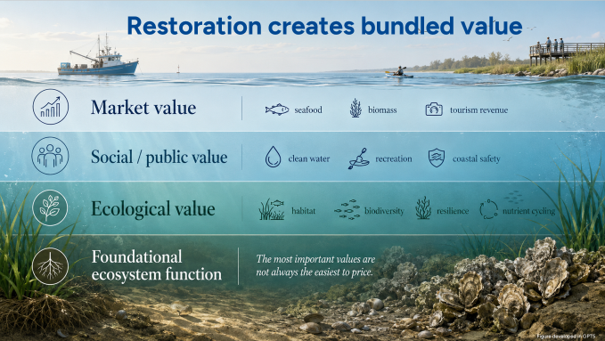
This creates a financing gap. An intervention may be beneficial from a societal perspective without providing a viable business case for the organisation expected to implement it. A part of my own research has for many years been the valuation of ecosystem services, but this is actually only part of the solution. We also need to understand who pays, who benefits, and who has the incentive and capacity to act.
We need to develop new approaches including a mix of public financing, payments linked to ecosystem-service outcomes, cost-sharing arrangements, market development, and combinations of public and private capital. This is developing into a critical research field for us. Keep an eye open and get in touch if you too are interested in this puzzle.
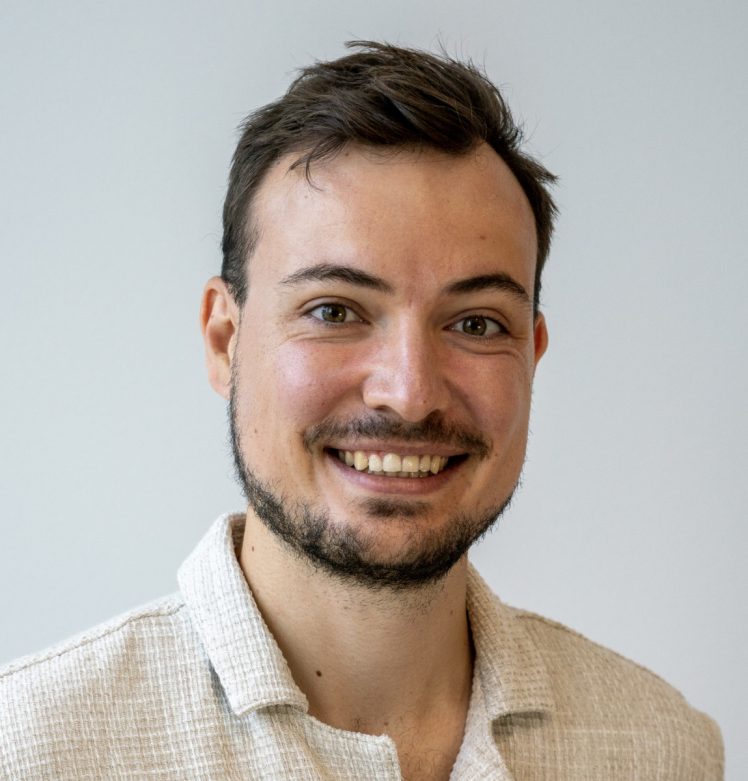
Linus Hasselström Langer is a researcher at the Department of Sustainable Development, Environmental Science and Engineering (SEED) at KTH Royal Institute of Technology, Stockholm. He has a PhD in Environmental Strategic Analysis with emphasis on the economics of marine environmental change. His work focuses on the intersection of marine ecosystems, sustainability, innovation, and future ocean economies, with a particular interest in how science, technology and entrepreneurship can support large-scale marine restoration and resilient coastal societies.