KTH Logo

Descent into XXX Fountain

Christian Pleijel reflects on a spectacular tour into the techno-mythical world of water on the island of Vis in Croatia.
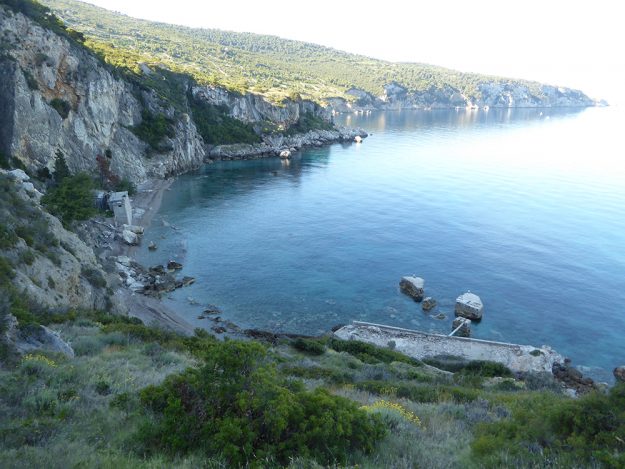
The bay of Komiža with an old bunker and the entrance to the spring to the left

Vis, a Croatian island in the Adriatic Sea, 55 kilometers from the mainland, with an area of 90 km2. 3,460 persons live in the island’s two municipalities. Ten times the population comes to visit every year = 36,750 tourists, spending some 200,000 person-days on the island.

The pressure on the islands’ freshwater system (as well as the systems for energy distribution, sewage, solid waste, roads, ports, telephones, internet, transports, postal services and healthcare) from tourism is not so high, compared to most Mediterranean islands. The amount of water needed for the island can be estimated to 139,000 m3 (139 million liters) a year.

The islanders get their freshwater from two locations: five 160 metres deep drilled wells at Korita located in the interior of the island, and the fresh water spring called Pizdica which is located close to shore in the bay of Komiža, deep inside the 587 metres high mountain Hum.

To visit the source, you leave the road at a height of about 250 meters and descend on a pathway which becomes a serpentine trail down the mountainside. Getting more rugged, with simple stairs, plateaus, risk to slip and dope. There are wild roses, blackberries, hedge flowers, rosemary and St. John’s wort. Through many turns, bends and staggering dumps, you eventually land on a beach with decayed buildings.

Vis was a floating fortress with bunkers and caves for torpedo boats during Yugoslav time. No visits were allowed. The Pizdica source was the only known natural water resource of the island and therefore carefully guarded by the military, who had a posting here and carefully guarded it from attacks of all kinds. Two iron doors 50 meters apart close the double entrance to the spring, connected by a half-moon-shaped gallery, built to bear the pressure of a 500 kiloton bomb. A heavy steel door leads into today’s pumping room, where a small side door leads through a long narrow tunnel deep into the mountain, with the water pipe from the source on the floor. It is dark with simple lamps every ten meters. The passage turns once more. The pipe has taps into the mountain. You hear the water gurgle, and, after another bend, you are at the source.

It is a small basin, 2 x 2 meter, one meter deep, giving 4 litres per second during summer, 3-4 times more winter time. The water is cold and clear and has a slight taste of salt.

It is spectacular. First the steep descent, then the jealous, oversized steel and concrete defense of the source, then today’s impressive engineering solution to extract the water of the source, finally at the bottom of the mountain the ancient, mysterious source, the holy origin of life. The Croatian word Pizdica literally means “small vagina” and the spring is referred to as the “pussy fountain”.
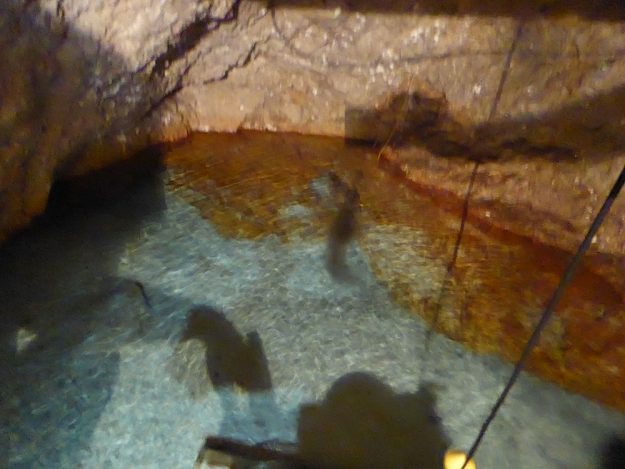
The source of Pizdica

We can choose to look at water from many angles. From an engineering point of view, drinking water is a precious provision which has to be found, extracted, purified and distributed among us humans. From a more poetic perspective, a freshwater spring is not only a subterranean spring but also a subconscious, important source of a myth, a legend, poetry, music, dreams and nightmares.

At Pizdica the myths seem to have combined in curious ways over time. Modern engineering ideals and military manifestations of dated geopolitics blend with traditional folklore echoing masculine dominance. Regardless what perspective we choose, the story of water on the island of Vis is one about a precious resource that needs to be safeguarded. Steel doors or not.

Christian Pleijel is Vice President of the European Small islands Federation. He works with leadership and development on island communities in Europe, including the challenge of water:  https://europeansmallislands.com/water-saving-project/

christian.pleijel@es.kth.se

Water scarcity on islands: how to stage and navigate collective learning

There I was on the island Vis far out in the Croatian archipelago, surrounded by beautiful turquoise water to participate in a workshop about water shortage on small European islands arranged by the Water Saving Challenge Project. Once again the same ingredients; a wicked problem, a diverse group of knowledgeable actors and the tension between holistic ambitions, and specific and localized solutions – they seem to attract my attention. Collaboration, cross-sectoral dialogues and broad participation are argued for as key measurements in almost all sustainable development policies. This seems logical given that the present complex challenges require combination of a diversity of knowledge, and multi-scale and multi-sector approaches. However, I think we have all been participating in too many workshops, discussing challenges, barriers and potentials, with a nagging feeling that it is not enough for the needed societal  transformation. I was curious to find out if the workshop at Vis could be different.

The setting and process leadership are keys for successful collaboration and learning

Shortage of water is one symptom of our inability to handle water as a wicked problem, which has become an everyday reality for the inhabitants on many small islands. The task for the group of islanders gathering on Vis in September was to identify strategies to re-match water use with water availability but without losing sight of other important values such as a viable tourism providing jobs and income or local food production. What new ways of thinking, organizing and doing are needed to transform the water governance and how can the islands help each other?

Our process leader Christian Pleijel from the Kökar Island in Åland, works at KTH Executive School and is also the vice president of the European Small Islands Federation, used two tools to facilitate the discussions. The Ishikawa fish bone is designed to identify causes building up to a certain effect – in our case to identify all aspects of importance to achieve a water saving effect. The fishbone was combined with a method for parallel thinking by the use of six thinking hats developed by Edward de Bono. The thinking hats is a way to look at a certain issue from one direction at a time – the white hat as fact based and neutral, the red hat emotional, the black hat cautious, the yellow hat optimistic, the green hat creative and the blue hat organization. I had not before experienced these tools and looked forward to learn more about their potential.

However, what I soon discovered is that these are just yet another set of tools and with many similarities with tools that I have used or experienced in various collaborative processes before. It is not the tools that make a workshop contributing to real learning and change, it is the setting in which they are operationalised. What made this workshop a collective learning about island water saving was the stage, the actors and the process leader that used the tools.

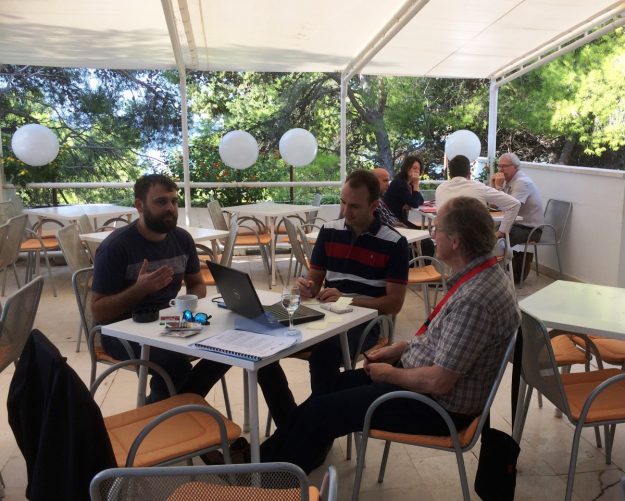
The stage was very carefully designed based on extensive field studies on each of the eight islands represented. These field trips were as much about investigating the present water situation on respective island, as they were about establishing relationships and building trust that enabled the islanders’ engagement in the knowledge exchange and their support of a collective learning community. Furthermore, the stage is not just about what happens in the sessions which usually have a clear structure, roles and goals, but what happens in-between the sessions, during field-trips, coffee breaks and dinners. This is when new relationships are established that are necessary for future remote collaborations to be successful.

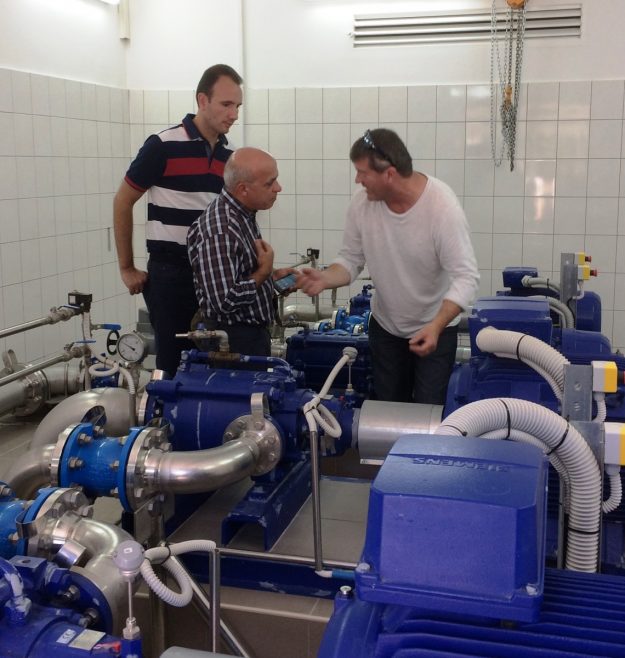
The importance of the space between sessions in a workshop. This is when relationships are built and long term learning partnership can start. A much appreciated visit to the Vis Island water center.

The actors also need to trust the process leader and each other in order to fully contribute to the joint process – the workshop play. Christian is himself an islander with personal experiences about what it means, combined with a long career working with people, leadership, innovations and businesses. In order to address wicked problems a diverse set of knowledge needs to be combined, demanding the process lead to be like a chameleon when interacting with this diversity. Like a director of a play you need to know when to start, stop, go back, fast forwarding by tweaking the tools so they are as purposeful as possible in relation to the process dynamic.

In the end fish bones covering many aspects of the water saving challenges on each island was drawn and the participants had been cautious, creative and emotional along the way with a strong foundation in facts and possible interventions in terms of governance. But, most importantly it was decided that this workshop was just the beginning of a more long-term exchange between the islands and that they will become learning labs to support a larger network of islands in the future.

What I bring with me from the three days with great islanders from all over Europe is that a workshop that enable not just knowledge exchange but real learning, needs to be carefully designed as part of a larger setting and requires deep skills in how to set a stage, encourage actors and use the right tools in the right moment. This might be common sense in other sectors but within sustainable development there is a clear need to highlight and develop skills in process design, leadership and facilitation so that we can move away from disappointing efforts of collaboration into meetings that enable societal transformation.

Sara Borgström

Assistant Professor, Strategic Sustainability Studies

KTH Royal Institute of Technology


Readings:
How to read an island by Christian Pleijel
Six thinking hats by Edward de Bono
Att leda samverkan: En handbok för dig som vill hantera komplexa samhällsutmaningar by Martin Westin, Camilo Calderon och Alexander Hellquist.

Green Infrastructure and Tin Roofs

Slow-down, infiltrate, filter. These are the reassuring mantras at the heart of efforts to emulate the drainage patterns of natural systems and a practical strategy to mitigate the increasingly severe effects of urban flooding. Departing from the traditional hard-surfaced approach of “pave, pipe and pump” this naturalised approach to drainage represents the blue strand in the budding concept of “Green Infrastructure” (GI) which weaves together stormwater management, landscape, ecology, air quality, climate change adaptation, public health and recreation in the urban setting.

All infrastructure development requires significant space and careful planning. Green infrastructure even more so, as water is encouraged to slow, stop, infiltrate and evaporate where it falls. At the same time, the intensity of severe rainfall events is rising in many regions, requiring more space to deal with ever-increasing flows. So what does sustainable drainage and green infrastructure mean in different cities, especially for rapidly growing cities like Nairobi, Kampala or Lagos where the majority of new urban residents will live in low-income, dense and “informal” neighbourhoods where there is little space?

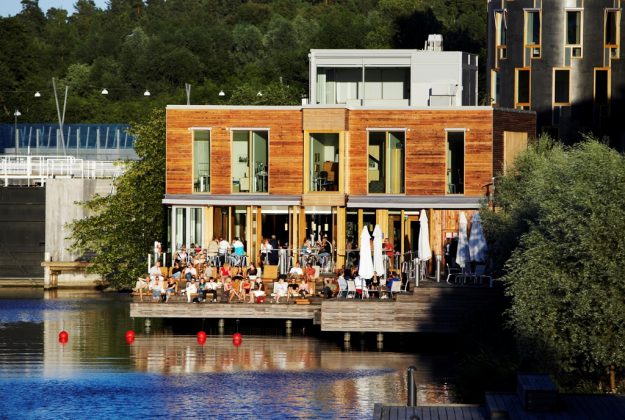
Many cities rightly feted for their achievements in Green Infrastructure – for example Portland, Melbourne, or Stockholm – represent different geographies. But they are also typically wet and temperate, well-resourced, and well-coordinated. Not seldom are they re-generating underutilised spaces when implementing GI approaches (e.g. Hammarby Sjöstad). Other successful strategies make use of new opportunities created by the vacation of previously occupied land (e.g. in legacy cities like Detroit).

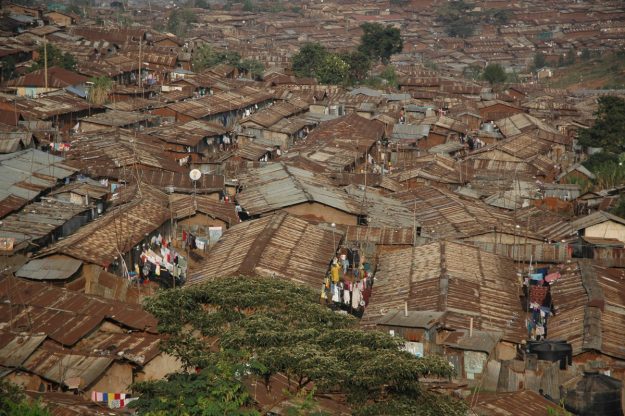
Image: Hammarby Sjöstad (Mikael Sjöberg/mediabank.visitstockholm.com). Top Image: Kibera rooftops (Joe Mulligan).


Image: Green Infrastructure development in the Cody Rouge area of Detroit (Joe Mulligan)

Green Infrastructure in the East African city: a pipe-dream?

In the rapidly growing cities where we are working in East Africa the catch-all concept of Green Infrastructure could have significant co-benefits, but also faces some knotty challenges. In many cities the public land along natural drainage paths is inhabited by the city’s poorest and most vulnerable (see for example Parikh et al, 2012); residents’ solution to a lack of affordable housing. The density, imperviousness and lack of sanitation services in these settlements create hotspots of flooding and public health risks while leaving little physical or political space to manoeuvre. Divisive planning regulation, sometimes stuck in the colonial era, increasingly intense extreme rainfall events, and the appropriation of green space into dense developments through both “formal” and “informal” processes compound the physical and social problems.

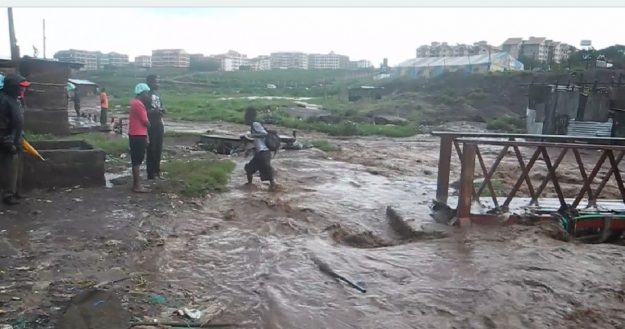
Video: flash flooding after 15 minutes rain in Andolo, Kibera (Pascal Kipkemboi)

A discussion on the potential and constraints of GI in rapidly growing cities is now timely with new investments in the networked and stacked infrastructures of roads, drainage, water and sewerage, as well as more holistic approaches to “slum-upgrading”, being planned in many cities. At the same time there is the risk of locking-in unsustainable practices and long-life infrastructures. In Nairobi, today there is concern that the proposed city-wide Stormwater Masterplan will encourage traditional hard drainage solutions that don’t activate the potential of green and open spaces and that are inflexible to future climate change.

Site, Settlement, Watershed – Networking Green Infrastructure from the Bottom-Up

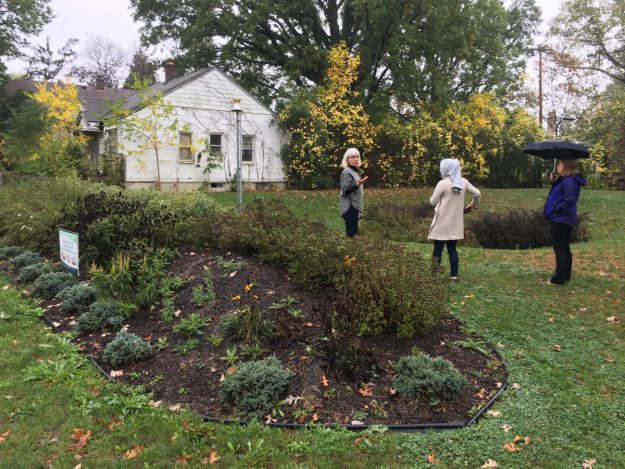
As major upgrading works take time to plan and implement we also need to think about interim improvements to reduce daily risks for residents. In our work at KDI we have been piloting a number of sustainable drainage techniques in the Kibera neighbourhood of Nairobi at the very local scale. In practical terms, these include GI elements such as planted revetments, bamboo plantation for erosion control, structured detention and infiltration (using soft drink crates instead of expensive “stormblocs”) and rainwater harvesting. Even when harder drainage solutions are the only spatially viable solution, there are opportunities to improve public health, access and safety, and to create green, open and productive public space for social interactions, play and economic activity.

Image: Green Infrastructure and Public Space at the small scale in the Kibera settlement (Joe Mulligan/Pascal Kipkemboi)

At the larger scale Green Infrastructure in dense urban areas implies some unavoidable trade-offs. The question is; can residents and local authorities come together to discuss acceptable levels of risk and negotiate appropriate re-housing while creating space for social and ecological functions? The success of enumeration and participation processes in Kibera run by intermediaries such as Slum Dwellers International and Akiba Mashinani Trust (see Mitra et al, 2017) suggest this could be possible. If layers of local knowledge, scientific understanding of flooding, appropriate re-housing and integrated planning can be combined with green infrastructure as an organising framework, the co-benefits of ecological remediation, climate change adaptation, improved services and local development opportunities could be realised. That’s a lot to factor in, but demonstrating that GI techniques can actually work in dense, urban and low-income areas at the small scale might be a starting point for inserting them into larger discussions.

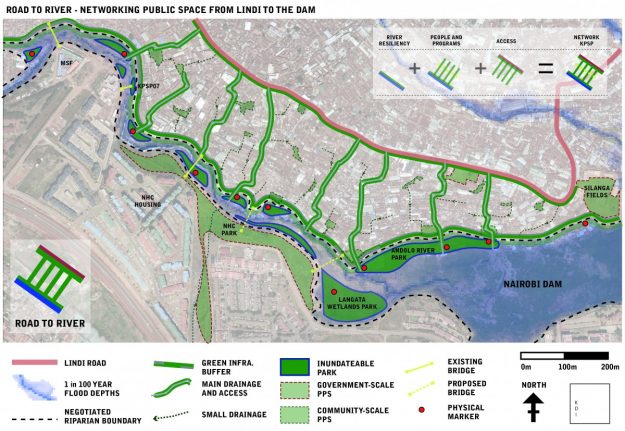
Image: A conceptual “Rivers and People” plan by KDI in 2016 for the co-development and rehabilitation of the Ngong River in Kibera.


Joe Mulligan, is a civil and environmental engineer and associate director of KDI working on water and drainage strategies in multiple contexts for more than ten years. He is also an industrial PhD student at KTH Division of Strategic Sustainability Studies.

Vera Bukachi is a civil engineer and the senior research coordinator in KDI’s office in Nairobi and is completing a PhD at University College London’s Centre for Urban Sustainability and Resilience where she has also taught urban drainage and flooding.