Possessed Landscapes: Experiments in Conservation and Sovereignty in Southeast Myanmar
Welcome to the first Brown Bag Seminar for 2026, with Tomas Cole, Stockholm University, who will share about his field work in Southeast Myanmar that has resulted in the book Possessed Landscapes. From Cole we will hear about how indigenous communities, activists and revolutionaries have transformed war-torn land into a conversation area, combining revolutionary politics and conversation, now a home for humans, more-than-humans, territorial spirits and ancestors.
When spirits guard forests, conservation becomes revolution—and liberation grows from the soil
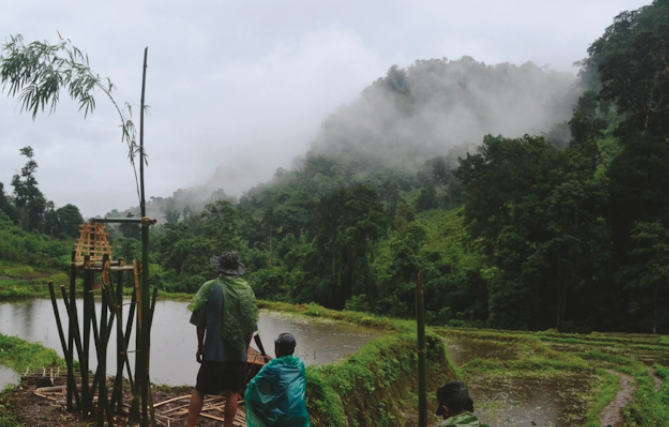
In 2011, Myanmar emerged from what was by some counts the longest ongoing war in the world. Amid the flurry of ceasefires and constitutional reforms, Indigenous communities moved to reterritorialize land that was fiercely contested in the preceding decades of conflict. In southeast Myanmar, the Indigenous people of Karen State, activists, and revolutionaries transformed their war-torn land into the Salween Peace Park—a conservation area that is home not only to endangered species like tigers and gibbons but also to territorial spirits and ancestors.
Set in the highlands of the Myanmar-Thai border, Anthropologist Tomas Cole’s newly published book "Possessed Landscapes" introduces a world where land is understood as both spiritually inhabited and politically claimed. Pwakanyaw cosmologies blur boundaries between human and more-than-human ownership, presence, and possession. Cole’s concept of more-than-human political ecology captures the nuanced, playful, and often deeply strategic ways in which local communities negotiate power, land, and identity amid civil war and state violence. Through vibrant ethnography and grounded political analysis, Cole illuminates how Indigenous Karen communities and their allies are defining conservation, autonomy, and peace-building on their own terms.
A case study in reimagining sovereignty through ecological stewardship, Possessed Landscapes is essential reading for scholars and practitioners in anthropology, environmental humanities, and peace and conflict studies, as well as anyone seeking to understand how revolutionary politics and conservation can be inseparably entwined.
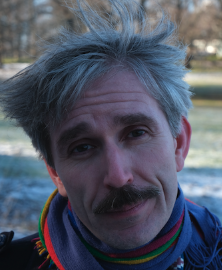
Tomas Cole is a Postdoctoral Fellow at the Department of Social Anthropology, Stockholm University, and a Visiting Scholar at the Rachel Carson Center in Munich. His previous research has focused on indigenous conservation and environmental peacebuilding in Southeast Myanmar. This work examined indigenous modes of possessing landscapes and the ways these are translated and rescaled into struggles to protect environments and to gain greater autonomy. His current project explores divergent attempts to make peace with “pests”—specifically with diseases bearing mosquitoes in both Singapore and Myanmar.