KTH Logo

Marco Armiero: Mediterranean Culture Award 2022 with “Wasteocene”

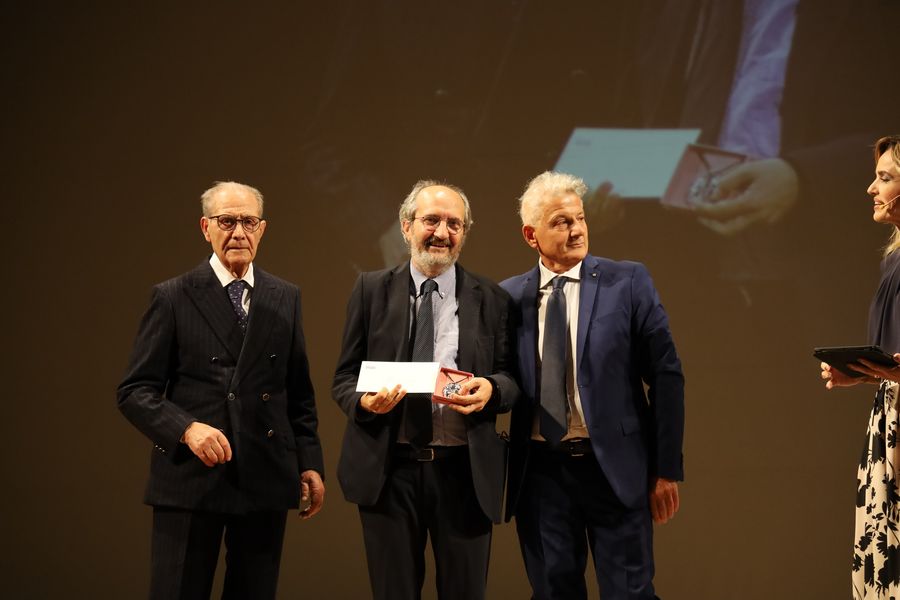
We are happy to announce that Marco Armiero, director of the KTH Environmental Humanities Laboratory, has been awarded the Mediterranean Culture Award 2022 in the section for Human Sciences with the book Wasteocene – Stories from the global dump. He recieved the award at a price ceremony in Cosenza, Italy, on the 13th of October.

This year it was the XVI edition of the Mediterranean Culture Award founded by the Carcial Foundation. The foundation represents the historical continuation of the Cassa di Risparmio di Calabria, established in Cosenza in 1861. Marco Armiero was nominated in the Human Sciences section together with emeritus professor of economy, Joan Martínez Alier and political scienteist Gille Kepel. His book Wasteocene – Stories from the global dump was published in 2021.

Summary of the book

Humans may live in the Anthropocene, but this does not affect all in the same way. How would the Anthropocene look if, instead of searching its traces in the geosphere, researchers would look for them in the organosphere, in the ecologies of humans in their entanglements with the environment? Looking at this embodied stratigraphy of power and toxicity, more than the Anthropocene, we will discover the Wasteocene. The imposition of wasting relationships on subaltern human and more-than-human communities implies the construction of toxic ecologies made of contaminating substances and narratives. While official accounts have systematically erased any trace of those wasting relationships, another kind of narrative has been written in flesh, blood, and cells. Traveling between Naples (Italy) and Agbogbloshie (Ghana), science fiction and epidemic outbreaks, this element will take the readers into the bowels of the Wasteocene, but it will also indicate the commoning practices which are dismantling it.

Get the book here!

*

Also recently published by Marco:

Armiero, Marco/ Biasillo, Roberta/ Graf von Hardenberg, Wilko: Mussolini’s Nature. An environmental History of Italian Fascism, MIT Press 2022.

Ruiz Cayuela, Sergio a. Armiero, Marco: Cooking Commoning Subjectivities. Guerilla Narrative in the Cooperation Birmingham Solidarity Kitchen, in: Franklin, Alex (ed.): Co-Creativity and Engaged Scholarship. Transformative Methods in Social Sustainability Research, Palgrave Macmillan 2022.

Armiero, Marco: From Waste to Climate. Tackling Climate Change in a Rebel City, in: Social Text (2022), 40 (1(150)): 69-89.


New Article: Claiming Value in a Heterogeneous Solid Waste Configuration in Kampala

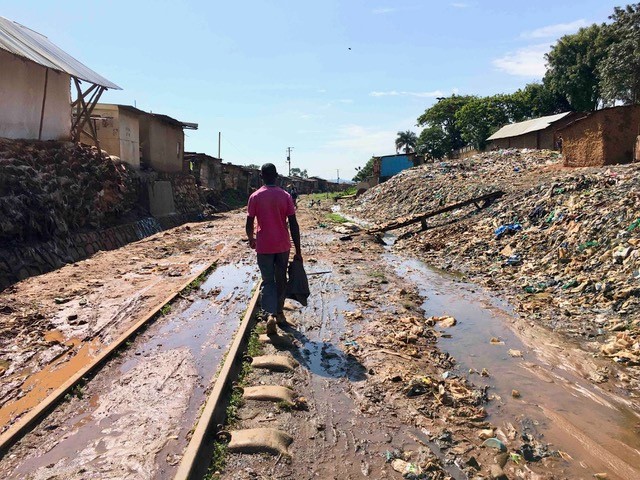
Division and EHL researcher Henrik Ernstson, together with Mary Lawhon, University of Edinburgh and Hakimu Sseviiri, Shuaib Lwasa and Revocatus Twinomuhangib from Makerere University (Urban Action Lab) are published in a forthcoming issue of the scientific journal Urban Geography. In the peer review article “Claiming value in a heterogeneous solid waste configuration in Kampala” they examine recycling in Kampala, the city’s complex waste systems and why little waste moves through it.
Photo: Henrik Ernstson http://www.situatedupe.net/hiccup/hiccup-resources-outputs/

Abstract 

Kampala has a complex set of regulations describing actors, rules and procedures for collection and transportation of waste, and requires waste to be disposed of at the landfill. Yet little of the city’s waste moves through this “formal system”. Building on wider scholarship on urban infrastructure and calls to theorize from southern cities, we examine recycling in Kampala as a heterogeneous infrastructure configuration. Kampala’s lively recycling sector is socially and materially diverse: it is comprised of entrepreneurs, publicprivate partnerships and non-governmental organizations, as well as a range of materials with different properties and value. We articulate how actors assert claims, obtain permissions, build and maintain relationships as they rework flows away from the landfill. We argue that recognizing sociomaterial heterogeneity throughout the waste configuration enables a clearer analysis of contested processes of claiming value from waste. We also demonstrate how these efforts have pressured the state to reconsider the merits of the modern infrastructure ideal as a model for what (good) infrastructure is and ought to be. Various actors assert more heterogeneous alternatives, raising the possibility of alternative modes of infrastructure which might generate better incomes and improve service provision.

This article is a part of the Heterogenous Infrastructure Configurations in Uganda (HICCUP) project, funded by the Swedish Research Council.

Henrik is a long time research fellow of the Environmental Humanities Laboratory and the Division. He is a political ecologist, lecturer at the University of Manchester, world wide resident, honorary associate professor of the University of Cape Town, a postcolonial urbanist and a filmmaker to mention only a few things on a long list of engagements. Keep up with Henrik on Twitter: https://twitter.com/rhizomia

Links

Claiming value in a heterogeneous solid waste configuration in Kampala (open access)

HICCUP project page

Urban Geography