KTH Logo

On pikes and potatoes

On the island Utö in Stockholm’s southern archipelago they grow pikes and potatoes next to each other. You don’t believe me? Go see for yourself!

In the beginning of September I returned to this wonderful spot, along with some 50 academics, entrepreneurs, investors and environmentalists. The occasion that brought us here was the first Baltic Sea WaterTalks; a meeting of diverse professionals in search of practical solutions for challenges in the Baltic Sea.
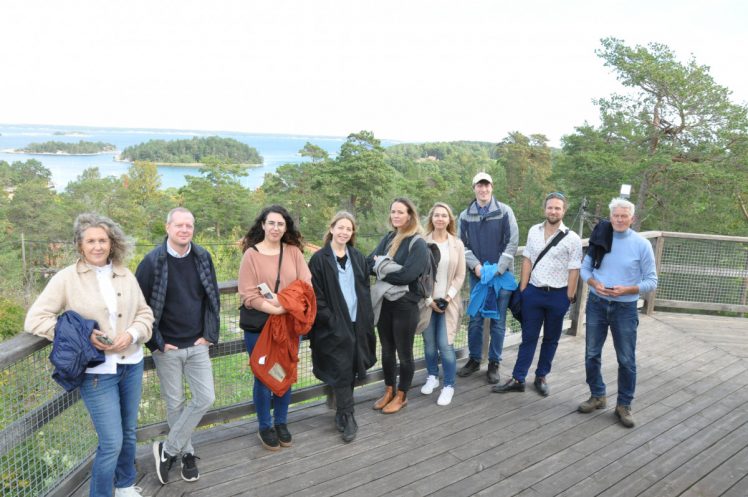
KTH researchers visiting Utö’s famous windmill

People on the island of Utö have always depended on what nature gives, in one way or the other. While this might be said for all of humanity, it is never more obvious than on an island at sea. Already from the 12th century, it was the iron ore on the island that brought prosperity. After the mining was abandoned in the 19th century, all the trees were cut down to supply timber to the growing city of Stockholm. But fish was plenty and by the early 1900s, there were some 70 fishing boats stationed on Utö. Now there is only one part-time fisherman left. Instead, the island has become a popular tourism destination thanks to its unique nature, its heritage and birdlife. Yet again, nature provides the basis for local livelihood. But how do we make life in the archipelago sustainable after centuries of predatory resource extraction?

This is where the pikes and the potatoes come in. Initiativ Utö, a local NGO and also the host of the WaterTalks, has started to build “pike factories”. In these constructed wetlands and estuaries they aim to both restore the fishing stock and reduce nutrient loads. Nutrients in the run-off and sediments are collected through mechanical and biological methods and the estuaries are breeding places for pike. The pikes restore some balance in the local marine ecosystems and attracts sports fishers. The recovered nutrient is used in local small-scale farming, and seems to be particularly good for potatoes.
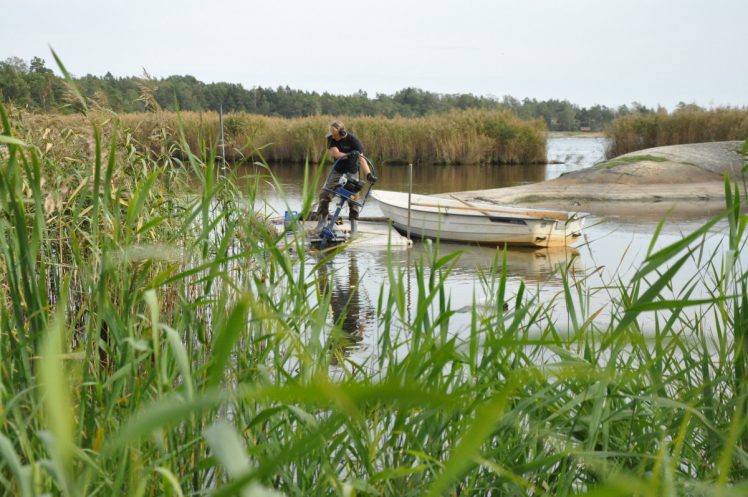
Restoration work in the estuary

Currently, two research groups from KTH are actively doing research on the pike factory wetlands. A team led by Guna Rajarao Kuttuva looks into monitoring techniques and optimisation of the wetland. Another team led by Zeynep Cetecioglu Gurol is investigating the potential of phosporous “mining” from the estuary sediments, where valuable phosphorous could be extracted as a commercial product. Research and innovation like theirs moves us towards “closing the loop” for food production on a whole new scale. Could the polluted seas become a source for valuable and scarce nutrients? Can we move towards a balance with nature and stop exhausting nature’s resources one after the other?
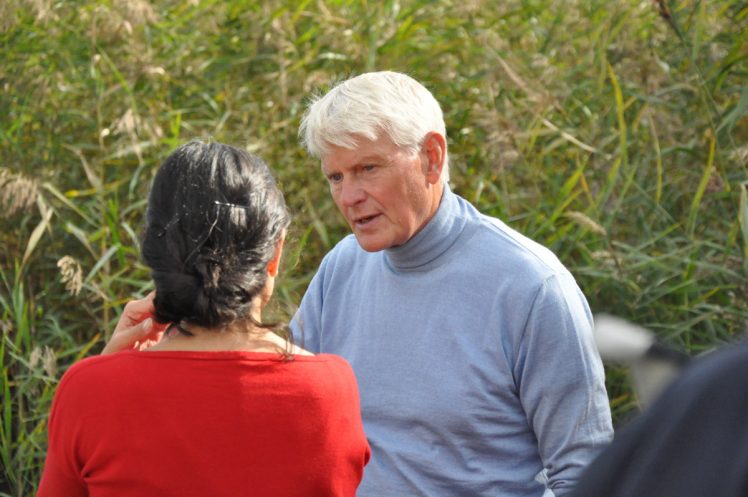
Thomas Hjelm of Initiativ Utö talking to Zeynep Cetecioglu Gurol in the wetlands

And most importantly, what to do with the potatoes? For my part, I prefer the Swedish traditional dish “raggmunk”, a type of potato pancake. I can tell you that the Utö potatoes grown on sludge from the pike factory, are particularly well suited for raggmunk. Bon appétit!

Oooh those raggmunks!

Utö-Raggmunkar

10 Utö potatoes

3 eggs

2 dl flour

4 dl milk

1 teaspoon salt


Grate potatoes coarsely

Mix egg, flour, salt and milk and add grated potatoes

Form small “beefs” into saucepan and fry on medium-high, rich with butter

Serve with lingonberries
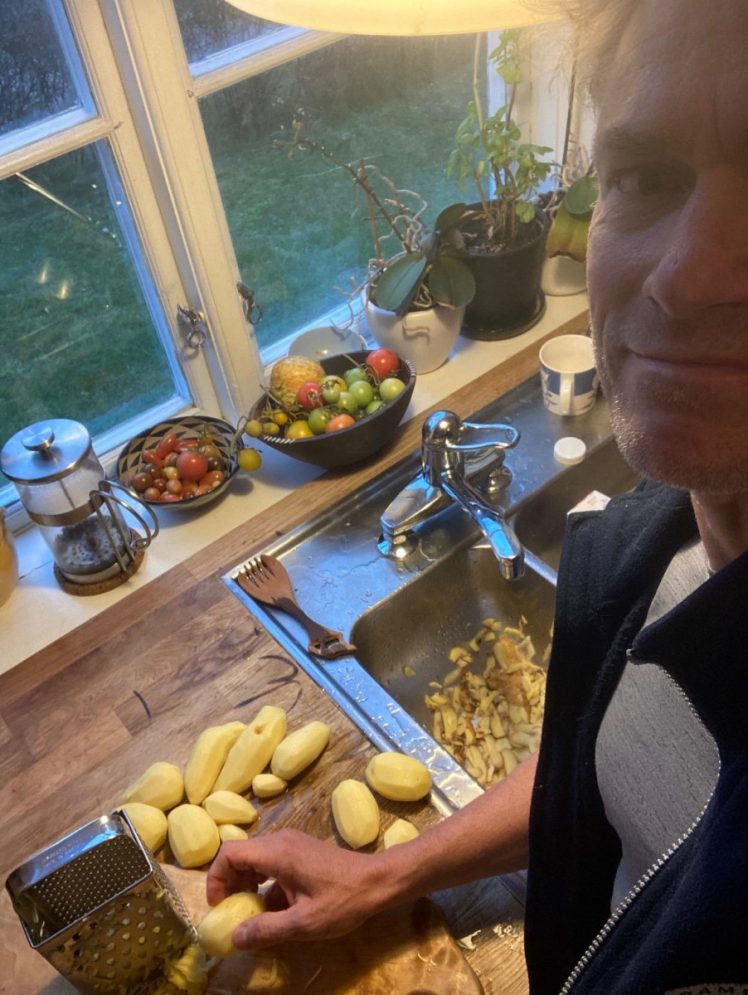


Le chef at work – grating away in the kitchen

Why Water Matters for Nuclear Power

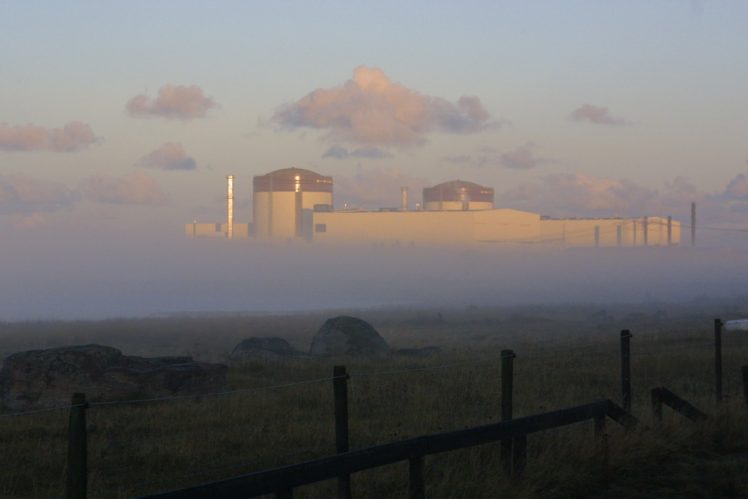
Ringhals power plant. Photo: Vattenfall

We tend to associate nuclear power plants with many different things: smoking cooling towers, Homer Simpson-like operators, or dramatic TV series like HBO’s Chernobyl. But something people generally do not associate nuclear power plants with are massive amounts of water. Still, water is at the centre of nuclear power’s historical development, contemporary challenges, and further future.

The connection between water and generating nuclear power goes back to the Industrial Revolution, when steam technologies such as boilers and steam generators were used to heat up water, turn that water into steam, and use the energy of that steam to generate power. However, this led to many steam explosions with deadly casualties. Countries like the U.S., France and Sweden enforced safety rules, which stipulated how the boilers had to be designed and what the allowed pressures and temperatures were.

In the 1950s, more and more countries saw the potential of using nuclear technologies to generate power. With its Atoms for Peace-program, the U.S. took the lead and promoted the reactor type they developed: the light water reactor. This reactor type uses normal water as a coolant and had its origins in both naval propulsion and fossil fuel power generation. This continuity thus made water-cooled reactors a relatively simple way of rolling out nuclear power fast.

The safety in nuclear power plants was therefore determined by the control of water and the understanding of thermal-hydraulic phenomena, such as transients and steam explosions. The pressure vessels, steam generators, valves, pipes, tubes, and pumps of nuclear power plants suddenly became subjected to the steam regulations of the Industrial age. This created new risks since these codes and regulations did not consider radiation. One of the codes that underwent revision was the Boiler and Pressure Vessel Code of the American Society of Mechanical Engineers (ASME). The Code started travelling and was, for instance, almost directly implemented in all Swedish nuclear power plants. Gradually but surely, nuclear safety regulations in the West became more ‘nuclear’ as the intersection between water, steam, steel, and radiation became better understood and nuclear accidents, such as Three Mile Island, pushed governments for more safety legislation.

For the USSR water was equally crucial along all steps of the nuclear lifespan, such as mining, fuel element production, exploitation, and the storage of spent nuclear fuel and radioactive waste. In general, all nuclear power plants were placed next to either a river, a lake or the coast – the latter being an exception. The most common source of coolant was river water. Interestingly, those rivers usually had to be previously ameliorated and often artificial water reservoirs were created.

A specific setup was used for so-called energy complexes, a special form of nuclear-hydrotechnical combine. They embodied the combination of nuclear and hydro power, agricultural irrigation, and fish cultivation in one location. Furthermore, constructing them meant to manipulate water bodies with newly created dams. In this way an energy complex was created to procure valuable synergies through the multiple usage and partial recycling of water.

Finding the right location was crucial for an envisioned energy complex. It needed to be a location with sufficient water supply, with suitable ground conditions, without earthquake or flood dangers. In addition, the complex needed to be within reasonable distance towards a (potential) industrial settlement to provide this population centre with electricity. Safe and ample water supply had to be considered during site selection and was one of the essential criteria for their construction. If there was not enough water, the complex could not be built.

A leading institute for the creation of energy complexes was Gidroproekt (Hydroproject). As the name suggests, Gidroproekt was a Soviet hydraulic research, design and construction agency. By joining its hydraulic expertise with newly introduced nuclear engineering, this institute was the very place where knowledge transfer between these two prestigious engineering communities took place. Here, the water-focused perspective prevailed and embedded nuclear technology into hydro-ameliorated aquatic systems. It promised prestige as well as quick results – and Gidroproekt readily delivered.

In sum, both in the East and the West, water played a crucial role in the development of nuclear power. In the West, knowledge about water was essential for developing nuclear safety practices. In the East, water was seen as a crucial resource, for powering energy complexes in the struggle for building a Communist state. Nuclear’s reliance on water meant that nuclear power plants and energy complexes were meeting places of different long-standing traditions and communities. Given the large number of water-cooled reactors in the world today, and including those under construction, it is fair to say that this crucial connection is there to stay.

Achim Klüppelberg & Siegfried Evens
Doctoral students at division for History of Science, Technology and the Environment, within the ERC-funded project Nuclear Waters

Covid-19 cannot stop youth and ChangeMakers!

ChangeMakers is a Central Baltic Interreg project, funded by the European Union, that aims to enhance the spirit of entrepreneurship with focus on sustainability, circular economy, water sectors, and reuse-reduce-recycle. Target group in ChangeMakers is students of upper-secondary schools in countries around the Baltic Sea, i.e., Sweden, Finland (including Åland), Estonia, and Latvia. The project started in 2020 and runs over two years in which 250 students will form 50 cross-border teams to establish ‘mini’ start-ups and develop business solutions to global environmental challenges with a specific focus on the Baltic Sea. Local companies and organisations – e.g. the Environmental Protection Agency (EPA) of Sweden, Lovia, and Fifax Ab, — have partnered the project assisting the students with their start-ups.

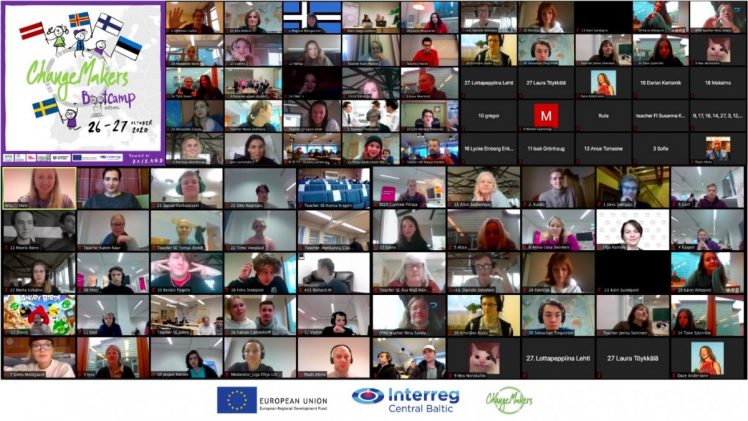
The Zoom call with a selection of the more than 120 upper-secondary school students from Sweden, Finland, Estonia, Latvia, and Åland.

The ChangeMakers BootCamp was a great success, hosted and moderated by the representatives of Riga Technical University who ensured that the students learned about innovation, teamwork, and entrepreneurship in a meaningful way. Organising a Zoom call with 120+ teenagers for two days is of course a challenge, but several online tools, like Mentimeter or Miro boards, helped to engage everyone. Furthermore, the founder of Angry Birds, Peter Vesterbacka, joined us and gave an inspirational speech about entrepreneur­ship and initiating things that seem impossible in the beginning. The students showed great interest and creativity to work on the presented environmental challenges, and were curious to talk to their new teammates from other countries.

As a central activity, 14 environmental challenges were presented in the BootCamp which had been defined by the project partners in collaboration with local companies and organisations from whom a representative also joined the online Boot Camp. Defined challenges cover a wide range of environ­mental issues both within the Baltic countries and beyond, including hydrological and water management challenges such as the use of excess rainwater, plastic pollution of stormwater discharge into the Baltic Sea, as well as eutrophication and invasive species issues concerning the Baltic Sea. Further­more, problems regarding textile waste, the efficiency of different industries, usage of disposable cups or silage packaging, as well as how to cut down fossil fuels were also introduced to the students. After learning about different environmental challenges, the students chose a challenge, formed cross-border teams and drafted their initial ideas about founding a mini company and how to tackle solutions to their environmental challenge.

Following the BootCamp in Oct 2020, the student teams continued working on their mini company ideas in collaboration with mentors and project partners. In Sweden, the Swedish Environmental Protection Agency (Naturvårdsverket) is part of the project and assisted students in addressing solutions with the two challenges of a fossil free planet and a plastic free Baltic Sea. The teams will pitch their companies in a dragon’s den format (i.e. present their business ideas to a panel of experts and potential investors) to the project representatives and collaboration partners in the beginning of May 2021. Although the final event of the first round of the project is again going to be online, ChangeMakers is indeed a great example of how we can conduct projects and events despite the current situation and that inspiration and passion for a sustainable future can also be spread online.


Project team in Sweden
Zahra Kalantari
Navid Ghajarnia
Samaneh Seifollahi
Hanna Kreplin

Find out more about the project:
https://sites.utu.fi/changemakers


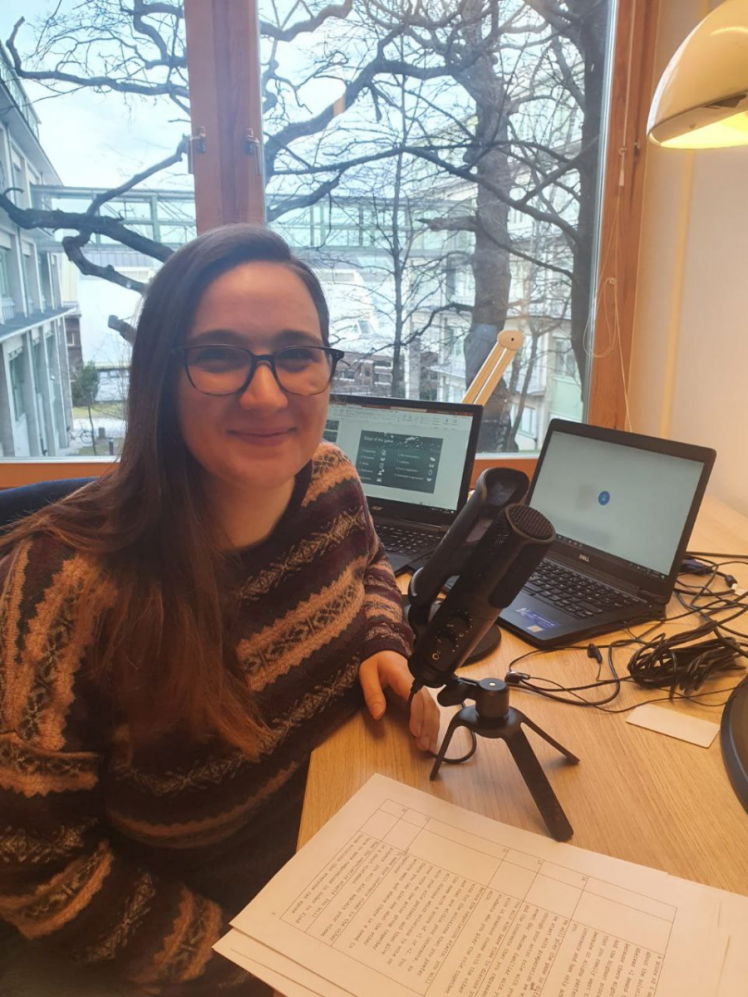
Hanna Kreplin recording a video as an online study material for the students

Vattensparandet sipprar från ö till ö

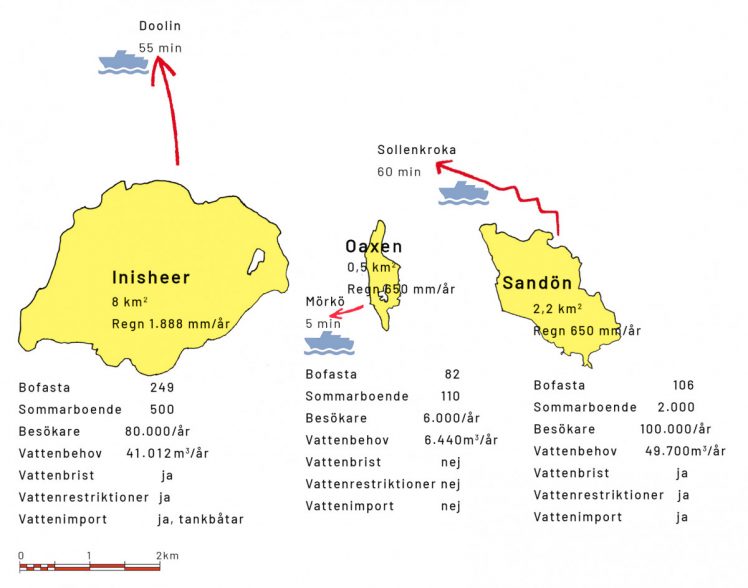
Ön Oaxen i Himmerfjärden har varit testbädd för snålspolande kranar under år 2020. Utan att uppleva någon försämring i vattenflöde sparade varje hushåll 25 kubikmeter vatten (20%) vilket är 270 kr/år i minskad avgift. 3 kranar kostar 480 kronor, återbetalningstiden är mindre än två år.

Testet skedde i samverkan mellan samfälligheten på Oaxen, de boende i bostadsrättsföreningen Sjövillan, Värmdö och Södertälje kommuner samt KTH.

Inspirationen kom från den irländska ön Inisheer, en av Aranöarna, där 25 hushåll som var öns största vattenförbrukare fick nya duschmunstycken, kranar och klosetter år 2017. Den typiska irländska familjen med 2,6 personer minskade sin vattenanvändning från 128 till 79 liter per person och dag. Inisheer sparade därmed 2,3 miljoner liter vatten på två år vilket är nödvändigt eftersom det är en vattenfattig ö som importerar färskvatten med tankbåt.

Studenten Liubov Shkurenko från KTH skrev sin masteruppsats om vatten och avlopp på Oaxen år 2019. Den ledde till att Oaxen blev en testbädd, en pilot för snålspolande kranar ledd av universitetslektor Anders Nordström i Pelago-projektet.

Nu fortsätter studenterna Ellinor Hambraeus och Emilie Andersson med att jämföra vattenbesparing i hushållen på Oaxen och Sandhamn. Sandhamn är en ö med mycket ojämn belastning på vattenresurserna genom det stora antalet besökare sommartid, i högsäsong 8.000 personer per dag. Studenterna vill förstå och föreslå hur man kan spara på vatten. I deras kandidatarbete ingår enkäter, översikt av vattenbesparande tekniker för hushåll, och de kommer att föreslå åtgärder.

Det hela har genomförts i projektet Pelago, som sammanlagt har fått tio studenter från KTH att skriva sina kandidat- och masteruppsatser på ämnen föreslagna av och med stor betydelse för ö-samhällena i Värmdö skärgård. En sammanlagd resurs om c:a 5.000 timmar som skärgården får av unga, nyfikna, ifrågasättande, kreativa och begåvade personer samt deras handledare, professorer och institutioner.

Våra öar är vackra och bräckliga samhällen, glesa glesbygder om vintern och täta glesbygder på sommaren. De stora variationerna sliter hårt på landskapet, på människorna och på infrastrukturen t ex vatten och avlopp. Nu sipprar kunskapen om hur man kan spara på vatten från ö till ö.

Läs mer om samverkansprojektet Pelago här.

Christian Pleijel
Biträdande projektledare,
Värmdö kommun

A Water Conference in spite of Corona

The WaterCentre@KTH has already existed for four years. Wow, time flies! To mark the ending of our first mandate period, we had decided to organise a water conference showcasing research, water innovation and collaboration at KTH. That was before the new Corona pandemic struck…


Already back in January this year we drew up plans for a Conference in December.  We – the “core team” at the WaterCentre – wanted to have a full science and innovation event, with lots of interaction, parallel sessions with paper presentations, partners dialogues, workshops, complete with dinner party and late-night dancing afterwards!

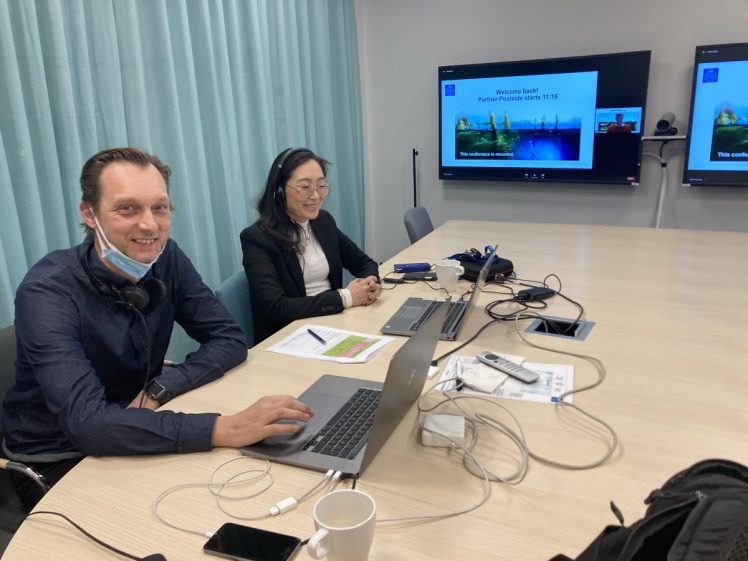
The “control room” with technician Daniel Persson and Coordinator Lisa-Mee Swartz

We all know what happened after that. Yet, for the entire spring we still believed that the virus would have receded by December. By May we had booked venues at KTH Campus, secured our international Key Note speaker, and invited for papers. But this virus wasn’t easily dealt with and after summer we realized the fact of the matters; if we wanted to make a conference it had to be digital. As if there weren’t enough digital meetings already…

Now we can look back at a successful conference although in a format quite different from what we had envisaged. Within just three hours we learnt and interacted across disciplines and across professional fields all from the comfort of our desks (or sofas and armchairs).

After the nice words of welcome by our Vice President Annika Stensson Trigell, we all enjoyed a remarkable Key Note address by Prof. Dr. Janet Hering, the Director of one of the world’s leading water research institutes, EAWAG in Switzerland. Janet stressed that science is not enough if we are to meet the global goals on sustainable development and therefore, we need to make our research “actionable”. The following Q&A also revealed that while many researchers want their results to have an impact in society, a majority also need more support from their organisations in doing that.

The ensuing Science Fountain showered the participants with water knowledge. In three parallel sessions, 22 KTH researchers delivered speed talks in areas spanning from decentralised hypochlorite production and Artifical Intelligence, via algae-cultivation, to arts and history. Yet – all about water! All presentations here.

Research coordinator Timos Karpouzoglou during the Science Fountain

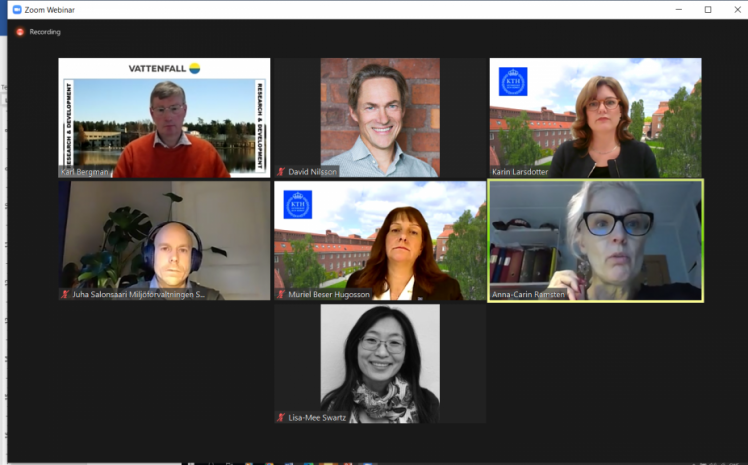
Science is not enough – as we heard from Janet Hering – and the final part of our conference we devoted to a discussion on “How to make collaboration meaningful”. Much thanks to a skillful moderation by our colleague Karin Larsdotter, it was a fantastic display of what is required to make collaboration between academia and societal partners work.

To start with, a partnership has to be a two-way relationship and academic actors need to listen more attentively. As Karl Bergman – head of R&D at the energy company Vattenfall – put it: “You often invite us to be part of new R&D projects. But why don’t you ask us more often what our problems are?” At the same time, industrial actors might want to push universities to produce engineers tailor-made for their needs. But it is more important that we give our students robust knowledge for the entire job market, said Muriel Beser Hugosson, head of the School of Architecture and Built Environment at KTH. Juha Salonsaari from the Environmental Department  at City of Stockholm, stressed that a multitude of interaction arenas and a wide network really are keys for starting successful collaborations. In fact, argued Anna-Carin Ramsten from the government agency Vinnova, informal meeting points are often under-estimated in collaboration. Maybe we just need “go and take a fika with someone”.

A lively conversation – over the net!

The entire conversation – which was very lively despite none of the panelists sitting in the same room – can soon be found on the WaterCentre webpage, along with the recording of all the sessions, and the Key Note. Presentation slides are also downloadable from the web.

On the whole, we had an intense and very fruitful conference.  Our sincere thanks goes to all the participants, and all the speakers, for joining us in the water. We can all agree that we miss the physical meetings. But digital interaction also has its qualities, and we are rapidly getting better at it!


As for the party: well, who knows – it might still happen. Meanwhile, please enjoy this brand new report for the WaterCentre@KTH 2017-2020. I promise, it is a small carnival in itself!

Miniature party afterwards, with 2 metres distance. Almost.