The Department of Theoretical Computer Science (TCS) works on the foundations of efficient and correct algorithms and software, and it deals with the tractability of computational problems. Applications areas include software engineering, computer security and privacy, cryptography, verification and sat solving, natural language tools, and computer science education
Research areas
Algorithms and Complexity
Solving a computational problem requires resources and the fundamental question studied in this research area is to determine, as closely as possible, the computational difficulty of basic problems.
We study the impact of network communication delays and failures on the behavior of networked software, where error handling is difficult to test with conventional means.
Computer science education research is an interdisciplinary area aiming at improving the understanding of how students learn computer science and how the teaching and assessment of computer science could be improved.
Data science has emerged as a key discipline to enable transforming the available data into knowledge products that bring insights into the corresponding domains, improve decision making, and accelerate scientific discovery.
A major current technological and societal challenge is to be able to produce software systems that behave in a reliable and predictable manner. We perform research into different ways of mastering software complexity.
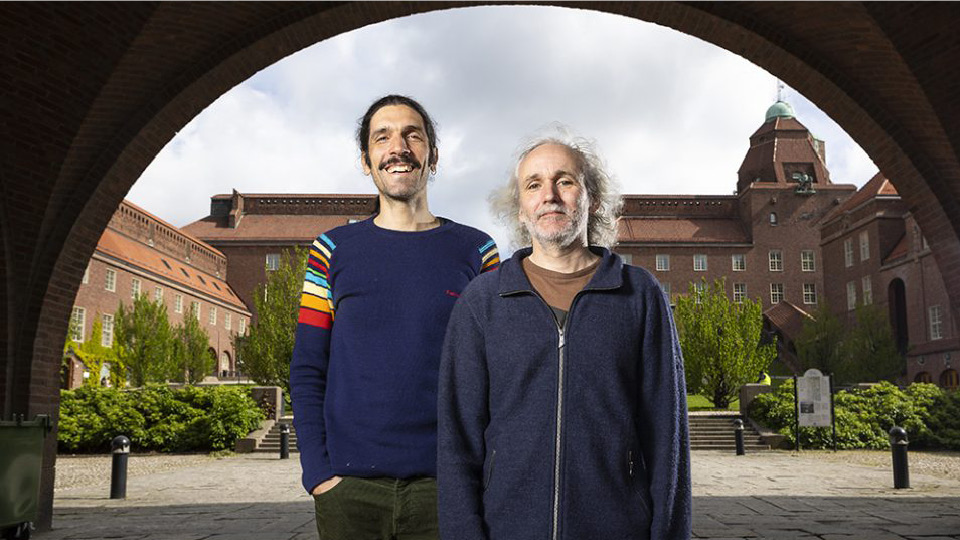
For nearly two decades, Benoit Baudry (Université de Montréal) and Martin Monperrus (KTH Royal Institute of Technology) have supervised master’s and PhD students. Along the way, they’ve drawn a perhap...
AI fixes security flaws – KTH wins prestigious award
Can AI fix security flaws before hackers strike? KTH researchers say yes—and their breakthrough won the Best Paper Award 2023 from IEEE Transactions on Software Engineering. By using AI to automate se...
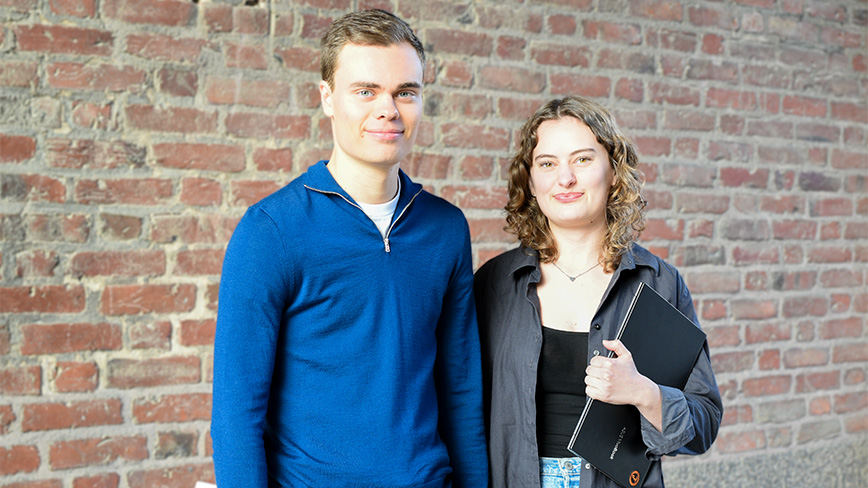
In the ever-evolving landscape of cyber warfare, defending against human-controlled cyberattacks requires innovative strategies. A recent study conducted by students at KTH delves into the realm of cy...