
Sudarshan
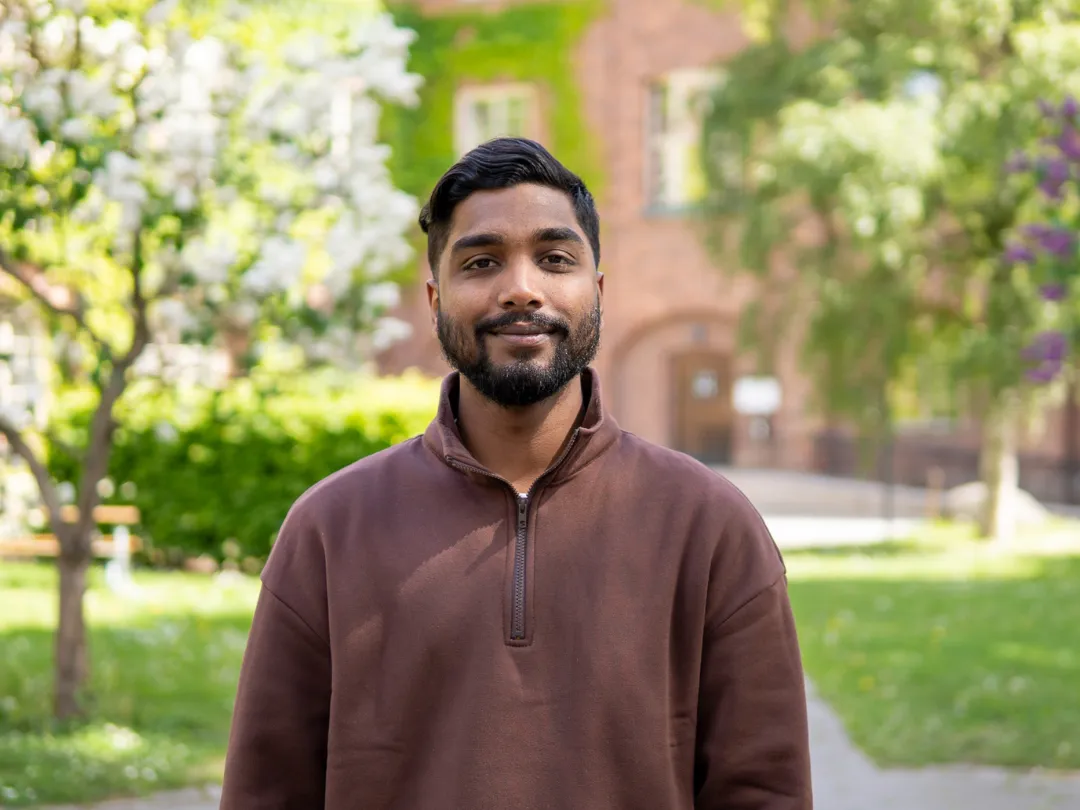
Sudarshan, from India, holds a Bachelor's degree in Mechanical Engineering from SASTRA Deemed University and is currently pursuing an MSc in Sustainable Production Development at KTH Royal Institute of Technology, Stockholm. With hands-on experience at Bosch and Essae Gears, and having led a national SAE Electric Bike Design Competition, he combines a solid engineering background with a passion for sustainable manufacturing.
How is student life in Stockholm?
Stockholm has been a wonderful surprise. Coming from Bengaluru, the contrast is striking the city is calm, clean, and incredibly well-organised. Public transport makes it easy to explore everything from Gamla Stan to the archipelago on weekends. The international student community at KTH is very welcoming, and it’s been exciting to meet peers from all over the world who share a passion for engineering and sustainability. The Swedish work-life balance culture has also been refreshing there’s genuine time to explore the city, enjoy nature, and recharge alongside your studies.
How would you describe your time at KTH so far?
My first year at KTH has been both challenging and deeply rewarding. The programme in Sustainable Production Development has pushed me to think beyond just engineering design to consider the environmental and systems-level impact of manufacturing decisions. Coming with a background in CAD, FEA simulations, and real industry experience from Bosch and Essae Gears, I felt well-prepared technically, but KTH has broadened my perspective significantly. The collaborative culture here, working with international classmates on complex problems, has been one of the highlights.
How do studies at KTH differ from your previous studies?
At SASTRA University in India, the focus was largely on foundational mechanical engineering which gave me strong technical roots in CAD tools like SolidWorks and CREO, and hands-on project work like our SAE Electric Bike competition. KTH feels different in approach there’s a much stronger emphasis on critical thinking, sustainability integration, and independent research. Professors encourage you to question assumptions rather than just apply formulas. The connection between coursework and real industrial challenges is very direct, which suits someone like me who has worked across manufacturing, FEA consulting, and process optimisation.
What are some of your favourite courses so far?
The courses that have stood out most to me are those connecting production engineering with sustainability thinking which is exactly what drew me to this programme. Modules covering process optimisation and sustainable manufacturing align closely with work I did at Bosch improving inspection systems and at Essae Gears developing APQP documentation. It’s satisfying when classroom concepts directly map to real problems I’ve already encountered in industry. The simulation and analysis-heavy coursework has also been engaging, building on my ANSYS and Deform experience from previous projects.
What would you like to say to students thinking of choosing KTH?
If you have a solid engineering foundation and want to take it to the next level, with a genuine focus on sustainability and global industry relevance, KTH is an excellent choice. Don’t be intimidated by the move to Stockholm; the city is incredibly liveable and the university does a great job supporting international students. My advice: come with curiosity and some industry experience if you can. Having worked at Bosch and led a national-level design competition before starting here has made me appreciate the depth of what KTH offers even more. It’s a place that will challenge you to grow both technically and as a global thinker.