MSc Sustainable Production Development
The master's programme in Sustainable Production Development focuses on the sustainable design and development of production systems. You acquire skills to create advanced production systems and to transition existing systems, focusing on circular material flows, increased digitalisation and automation, energy use, and new manufacturing technologies. Graduates shape the future of sustainable production through influential roles in industry and consultancy, or through PhD studies.
Sustainable Production Development at KTH
Rational and cost-effective production systems have been vital to industrialisation and wealth for decades. However, the area is experiencing changes and pressures across different dimensions, altering the role of production systems. Requirements for greater renewable energy use and circular material flows, increased digitalisation and automation, new manufacturing technologies, service integration, and the emergence of new business models are among the phenomena shaping the development of future production systems. Based on a systemic organisation of contemporary science and understanding, courses run in close collaboration with manufacturing companies. Programme graduates are equipped to lead the development and design of production systems as part of the solution towards a sustainable society, attractive workplaces, and competitive industries.
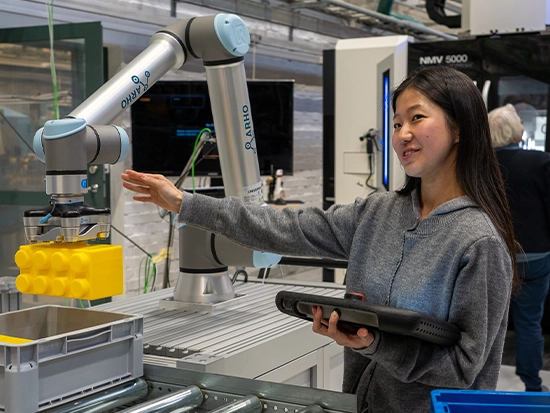
Rooted in mechanical engineering, the programme focuses on developing the sustainable production systems of the future by combining expertise in production management, production logistics and industrial dependability. The programme’s courses are structured around the interaction between the development and operation of production systems. Digitalisation and sustainability are central themes that shape both the content and progression of the programme.
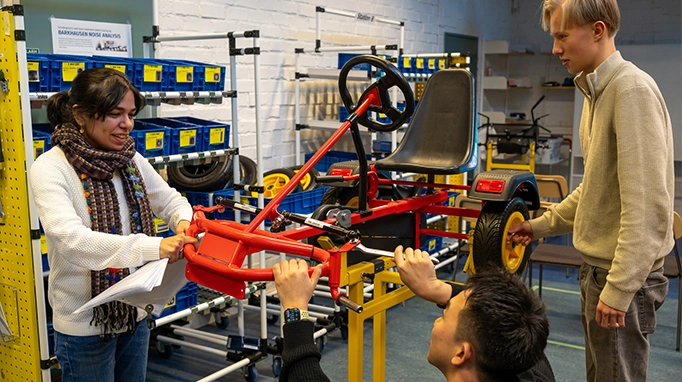
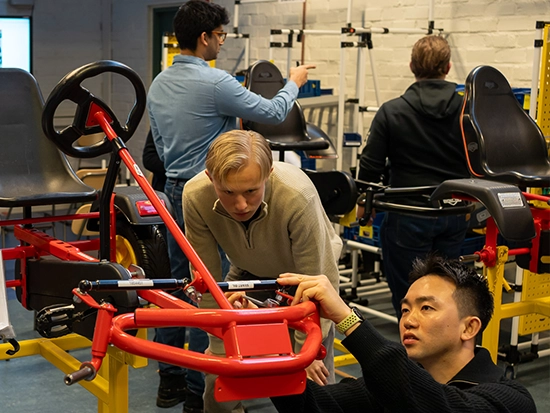
Teaching is student-centred and combines a range of learning formats. Industry involvement is a key component of the programme, supported by KTH’s proximity to leading manufacturing companies and production facilities in the Stockholm region. Through guest lectures by industry professionals and course projects based on real challenges provided by companies, you gain insight into current industry practices and experience applying your knowledge to authentic production challenges.
As the programme is run within the research environment at the Department for Production Engineering, the programme closely interacts with industrial-academic research projects and research labs. You are also encouraged to take elective courses to enhance knowledge and skills in complementing areas of interest.. Methodological teaching and project work also prepare participants for academic and research careers.
This is a two-year programme (120 ECTS credits) given in English. It comprises of 99 ECTS credits of mandatory courses and 21 ECTS credits of elective courses. Graduates are awarded the degree of Master of Science. The programme is given at KTH Campus by the School of Industrial Engineering and Management (at KTH).
Programme structure and progression
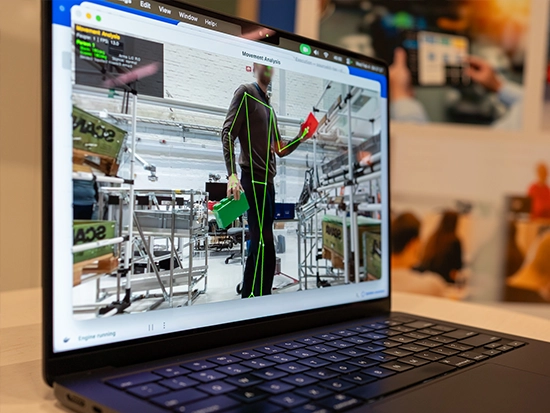
During the first year, you build a foundation in sustainable production development through mandatory courses in sustainable production, production management, production logistics, industrial analytics, modelling and simulation, and digitalisation. You can also broaden your studies through elective courses related to sustainable industrial development.
In the second year, you continue with mandatory courses in scientific methodology and sustainable production development. A central component of the programme is the CDIO course in Sustainable Production Development, where knowledge and methods from across the programme are integrated and applied to challenges within the field. The programme concludes with a degree project carried out during the final semester.
Courses in the programme
The courses in the programme cover topics such as sustainable manufacturing, production development, production systems, production management, production logistics, industrial dependability, sustainability and digitalisation.
Courses in the master's programme in Sustainable Production Development


Future and career
The master's programme in Sustainable Production Development strongly focuses on systems thinking and the underlying need to be proactive in creating production systems with minimal impact on the climate and people while keeping businesses profitable. The close interaction with world-class industries and an active research environment ensures an up-to-date, relevant education. Therefore, graduates are ready to take up a wide range of industrial positions or pursue an academic career. The issues discussed, and the knowledge and skills in focus, are required by industrial production systems in most (if not all) parts of the world and provide a very attractive graduate profile. Regardless of the sector, companies with production management and change activities are potential employers. Automotive and electrical equipment manufacturers, pharmaceuticals, logistics and other service providers are among the typical recruiters of production management graduate profiles. The programme also prepares students interested in pursuing advanced research in the subject area.




Sustainable development
Graduates from KTH have the knowledge and tools for moving society in a more sustainable direction, as sustainable development is an integral part of all programmes. The three key sustainable development goals addressed by the master's programme in Sustainable Production Development are:


The programme addresses the three dimensions of sustainability in the context of industrial production system development and change. As such, it focuses directly on fostering the achievement of Sustainable Development Goals 9, 12, and 13, with secondary effects visible in goals 6 and 8. The industrial infrastructure is part of the broader system of infrastructure shared by society. Changes in how production systems are developed and organised impact, and are impacted by, changes in adjacent or connected infrastructure (such as transport). Innovative solutions in production systems can significantly increase opportunities to reduce the impact of industrial activities on the planet and society. This is also directly related to actions to combat climate change, as small, systematic reductions in the climate impact of manufacturing and production have a considerable global impact. All in all, the essence of sustainable production system development is enhancing behaviour aimed at responsible production and consumption of industrial inputs and outputs.
Faculty and research
The master's programme in Sustainable Production Development is provided by the Department of Production Engineering . The research projects run at the department concern the three focus areas of Production Management, Production Logistics and Industrial Dependability, as well as the renewal of industrial production practices set by digitisation initiatives and sustainability requirements. The establishment of digital and physical labs for future production and logistics is a key function of this initiative. As a student in the programme, you are welcome to a vibrant research and education environment for sustainable industrial production for the future.
- Research in Production Management
- Research in Industrial dependability
- Research in Production Logistics