Division professors Sverker Sörlin and Nina Wormb’s article “Environing technologies: a theory of making environment” from the 2018 December issue of History & Technology, is available open access. Read the abstract and find the link for the full article below
Abstract
The central proposal of this article is that environing technologies shape and structure the way in which nature becomes environment, and as such used, perceived and understood. The argument builds on the understanding that environment is the result of human intervention. Technology is here understood broadly as a terraforming practise, materially and conceptually. We suggest that the compound environing technologies enable us to see environmental change on multiple scales and in new registers. That technologies alter the physical world is not new; our contribution focuses on the conceptual, epistemological, economic and emotional appreciation of systems and aggregates of technologies that is part and parcel of material change. The environing technologies that enable such articulation and comprehension hold potential in the future transformation that our societies need to undergo to overcome the crisis of environment and climate.
Eric Paglia has just now published a new article in Humanities and Social Sciences Communications. Topic is the 1972 United Nations Stockholm Conference on the Human Environment. The conference was convened after the Swedish delegation’s intervention on behalf of environmental protection four to five years earlier. Happening within a framework determined by the goal of sustainable development, this event acted as an embryonic cornerstone of global environmental governance.
While working in our division’s project SPHERE (in partnership with the Universities of Cambridge, Berkeley and Sydney), Eric analyses this political milestone of environmental protection through the lens of science diplomacy. Among other things, the conference produced a joint declaration of principles, of which one small example can be seen here to illustrate the scope of the issues discussed:
Principle 2
The natural resources of the earth, including the air, water, land, flora and fauna and especially representative samples of natural ecosystems, must be safeguarded for the benefit of present and future generations through careful planning or management, as appropriate. [UN Report, p. 4.]
How did Swedish diplomats leverage science for their objectives in negotiations to achieve this declaration? How was science used to (successfully) lobby for convening a guiding UN environmental conference? What was the role of science during the conference’s preparation process?
You can find the answers to these questions and a lot more in Eric’s article!
It is a new week at the Division of History of Science, Technology and Environment and this one begins with the official launch of the SPHERE podcast – produced by our very own Eric Paglia.
About the Podcast:
SPHERE is a podcast that investigates the historical evolution of global environmental governance through in-depth discussions with a wide array of scholars, scientists, and practitioners—including politicians, diplomats and other government officials—who have played decisive roles in shaping the course of environmental politics, science and activism over the past half century or more.
In the first episode, with 1948 as a starting point, Eric talks to prof. Sverker Sörlin on “the idea of “the environment” emerged at the outset of a radical reconfiguration of the human-environment relationship precipitated by an unprecedented post-war economic expansion that put enormous pressure on ecosystems and the Earth.”
Sverker is a professor of Environmental History at the Division, an author, writer, frequent debater and outdoor sports entusiast with an inexhaustible source of energy.
The SPHERE project is a historical study of humanity’s relation to planetary conditions and constraints and how it has become understood as a governance issue.
As more and more of our doctoral students finish, more and more new traditions are created. Some traditions seem made to be broken quite fast, but the tradition of getting together for the spiking of a freshly printed doctoral thesis is one we hope to keep.
Today was the day for Anna Svensson to grab the hammer and, ehrm, hang her thesis A Utopian Quest for Universal Knowledge – Diachronic Histories of Botanical Collections between the sixteenth Century and the Present on the thesis tree in the library. We were a happy bunch of ten who accompanied Anna to the library for this occasion, humming on the Imperial March.
Anna started her doctoral studies at the Division in 2013 as one of the first doctoral students of the Environmental Humanities Laboratory. However, in 2014 she successfully applied for fundings together with supervisor Sabine Höhler, and from 2015 her doctoral studies have been funded by the Swedish Research Council in the project Saving Nature.
Except from thesis writing, Anna has super powers such as sensational kindness, magical flower fingers and crazy craft skills. A proof of the later can be seen on the dust jacket of the thesis, which is a photo of a patchwork that Anna made during the rare breaks she could take while finishing the kappa.
Anna will defend on December 8 2017 at one in room F3 at Lindstedtsvägen 26 here in Stockholm.
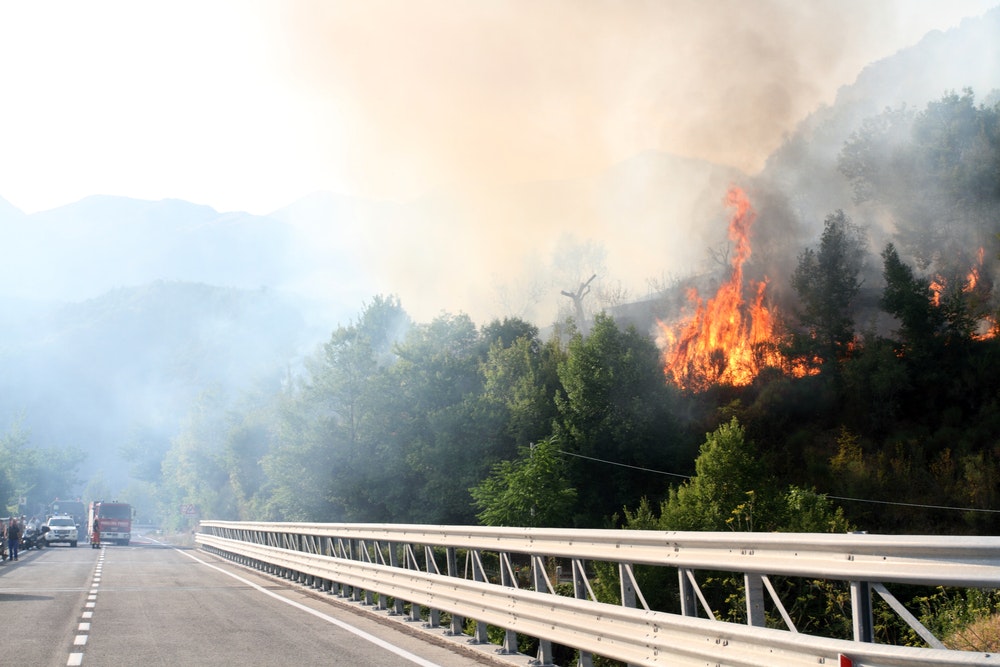
Can a forest be fascist? This may seem a facetious question, but it is one that Italians have been discussing of late due to a fire that occurred at the end of August.The fire, allegedly started accidentally by someone cooking tomato sauce, burned down part of a historic and controversial forest on the slopes of Mount Giano, about 100km north-east of Rome. The 20,000 fir trees here, spread over eight hectares, were planted between 1938 and 1939 by recruits studying at the academy of the forestry corps in the small town of Cittaducale. They were an homage to Mussolini: planted in such a way so that from afar, they read DUX, the fascist leader’s title in Latin. And some want to replant it.This story brings effectively together two major recent issues of debate: forest fires and the removal of inappropriate, “disturbing” monuments. In this instance a politically incorrect monument has been (partially) destroyed by one of the many forest fires that, every year, hit central and southern Italy. This past summer was particularly dramatic, with more than 70,000 hectares of Italian forest destroyed by fires.However, this forest is not just any forest, but a prime example of the fascist appropriation of landscapes to mark a regime’s domination on both the country and its nature. The fact that this forest survived decades of neglect and a first attempt at getting rid of it in the 1950s has allowed it to become a powerful symbol for neo-fascist groups, who gather publicity by defending its historic value.So should we see the forest first and foremost as a forest, a natural landscape that perhaps should be restored, or as a disturbing memory of Mussolini? Ought we to recreate the forest, as a preservation of the memory of the country’s history? Or should we leave it to its destiny and forget about it?
In a new book, Marco Armiero and Richard Tucker have edited together important contributions to the emerging field of the environmental history of modern migrations. Three main ‘styles’ of research delineate the contours of a timely research effort.
We are in the midst of a massive migration crisis when Europe is transforming itself into an impenetrable fortress. The times when walls were falling and barbed wires removed seem so far away. Everywhere rich nations are trying to isolate themselves from the waves of desperate people fleeing from wars, poverty, persecutions, and disruptive environmental changes. “A wall will save us!” this is the easy mantra repeated by the professionals of fear, the gardeners of the new and pernicious hate plantations.
Xenophobia, racism, and nationalism are gaining terrain, breeding on a toxic narrative which redirects class conflicts towards the “outside”. According to this narrative, if in the Global North the working class is becoming poorer, is because of immigrants and not for the unequal distribution of wealth, the attack against workers’ rights and the neo-liberal erosion of the welfare state. When hard times come, having an “other” to blame has always been a handy resource in order to preserve the privileges of the few.
The rise of terrorism has aggravated this situation with a continuous overlapping, in the public discourse, of migrants and terrorists. An exotic name does all the work here; the fact that often the terrorists were born and raised in the West is easily buried under the inflammatory rhetoric of the new right-wing nationalists.
Source: Cole Patrick
Lampedusa, Idomeni and Ventimiglia are the centers of a new geography of Europe, places which embody the fact that migration, borders, and bodies intertwine, creating a political ecology of humans’ movement and state’s control (Turhan and Armiero 2017). Routes of hopes and desperation crisscross the Mediterranean; acts of violence and disobedience dot the fortified borders of Europe.
The situation is not different in the United States and in Australia, where similar fears are agitated in the public discourse deeply affecting the political agenda of those countries. A simple textual analysis of the 2016 American presidential campaign could prove beyond any reasonable doubt that migration is a keyword in the public discussion.
In the face of all this, it should be clear why an environmental history of migrations (hereafter EHM) is needed. Environmental History was born — at least as a self-conscious disciplinary field — with a strong connection to the ecological movement raising especially in the US society in the 1970s. As the New Social History, also Environmental History looked at what was happening outside the university’s walls, conceptualizing its function as the study of the past in order to address the challenges of the present. In this sense, dealing with migration means to go back to the very roots of Environmental History as an intellectual project, we might say that it implies to reinforce the political effort of a field which, while gaining academic prestige, sometimes seems to have lost its militant soul (Armiero 2016).
The connections between migration and the environment may not be self-evident; nonetheless, there is a growing body of literature as well as a wider narrative in the public discourse which are enhancing the reflection on this theme. The most fertile terrain where migration and environment have met is that of climate change induced migration. Scholars, policy-makers, journalists, the military complex, writers and artists, NGOs and the general public have engaged with the issue of the so-called climate refugees. From the IPCC reports to the biblical migrations of a catastrophe blockbuster movie as “The Day After Tomorrow,” and from the 2008 National Intelligence Council’s assessment to European Union-funded research programs, the idea that climate change will cause massive and ominous movement of people has increasingly gained authority (see for instance Bettini 2013; Baldwin 2014).
Although everyone would agree that significant climate change will imply the migration of the most vulnerable people, it is more controversial to establish a direct and unequivocal cause-effect connection between the two. In other words, defining climate change migrants might be a difficult task, especially since this is not only a matter of academic disquisitions and it might have a legal implication connected to the ongoing debate on the status of people seeking asylum in the Global North. The ghost of the climate refugee is haunting fortress Europe, and for what matters fortress Australia as well; it continuously reappears in the pages of scholarly works and policy briefings.
The temptation to reduce everything to some ecological truth might be strong among those who believe that nature matters in humans’ affairs. Wars and poverty, two crucial causes of migration, can also be explained as consequences of environmental — more specifically climate — change. Is this the task for environmental historians? Are we supposed to concur in demonstrating that migration is caused by environmental — better off climate — changes? Definitely, we need a wider and less deterministic research agenda. Rather than isolating the environmental, searching for the supposed clear ecological causes — or effects — of migration, the challenge is to think ecologically of the processes which have led to — or spring from — migration. Connecting rather than isolating should be our research mantra.
EHM: a Toolkit
How can an environmental history of modern migration be done? In which directions should this new field go? For the sake of clarity, in our volume we have proposed three possible paths, or styles: the assertive style, the constructivist style, and the embodied style. Those are ideal-types which, rather than being mutually exclusive, many times are blended in the empirical work of researchers.
The Assertive Style, or Strange Pioneers on the Frontier
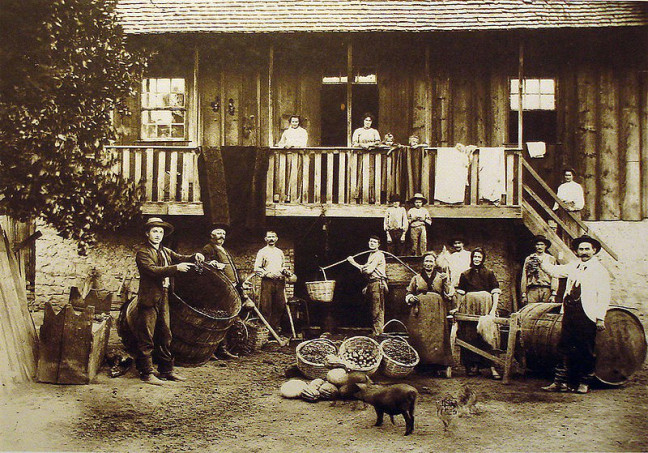
EHM may aim to uncover the contribution of migrants in the making of the landscapes where they settled. The connection to the studies of empires and colonial expansion of Europe is evident. Since the beginning of the discipline, environmental historians have researched the ecological transformations imposed by the imperial arrangements of the world. Looking at migrations, especially in the age of mass migrations, means to enlarge that kind of studies beyond the limits of the colonial settings.
Those limits are not only chronological — mass migrations arrived later than the age of the first colonial expansion — but they are also inherent to the nature of Empire. The military support of the Fatherland, the expropriation of natives’ lands, and the construction of a legal and institutional system at the service of the colonizers’ interests were the basis of the imperial movement of people. The late 19th and early 20th century migrants did not have that kind of cargo and by and large did not have such a close encounter with natives, but rather with other ethnic groups or the descendants of the colonizers. The risk of celebration is rather strong in the assertive style; easily, EHM can embrace a research agenda aiming to prove that immigrants were also pioneers, contributing to the taming of “nature”.
Portrait of the Boff family in their household (Source: Wikimedia)
The Constructivist Style, or Seeing the Environment through Others’ Eyes
Migrants not only shaped the environment where they settled; they also saw it in different ways, applying categories and visions which belonged to their own cultures or which emerged in the migratory experience. In many cases they were able to shape the environment because they saw it differently, recognizing in it things that others could not see.
In the very process of making sense of the environment, migrants transformed it, or at least affected it, and, as we will see later, changed themselves.
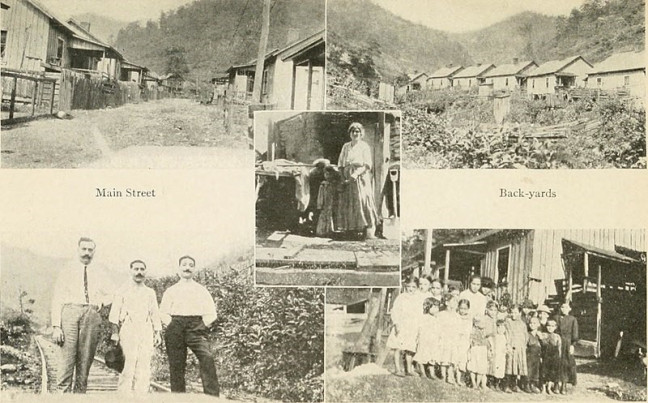
An Italian mining town: Boomer, West Virginia (Source: Wikimedia)
What were the Italian backyards, full of vegetables, rabbits and chickens, if not a different appreciation of land and natural resources and a porous space blending work, living and leisure times? Actually, it was precisely this porosity in immigrants’ practices of the environment what was intolerable for the Anglo-Saxon conservationists, who often blamed — and sometimes still do — foreigners for environmental problems (on this see Hartmann 2010; Rome 2008; Park and Pellow 2011).
The constructivist style can contribute to urban environmental history by rethinking ecologically the ethnic enclaves, exploring how immigrants understood and activated urban commons, including garbage, a space traditionally occupied by immigrant workers.
The Embodied Style, or the Nature of/in the Immigrant’s Body
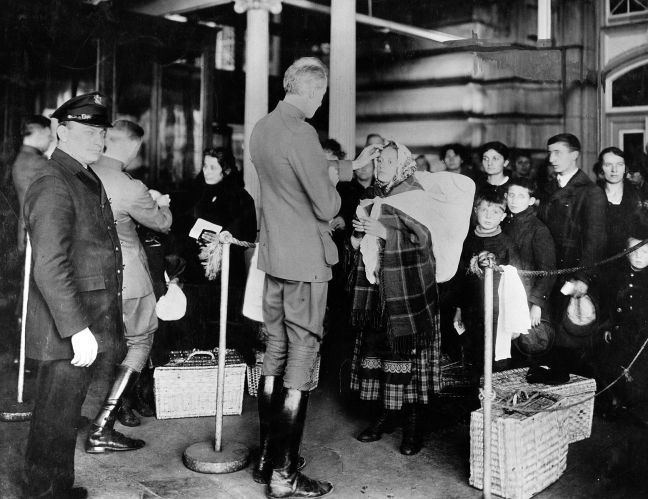
Migrants are themselves nature on the move. This was true not only during the early years of the Columbian or Magellan exchange. People continued to cross the oceans bringing with them their bodies, their resistance or weakness to pathogenic agents, their ability to cope with different climate and food. EHM needs to break the boundaries between bodies and nature.
Thereby, EHM must join forces with those environmental historians who have contributed to renovating the field, calling for attention to the connections linking work, ecologies, and health (Barca 2014; Montrie 2008; Mitman 2005; Nash 2006; Sellers 1999). This is not only a movement inside the Environmental History field, but it also comes strongly from civil society organizations, and especially from the Environmental Justice Movement. In this sense, it is the right time to foster the EHM agenda.
Public Health Service physicians checking immigrants arriving to the United States for signs of illness. (Source: Wikimedia)
Conclusions
Working on the environmental history of mass migrations might resemble the work of archaeologists. In both cases, the researcher is engaged in an excavation that aims to uncover what has been buried under layers of past epochs. However, when studying the landscape of migrations those layers are not so much arranged in strata but intertwined and blended with one another. They might look like the strange mix of Roman ruins and new buildings so common in many Italian cities.
In this sense the metaphor of the excavation might not work so well. While it does deliver the idea of making visible what has been hidden, it also implies a well delimited succession of strata which does not correspond to the reality of the hybrid landscapes created by immigrants. Actually, individuating an Italian, Chinese, or Serbian landscape might contradict the whole point of thinking in terms of metabolic relationships and socionatures.
How much were the vineyards Italian in California, in the face of the Phylloxera bio-invasion, or of the work of the Mexican laborers who prepared the land? Or how much was an immigrant landscape the coalfields of Colorado and Pennsylvania, where the hard work of miners, mostly immigrants, capital investments and interests, energy policies and technological shifts shaped the land and the bodies of people working and living there? The same could be asked for the urban environment where the marks of various ethnic communities — Little Italies or Chinatowns, for instance — spoke at the same time of immigrants’ agency in the city and their metabolic relationships with broader dynamics of urban political ecology as land rent, zoning, and gentrification. More than sealed layers in a succession, it seems a bricolage where what matters is the relationship among pieces, even more than the figure obtained through the assemblage. And, of course, the power and the resistance at play in the very making of that patchwork landscape.
Maybe the best metaphor to describe the kind of work the EHM should do comes from the experimental volume produced by Pulido, Barraclough and Cheng, A People’s Guide to Los Angeles. In the introduction they propose the image of the haunted landscape to describe the hybrid blend of invisible presences which peopled the places we live in: “Los Angeles is filled with ghosts—not only of people, but also of places and buildings and the ordinary and extraordinary events that once filled them” (4). This metaphor of the ghosts gives back the sense of the immigrants’ presence/absence into the landscape. As those ghosts, immigrants haunt the landscapes where they settled with traces which are embodied in the place even when they are completely gone. Many times, those traces are stories, because ghosts’ stories are what actually haunt the places.
Immigrants haunt as ghosts the landscapes where they settled. Their presence is in the shapes of the California farmlands, embedded into the energy systems fueling the industrial and post industrial societies, cooked with food, inscribed in the urban texture, mixed with blood, dust, and sick cells in the bodyscapes of exposures and exploitation which are also part of that history.
The figure of the ghost can also help us to overcome binary opposition between culture and nature or material and immaterial. Immigrants literally built the environment where they settled, making soil out of waste but also understanding the environment around them in ways that no one had done before. An environmental history of migrations and migrants should make peace with the fact that the environmental and the social are never apart. With the right jargon, one might say that they are mutually constituted in socionatural formations. But I prefer to say that they haunt each other, never leaving a place, a story, a landscape, a body alone.









_(14592478797).jpg)
.jpg)