KTH Logo

Upcoming Final seminar: Streams, Steams, and Steels: A History of Nuclear and Non-Nuclear Risk Governance (1850-1990)

A warm welcome to another upcoming final seminar at the division!

Doctoral Student: Siegfried Evens, Doctoral Student, Division of History of Science, Technology and Environment
Supervisor: Per Högselius, Kati Lindström, Anna Storm
Opponent: Markku Lehtonen, Social Scientist, University Pompeu Fabra in Barcelona

Time: Tuesday 2023-06-13 13.15 – 15.00

Location: Big seminar room, Teknikringen 74D (floor 5), Division of History of Science

Language: English
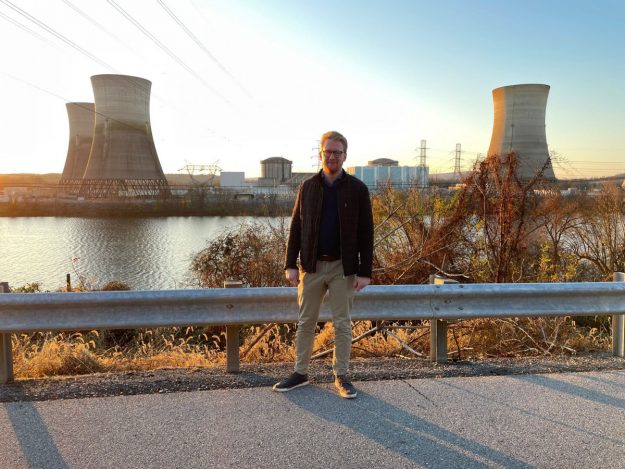
 

Siegfried Evens in front of the Three Mile Island Nuclear Power Plant in the USA.

Teaser

That is why this dissertation will focus on exactly that: the water that runs through our nuclear power plants. Water is so important and obvious to the safety of so many power plants not only nuclear ones that it barely goes unnoticed. Indeed, the history of nuclear power contains a striking paradox. Water is the key to a normal functioning nuclear power plant and to preventing nuclear accidents. Yet, up until now, the history of water is largely absent from the history of nuclear power, and especially nuclear risk. In contrast, there is a longstanding scholarly tradition of studying nuclear fission and radioactivity.

But this dissertation is about more than just water. By focussing on water streams for the analysis of nuclear safety, other relevant elements open up as well. While water streams are essential, there is no nuclear power plant in the world that generates electricity because of it. Electricity is generated because of the steam caused by the boiling of that water. The generation of steam is coupled to the science and engineering practice of thermalhydraulics a field with a long and important history, dating back to the early days of industrialisation and mechanical engineering.

As I will show, much engineering and political effort in the nuclear sector and outside of it has been devoted to the management of pressure and temperature in steam equipment, such as boilers and pipes. All of this was essential to prevent the pressure from mounting too high, causing catastrophic explosions. In turn, the management of all this water and steam is also very reliant on the material that this equipment is made of. And that material is steel. A very robust material, steel is wellequipped to
withstand the tremendous pressures and temperatures necessary to generate power. However, as
with almost any material, it can decay, crack, brittle, and break. A major theme in this dissertation will therefore be the continued effort to improve and regulate steel and the work of metallurgists and material engineers in doing so. Streams, steams, and steels; that is in many ways the essence of
this dissertation.

Excerpt from Siegfried’s final seminar text, pp. 12-13.
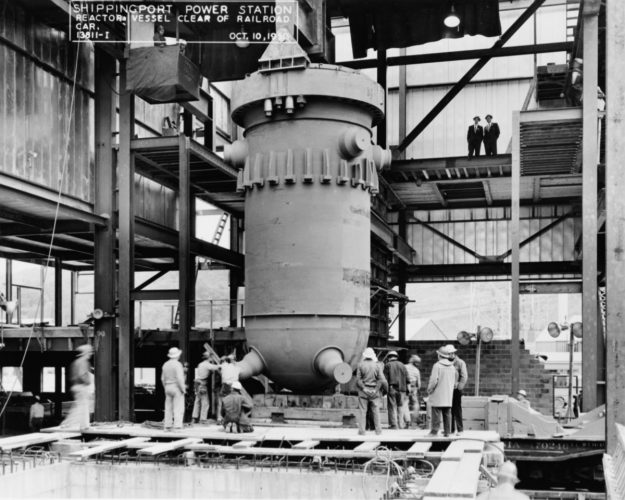
 

A pressure vessel at Shippingport Nuclear Power Station in the USA.

Upcoming Events in Doctoral Education

On 30 May, 1.15-2.45 pm, Alicia Gutting will have her final seminar with the title “The Nuclear Rhine” in her doctoral education. It will take place at the division, in the big seminar room. Alicia’s discussant is Timothy Moss, Senior Researcher at the Integrative Research Institute on Transformations of Human-Environment Systems (IRI THESys), based at the Humboldt University in Berlin, Germany.

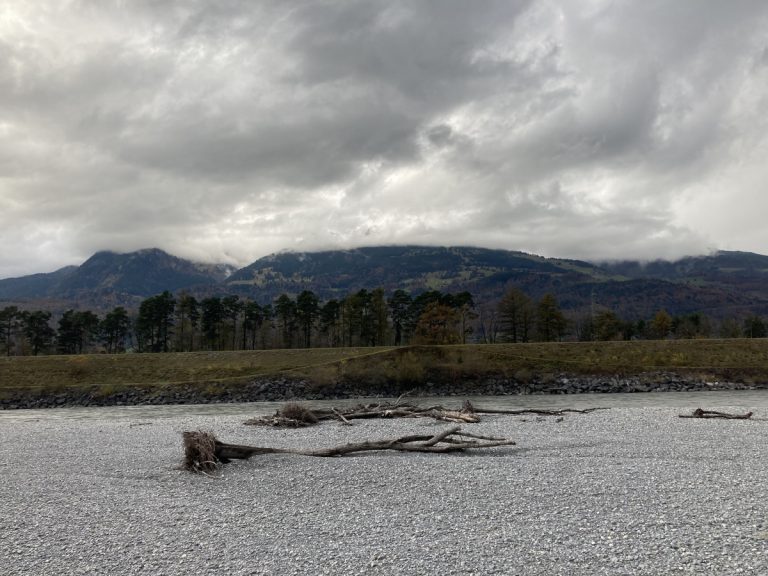
Alpine Rhine on the border between Liechtenstein and Switzerland. Photo: Alicia Gutting

*

On 02 June Ulrika Bjare will have her defence with the title “The autonomy of science – governance, organization, and enactment of university research”. It will take place at 10 am at KTH in Room B2, Brinellvägen 23 in Stockholm. Her Opponent is Charlotte Silander from Linnéuniversitetet. The defence will take place in Swedish.

You can also join the defence digitally via Zoom.

Ulrika has published her thesis on Diva. You can find it here.

Profilbild av Ulrika Bjare


Upcoming! Final Seminar on Planetary Timekeeping

Erik Isberg, doctoral student at the division, will discuss the progress of his dissertation at his final seminar on 13 March 13.15-15:00 (Stockholm time). The title of his seminar is “Planetary Timekeeping: Paleoclimatology and the Temporalities of Environmental Knowledge. 1950-1990”. Dania Acherman, Senior Scientist from the University of Bern, will act as discussant during the seminar. The event will be held in the seminar room at the division (Teknikringen 74D, level 5).

Profile picture of Erik Isberg

About Erik

I am a PhD Student at the Division of History of Science, Technology and Environment since December 2018. I hold a M.A in the History of Ideas and Sciences from Lund University and I was a visiting student at the Center for Science, Technology, Medicine and Society at UC Berkeley 2016-2017.

As a part of the research project SPHERE, my current work concerns the scientific construction of a global environment and, particularly, how planetary timescales were increasingly incorporated into human history and global environmental governance between 1950-1980. As human impact on the environment began to be understood in planetary terms, practices aimed at tracking environmental changes over vast periods of time, such as ice core drilling and pollen analysis, were drawn into the political spotlight. They spoke to more than just the deep past, as they gradually became immersed in the work to predict, visualize and alter the trajectories of the living conditions on the planet. Over the course of a few decades, long planetary timescales had moved into the realm of the governable. I am interested in this process and the way environmental and societal temporalities have been synchronized, mediated and negotiated as a part of a larger shift in the human-earth relationship. More broadly, my research interests concern the history of science and technology, environmental humanities and historiography.